- Home
- Services and Shopping
- Mobility Scooter Service Options
- Mobility Scooter Safety Checks Before Every Ride
Mobility Scooter Safety Checks Before Every Ride: Your Complete Pre-Flight Guide
Picture this.
You're running a little late. The sun is shining, the birds are singing, and you've got a list of errands as long as your arm. You hop on your mobility scooter, turn the key, and off you go.
Half a mile from home, you feel it. A wobble. A strange noise from the front wheel. Then a sudden jolt—and you're stuck. A flat tyre. Or worse, a brake that's been slowly failing for days, and you only just noticed because you had to stop suddenly at a junction.
That sinking feeling in your stomach? That's exactly what we're going to help you avoid.
If you've been searching for mobility scooter safety checks before every ride, you're already on the right track. Because here's the truth that too many riders learn the hard way: most breakdowns and accidents don't happen out of nowhere. They're the result of tiny issues that gradually worsen—a tyre losing pressure here, a loose connection there, a brake that doesn't quite bite like it used to.
And the best part? A simple, two-minute routine can catch every single one of them.
Let's walk through this together. By the time you finish reading, you'll have a clear, simple, and empowering pre-ride ritual that takes almost no time—and gives you total peace of mind.
Why Pre-Ride Safety Checks Matter More Than You Think
Your mobility scooter is more than just a piece of equipment. As one mobility expert puts it, "It is your legs, your independence, and often your social life on wheels". That's a lot riding on four wheels and a battery.
Yet unlike a car, there's no mandatory warrant of fitness for a mobility scooter. The responsibility for safety rests squarely with you.
Here's the reality: "A short daily walk-around (tyres, cables, lights, brakes, battery) and a slightly deeper weekly check are usually enough to keep a mobility scooter safe and reliable between services. Most checks take two to ten minutes and need no tools or technical knowledge".
That's it. Two to ten minutes. That's less time than it takes to make a cup of tea. And it could save you from a breakdown, an accident, or a very expensive repair bill.
Why do these checks matter? Because "good maintenance is about safety first. A sudden loss of power when you're crossing a road, or brakes that do not quite bite on a slope, can put you at real risk".
A few minutes of prevention is worth far more than hours of cure.
Your Daily Pre-Ride Safety Checks: The 2-Minute Routine
Think of this as your pre-flight check. Pilots do it before every take-off. You should do it before every ride.
Here's what to check, in the order you should check it.
1. The Walk-Around: Look Before You Leap
Before you even sit down, do a quick visual inspection of your scooter from front to back.
What to look for:
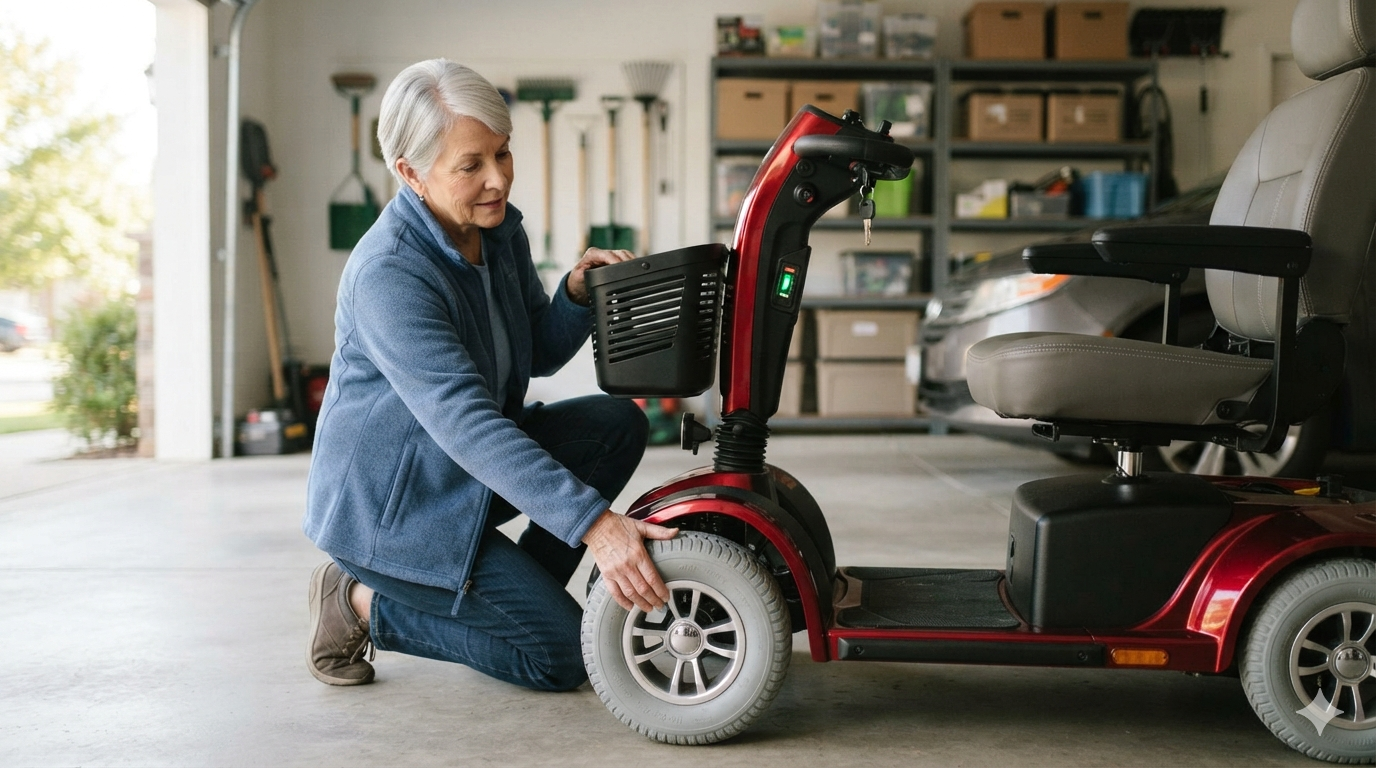
- Tyres: Any obvious punctures, splits, flat spots, or signs of very low pressure. If you have solid tyres, "check for flat spots".
- Cables and plugs: Nothing loose, hanging, or damaged. "Visually inspect the tiller cable. Make sure that it is not frayed".
- Lights and reflectors: In place, not cracked or covered in mud.
- The frame: Any visible cracks, damage, or anything that looks different from yesterday.
Why this matters: A visual inspection catches problems before they become dangerous. A cracked tyre or a frayed cable is easy to spot—and easy to fix—if you look for it.
2. The Throttle Test: Check Your Controls
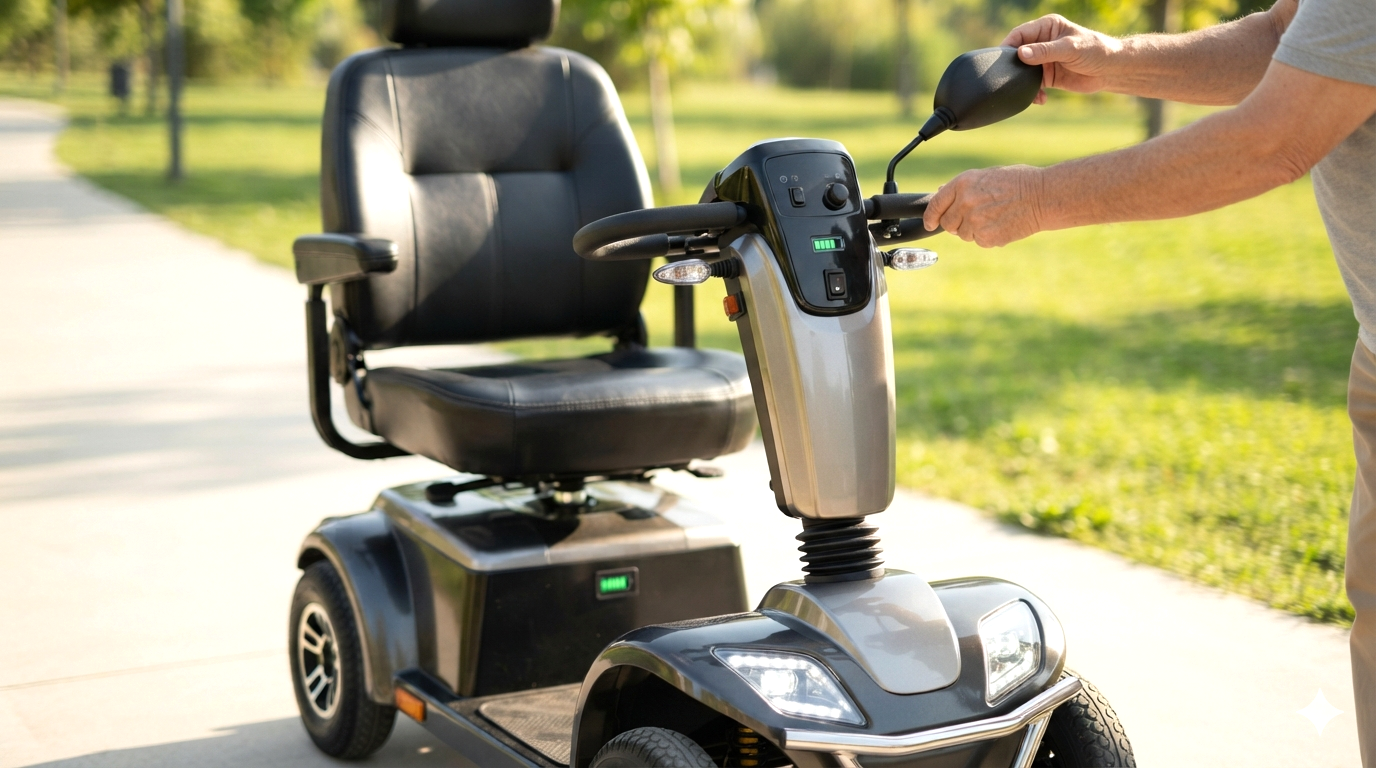
With the power turned off, check the throttle mechanism.
What to do:
- Make sure the throttle is not bent or damaged.
- Push and release it. It should return smoothly to its rest position.
- "Look at your tyres for any visible damage or low pressure".
Why this matters: A sticky or damaged throttle can cause sudden, unexpected acceleration or failure to respond when you need it most.
3. The Brake Test: Stop Before You Start
This is the most important safety check you'll do. Test your brakes before you start moving.
What to do:
- "Sit on the scooter and do a short 'cockpit check' before you move".
- On a flat, level surface, "test the brakes first. They should engage firmly and hold".
- "Gently squeeze the brakes or use the control lever to slow and stop in a safe area".
- If stopping feels weaker than normal, or there's a new noise, don't ride.
Many manufacturers recommend a specific brake test: "pull the throttle forward slowly until you hear the brake click, then release immediately".
Why this matters: Your brakes are your primary safety feature. If they fail, you have no backup.
"Safe driving practices for mobility scooters always start with good brakes!"
4. The Battery Check: Know Your Range
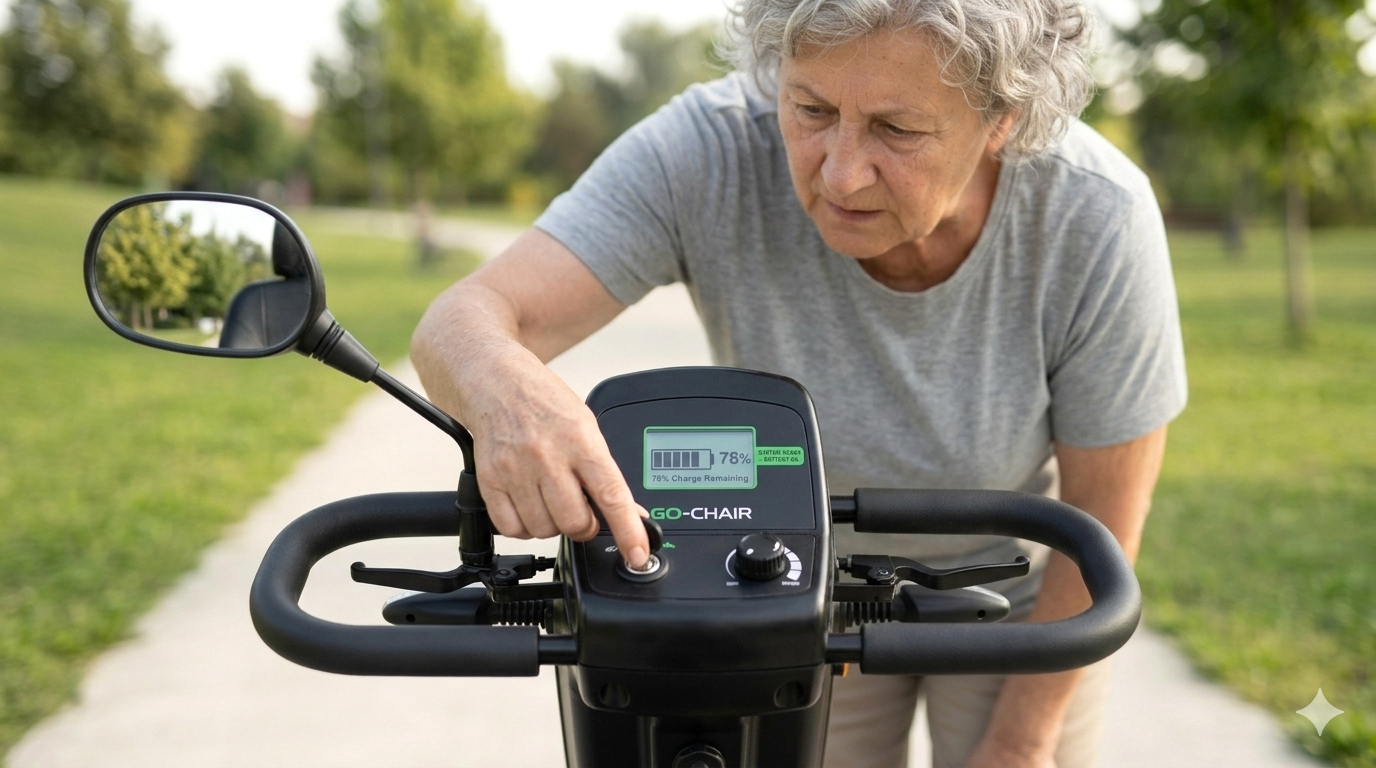
Before you head out, "check the battery condition meter to ensure the battery is fully charged".
What to do:
- Turn on the power and check the battery indicator.
- Make sure it shows a full charge.
- If it's low, charge it before you go. "A dead battery can leave you stranded, which no one likes!"
Why this matters: "Make sure your mobility scooter's battery is fully charged before you set out to ensure you aren't stranded mid-journey".
It's that simple.
5. The "Shake Test": Check for Loose Parts
"Give it a quick shake. Wheels, seat, armrests, and any folding parts should be tight and secure — nothing loose or wobbly".
What to do:
- Gently shake the seat. Is it securely locked in place?
- Check the armrests. "Inspect the armrests for loose hardware, stress points or damage".
- Check the anti-tip wheels. "Check the anti-tip wheels for extreme wear. Ensure anti-tips do not rub the ground when you operate the scooter".
Why this matters: A loose seat or wobbly armrest can cause you to lose balance or control. It's a simple check that takes seconds.
6. The Electronics Check: Horn and Lights
If your scooter has lights and a horn, test them.
What to do:
- "Check if the horn is working and the lights are bright enough for you to see and be seen".
- "Ensure the manual freewheel lever is in drive mode before sitting on the scooter". If it's in freewheel mode, the brakes won't work.
Why this matters: "This becomes paramount if you're heading out in low-light conditions like early morning or evening".
Being seen is being safe.
The Weekly Deeper Dive: What to Check Once a Week
Once a week, take an extra five minutes for a more thorough inspection.
Tyres and Wheels
- Check tyre pressure with a gauge. "Check your tyre pressure is around 34 psi as this impacts on the steering and performance of your scooter, especially the range you can travel".
- Check tread depth. If tread is worn down, replace the tyre.
Electrical System
- "Inspect battery terminals for looseness, oxidation, or damage".
- "Check all electrical connections. Make sure they are tight and not corroded"
Cleaning
- "Clean your scooter – give it a wipe over. Clean all the surfaces with detergent and a cloth to remove any built-up dust or dirt".
Personal Safety: Check Yourself Before You Wreck Yourself
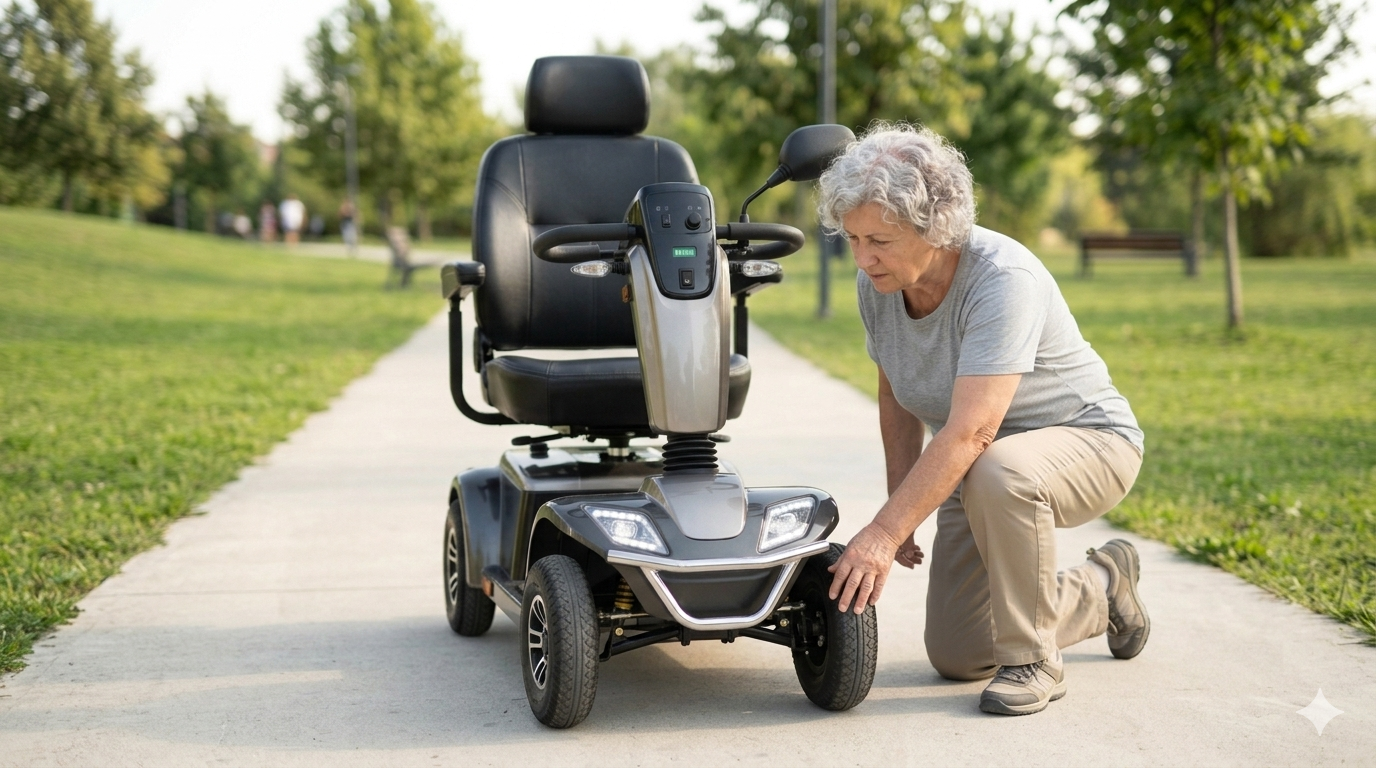
Here's something most checklists miss: you. Your safety isn't just about the scooter. It's also about you.
Be Seen
- "Does your scooter have a safety flag? Do you have some high visibility clothing on?"
- "Always remember that just because you've seen someone it doesn't mean they've seen you".
- Consider reflective clothing, particularly at night.
Dress Safe
- "Does the hood of your jacket restrict what you can see? Could your scarf get caught in the wheels? Do gloves impact on your ability to use the controls?"
- Loose clothing can be a hazard. Make sure nothing dangles near the wheels.
Know Your Limits
- "Never operate the scooter under the influence of alcohol, while fatigued, or if you have a medical condition that could lead to a sudden loss of physical control".
- "It's also worth thinking about medications you take which might affect you when you're out".
Check Your Route
- "Is your proposed path clear of people, pets, and obstacles?"
- "Have you planned your route to avoid adverse terrain and as many inclines as possible?"

New Rider? Practice Before You Ride
If you're new to mobility scooters—or it's been a while—"take time to familiarize yourself with all controls. Find a quiet, safe area with flat ground to practice accelerating, braking, reversing, turning, and handling inclines".
"Do not venture onto busy roads until you are fully confident in your steering".
And remember: "Do not lend your scooter to anyone unfamiliar with its operation".
What to Do If Something Feels Wrong
If any of your checks reveal a problem, or if something just feels off:
- Don't ride. It's not worth the risk.
- Contact a qualified service technician. "If the check reveals any problems, contact a competent service engineer before using the scooter again".
- If you notice sudden power loss, new noises, jerky braking, error lights, or damage after a bump, contact a qualified engineer immediately".
Your Pre-Ride Safety Checklist (Quick Reference)
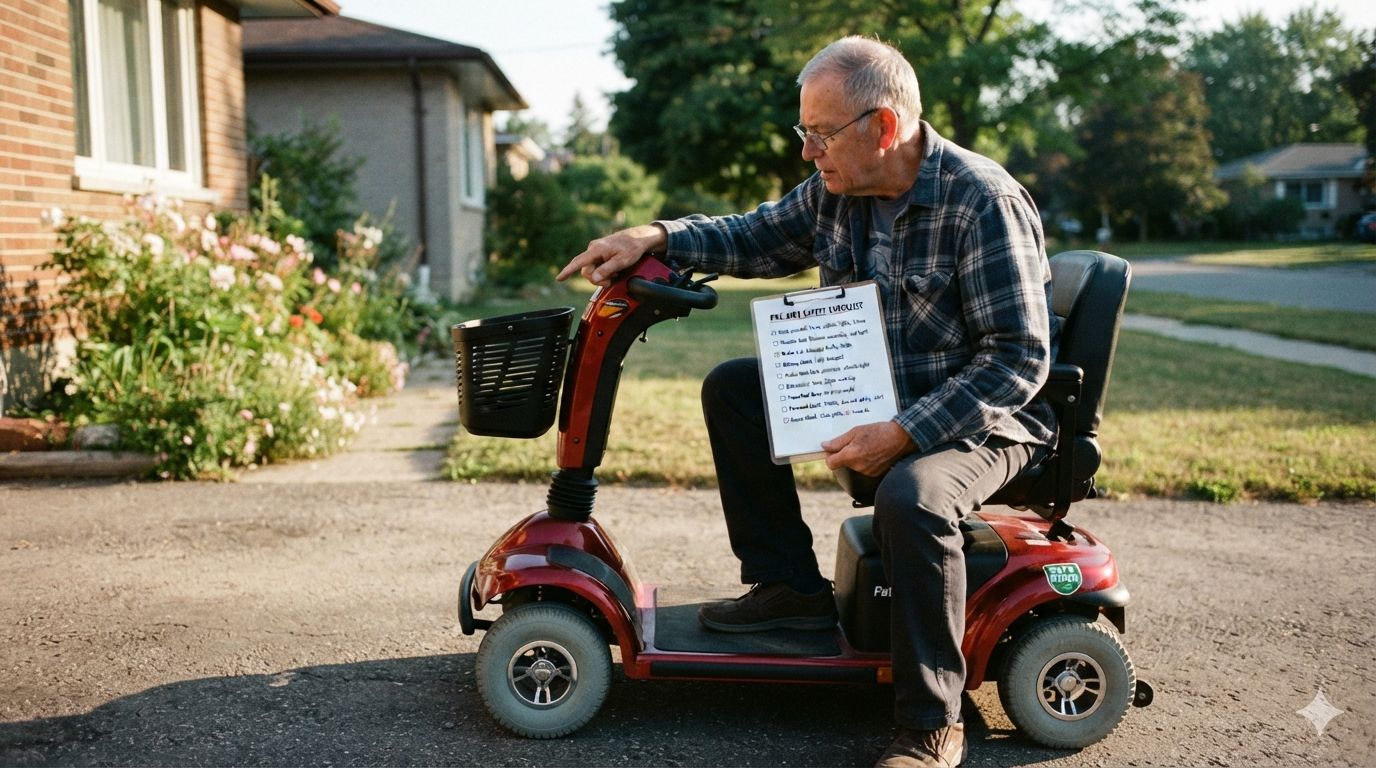
Print this out. Stick it by your door. Make it a habit.
☐ Walk-around: Tyres, cables, lights, frame
☐ Throttle test: Returns smoothly, not bent
☐ Brake test: Engages firmly, holds
☐ Battery check: Fully charged
☐ Shake test: Seat, armrests, wheels tight
☐ Electronics: Horn, lights working
☐ Freewheel lever: In drive mode
☐ Personal check: Visible, dressed safely, alert
☐ Route check: Clear path, no hazards
Final Thoughts
Let's come back to where we started. Mobility scooter safety checks before every ride—they're not a chore. They're not something to dread. They're your ticket to independence, confidence, and peace of mind.
A two-minute routine. That's all it takes. Two minutes to check your tyres, test your brakes, and make sure your battery is charged. Two minutes that could save you from a breakdown, an accident, or a very stressful day.
Your mobility scooter gives you freedom. It takes you to the shops, to visit friends, to enjoy the outdoors. Doesn't it deserve a little bit of care in return?
So tomorrow morning, before you head out, take those two minutes. Do your pre-flight check. And then ride with the confidence that comes from knowing you've done everything you can to stay safe.
Because you deserve to feel independent. You deserve to feel safe. And with the right pre-ride routine, you absolutely can.
You've got this.
Stay mobile, stay confident!
Sign up for our monthly Mobility Scooter Newsletter to receive practical guides, expert advice, and inspiring stories that help you make the most of your scooter and download our free "Mobility Scooter Guide for Beginners."
Don't worry — your e-mail address is totally secure.
I promise to use it only to send you our newsletter, "Mobility Matters."
Recent Articles


-
Portable vs Travel vs Folding Mobility Scooters Buyer's Guide
Sep 15, 26 11:01 AM
 Confused by "portable," "travel," and "folding" mobility scooter listings? This guide explains what Australian sellers actually mean, with real weight comparisons and a decision framework.
 -
Mobility Scooter Types Overview: No More Confusion
Sep 15, 26 10:54 AM
 Mobility scooter types explained in plain English. Includes Australian footpath rules, airline battery limits, and the one mistake most first-time buyers make.
 -
How to Choose a Mobility Scooter in Australia Guide (2026)
Sep 15, 26 07:29 AM
 Choosing a mobility scooter in Australia? This guide covers registration requirements by state, public transport dimensions, NDIS funding steps, and practical testing advice.



Ready to Feel More Confident on Your Mobility Scooter?

My Ebook, The Ultimate Guide to Mobility Scooters, walks you through choosing the right scooter, using it safely, and keeping it in top condition — all explained in clear, friendly language.
Give yourself (or someone you love) the gift of independence.


