- Home
- Services and Shopping
- Mobile Repair Call-out Expectations
- What to Do If Your Mobility Scooter Breaks Down in Public
What to Do If Your Mobility Scooter Breaks Down in Public
Knowing what to do if your mobility scooter breaks down in public is one of those things you hope you'll never need—but if it happens, having a clear plan can turn a terrifying moment into a manageable one.
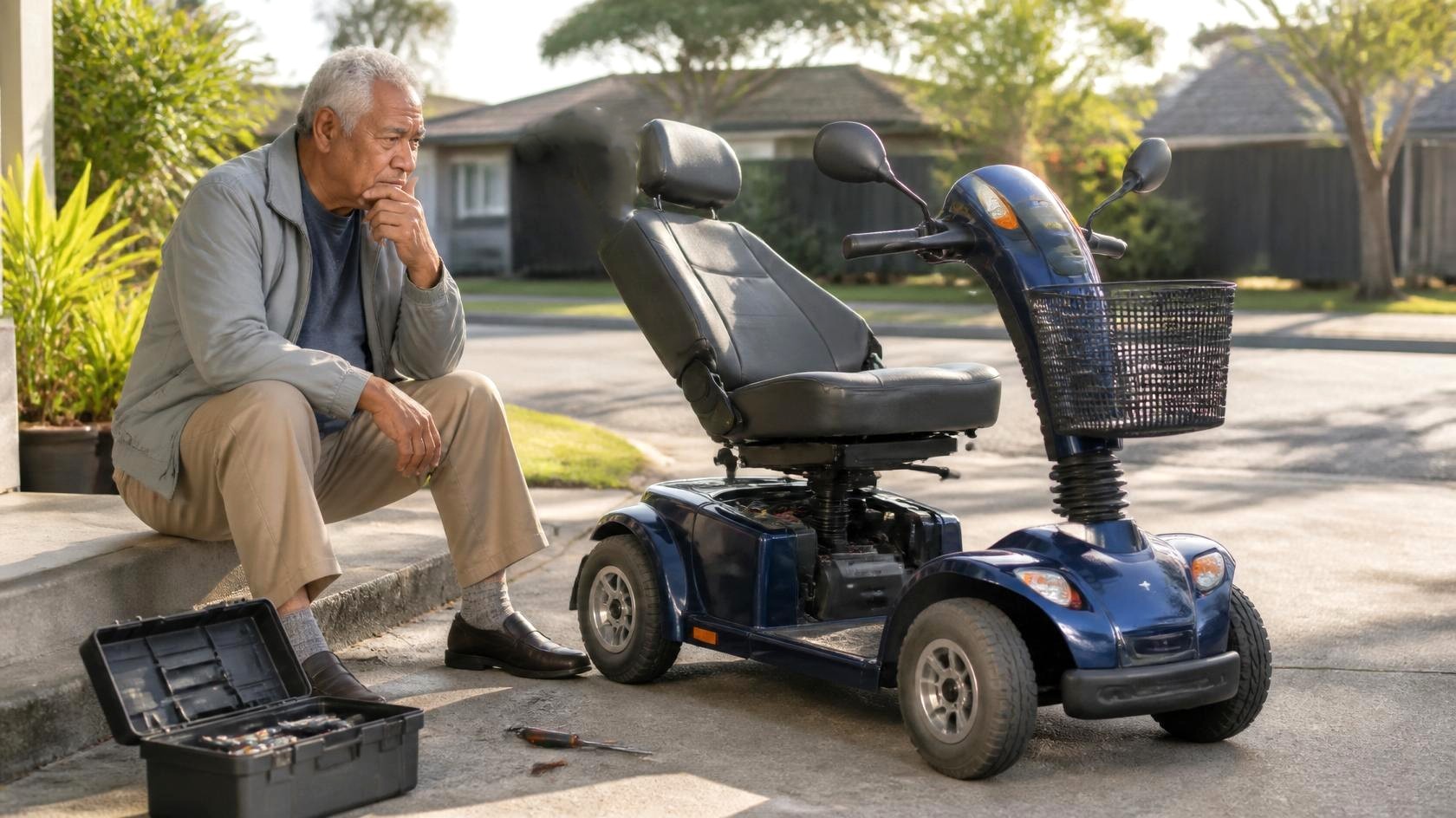
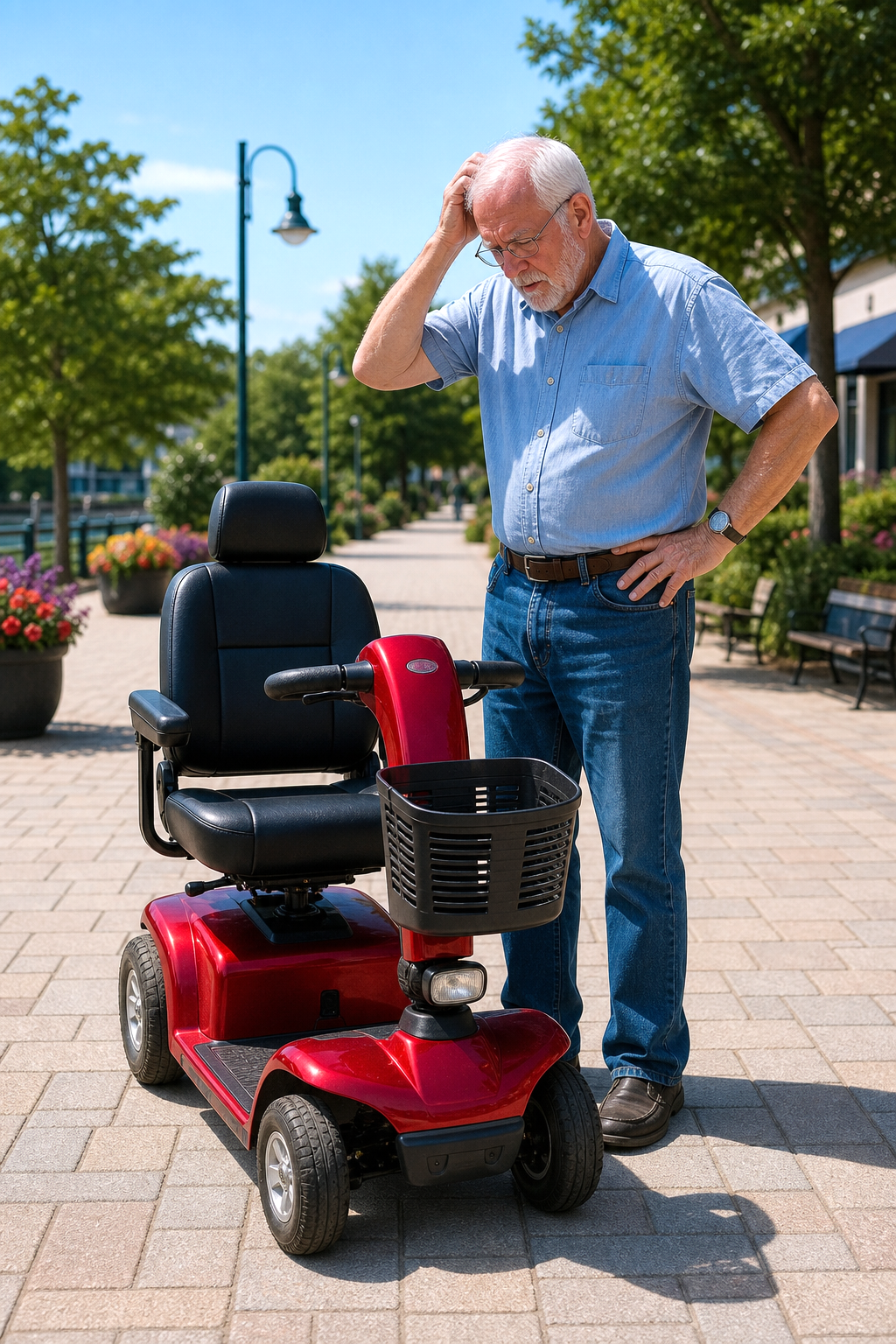
Picture this: you're out enjoying a sunny morning, maybe heading to your favourite café or running an errand. The world feels open and accessible. Then, without warning, your scooter slows, splutters, and stops. You're stuck. Possibly alone. Possibly in an unfamiliar area. And that wonderful feeling of independence suddenly feels very fragile.

Here's the truth: breakdowns happen. They happen to the best-maintained scooters, to careful drivers, and at the most inconvenient times. But here's the other truth: you are not helpless. With a little preparation and a clear head, you can handle this situation safely and get back on your way.
This guide walks you through exactly what to do if your mobility scooter breaks down in public—step by step, from the moment it stops to the moment you're safely home. We'll cover safety first, then troubleshooting, then who to call and what to say.
By the end, you'll have a practical emergency plan that stays with you every time you head out the door.
Let's start with the most important thing: your safety. Because nothing matters more than that.
Step 1: Stay Calm and Prioritise Safety
When your scooter stops unexpectedly, your first reaction might be panic. That's completely natural. But the single most important thing you can do in that moment is take a deep breath.
Move to a Safe Location
If your scooter has any power left, gently steer it to a safe place away from traffic, busy footpaths, or obstacles. Look for stable, level ground where you can comfortably assess the situation.
If you're on a footpath, move to the side. If you're near a road, get as far from moving vehicles as possible.
What if your scooter is completely immobile? Don't panic. You may need to ask a passer‑by for help to move it—or simply stay put and focus on making yourself visible.
Make Yourself Visible
If it's dark, overcast, or you're in a shaded area, turn on your scooter's lights and hazard indicators if your model has them. Wear bright or reflective clothing if you have it.
Visibility isn't just about being seen—it's about staying safe while you wait for help.
Stay With Your Scooter
Unless you are in immediate danger, stay with your scooter.
It's your mobility aid, and leaving it unattended can create problems—theft, towing, or simply losing track of it while you search for help. If you need assistance, ask someone nearby to call on your behalf while you remain with your scooter.
With safety sorted, let's see if the problem might be something simple you can fix yourself.
Step 2: Quick Troubleshooting—Can You Fix It Yourself?
Before you call for help, take a moment to check for common, easily fixable issues. You might be surprised how often a breakdown is caused by something incredibly simple.
Check the Freewheel Lever
This is the number one cause of "breakdowns" that aren't breakdowns at all. Most mobility scooters have a freewheel lever (also called neutral mode) that allows the scooter to be pushed manually.
If this lever has been knocked into neutral, your scooter won't move even if the power is on.
What to do:
Locate the lever (usually near the rear axle) and push it firmly into drive mode. Turn the scooter off, wait a moment, and restart.
Check the Battery and Connections
Battery failure is one of the most common reasons for sudden stops. While you're out and about, check:
- Is the battery properly connected? Vibrations can loosen connections.
- Is the power switch in the correct position? Is the key turned fully?
- Does your scooter have a removable battery pack? Make sure it's locked in place.
- Check the battery indicator—you might simply have run out of charge.
Check for Error Codes or Beeps
Many modern scooters communicate problems through flashing lights or beep codes. Count the beeps or note the flash pattern.
If you have your user manual handy (or saved on your phone), check the troubleshooting section to decode what your scooter is telling you.
Check the Circuit Breaker
Look for a small reset button near the battery compartment—often labelled with a red or black button. If it has popped out, press it firmly to reset.
Inspect for Obstructions
Check around the wheels and under the scooter for anything that might be blocking movement—sticks, stones, or debris caught in the wheel area.
Important: These are basic checks that can sometimes solve the issue. Never attempt more involved repairs unless you're confident, and it's safe to do so.
Your safety always comes first.
If none of these quick fixes work, it's time to call for help. Let's talk about who to contact.
Step 3: Who to Call When You're Stuck
Knowing who to call before you need them is the secret to a stress‑free breakdown experience. Here are your options.
Option 1: Roadside Assistance Services
Several Australian motoring clubs offer dedicated breakdown services for mobility scooters and wheelchairs. These are often surprisingly affordable and can be a lifesaver.
RACV Emergency Wheelchair and Scooter Assist (Victoria)
- Cost: Just $30 per year for up to 8 callouts
- What they do: An RACV technician meets you at your location and attempts minor onsite repairs. If they can't fix it, they organise a wheelchair‑accessible taxi to take you home or to a repair shop the same day (up to $60 per trip)
- Call: 13 11 11
- Coverage: 24/7, including nights and public holidays
RAC WA Wheels2go
- Cost: $51 per year (inc. GST)
- What they do: 24/7 roadside assistance. A patrol can replace a flat battery or tyre if you have a spare on hand. If unable to assist, they arrange a taxi (up to five trips per year valued at $55 each)
- Call: 13 11 11
- Important: If you join in a breakdown situation, a $200 join‑on‑road fee applies—so join before you need it!
RACQ (Queensland)
- Cost: Free community service—you don't need to be a member
- What they do: Test batteries, reinflate tyres, repair punctures if you have a repair kit, and change tyres if you have a spare
- Call: Check RACQ's website for contact details
NRMA (NSW, ACT, SA)
- What they do: Service for members with non‑registered mobility scooters or wheelchairs. If you carry a spare tyre or part, a technician may be able to assist
- Call: 13 11 12
- Note: Patrols don't carry spare parts or tyres, so you need to have your own
24/7 Road Service Australia
- Available through some manufacturers like Invacare
- Call: 1300 550 279
- Some providers, like Mounties Care, also offer roadside assistance through them—1800 008 616 for up to 4 free calls per year with a 30km towing radius
Option 2: Your Mobility Scooter Provider or Technician
If you have a regular service provider or the scooter is under warranty, save their contact details in your phone and carry a printed copy in case your phone dies.
Some manufacturers include complimentary breakdown assistance when you purchase a new scooter—for example, Invacare offers 1 year free breakdown assistance
Option 3: A Friend or Family Member
Sometimes the simplest solution is the best.
Call someone you trust who can come and help—whether that means picking you up, pushing your scooter home, or just keeping you company while you wait for professional help.
Option 4: Local Council or Community Support
In some areas, local councils and community organisations provide support for mobility equipment breakdowns. It's worth checking with your local council or community centre to see what services are available in your area.
Now that you know who to call, let's talk about what information you need to have ready when you make that call.
Step 5: Getting Your Scooter Home
Depending on the situation, you have several options for getting your scooter and yourself home safely.
If You Have Roadside Assistance
Most roadside assistance services will either:
- Fix the problem onsite (if it's minor and they have the parts)
- Arrange a taxi to take you and your scooter home
- Arrange to have your scooter taken to a repair shop
If You Don't Have Roadside Assistance
- Push it home—most scooters have a freewheel mode that allows them to be pushed manually. If you're close to home and have someone to help, this might be an option.
- Arrange transport—some taxis and ride‑sharing services can carry mobility scooters. Call ahead to confirm.
- Ask for help—staff at nearby shops, community centres, or medical facilities may be able to help you contact suitable transport or store your scooter safely until help arrives.
You're home safe. But what happens next? Let's talk about the repair process.
Step 6: After the Breakdown—What Comes Next
Once you're safely home, there are a few important steps to take.
Arrange the Repair
If your scooter wasn't fixed onsite, contact your regular repairer or the provider recommended by your roadside assistance service. If you have NDIS funding, check your plan has available funds—urgent mobility scooter repairs are capped at $3,000.
Consider Breakdown Cover
If you don't already have roadside assistance, now is the time to consider it. For as little as $30 a year, services like RACV's Emergency Wheelchair and Scooter Assist give you 24/7 peace of mind. That's less than the cost of a single taxi ride home.
Prevent Future Breakdowns
Regular servicing is your best defence against unexpected breakdowns. Most experts recommend servicing your mobility scooter at least every 12 months.
Keep your battery well charged and avoid letting it drain completely. Check your scooter regularly for corrosion, loose parts, and accidental damage.
Your Emergency Kit: What to Carry
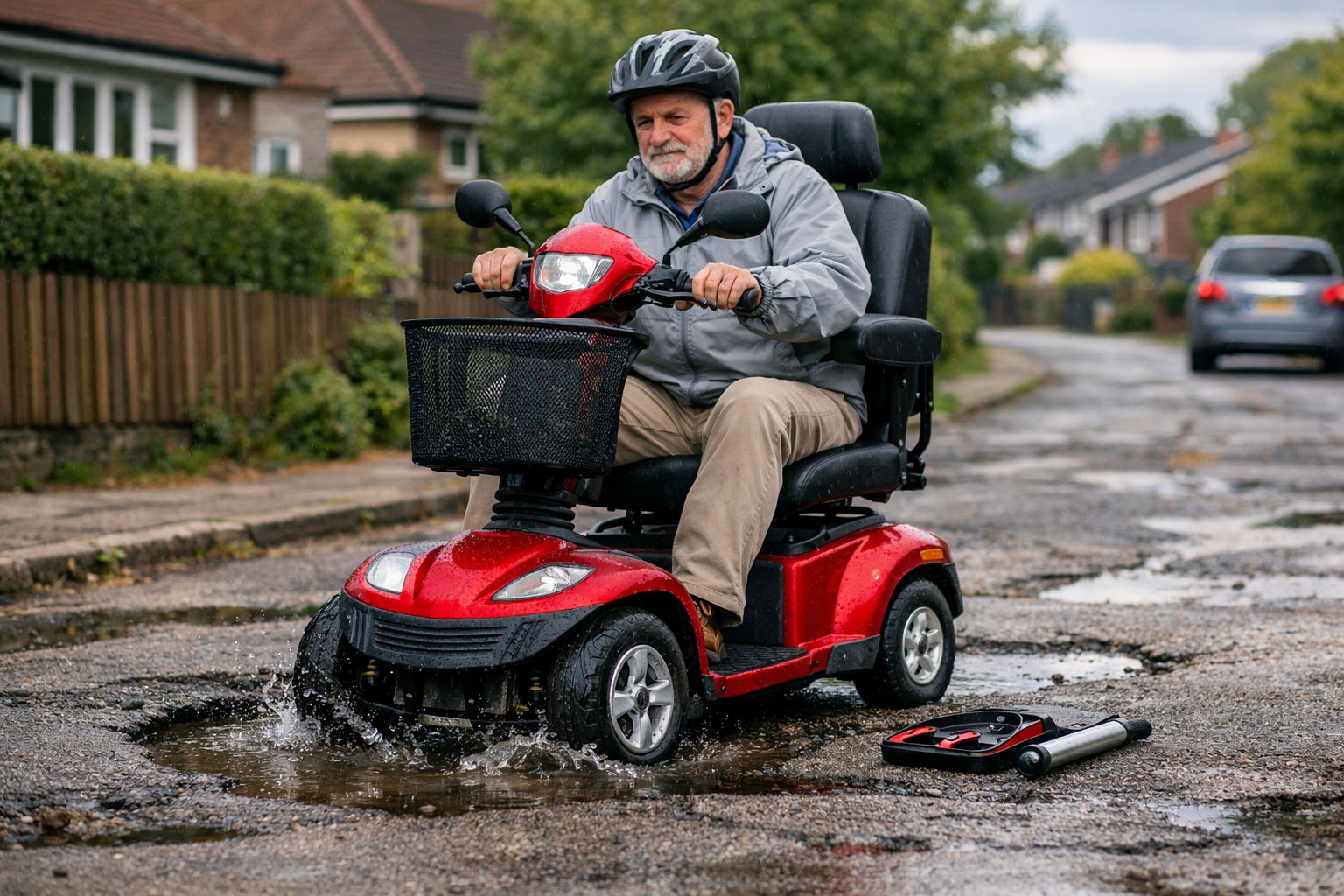
Preparation is the best breakdown prevention. Here's what to carry with you every time you head out:
|
Item |
Why It Matters |
|
Fully charged phone |
Your lifeline to help |
|
Portable power bank |
In case your phone battery dies |
|
Roadside assistance number |
Saved in your phone and written down |
|
Your scooter's make and model |
Written down or saved in your phone |
|
Spare battery or portable charger |
If your scooter uses removable batteries |
|
Puncture repair kit and spare tyre/tube |
For flat tyre emergencies |
|
Reflective vest or bright clothing |
To stay visible |
|
List of emergency contacts |
Friends, family, and carers |
|
User manual (or photos of key pages) |
For troubleshooting error codes |
A Special Note: When It's More Than a Breakdown
Most breakdowns are simple—a flat tyre, a dead battery, a loose connection. But sometimes, things are more serious.
If you smell burning, see sparks or smoke, or your scooter has been in an accident, do not attempt any DIY fixes. Move to a safe location, call for help immediately, and wait for professional assistance.
And if you're ever in immediate danger—if you're stuck on a road, in unsafe weather, or feeling unwell—call 000.
Your safety always comes first.

Your Peace of Mind Matters Most
Your mobility scooter is your freedom. When it breaks down in public, it can feel like that freedom has been taken away in an instant. But here's what we want you to remember: you are not alone, and you are not helpless.
With a clear plan, a few key phone numbers, and a calm approach, you can handle any breakdown safely and get back on your way. The stress of the moment will pass. The independence you value will return.
So take a moment now—before you need it—to save those numbers, pack that emergency kit, and give yourself the gift of preparation. Because knowing what to do if your mobility scooter breaks down in public isn't just about fixing a machine. It's about protecting your confidence, your safety, and your freedom to keep moving.
You've got this. And help is only a phone call away.
Need more help? Contact your local mobility equipment provider for servicing advice, or call RACV on 13 11 11 to learn more about Emergency Wheelchair and Scooter Assist. And if you're an NDIS participant, don't forget to check your plan has available funding for repairs—urgent mobility scooter repairs are capped at $3,000 under the scheme.
This response is AI-generated, for reference only.
Back to Top/ Back to Mobile Repair Call-out Expectations/ Back to Services and Shopping. / Back to Home
Stay mobile, stay confident!
Sign up for our monthly Mobility Scooter Newsletter to receive practical guides, expert advice, and inspiring stories that help you make the most of your scooter and download our free "Mobility Scooter Guide for Beginners."
Don't worry — your e-mail address is totally secure.
I promise to use it only to send you our newsletter, "Mobility Matters."
Recent Articles


-
Portable vs Travel vs Folding Mobility Scooters Buyer's Guide
Sep 15, 26 11:01 AM
 Confused by "portable," "travel," and "folding" mobility scooter listings? This guide explains what Australian sellers actually mean, with real weight comparisons and a decision framework.
 -
Mobility Scooter Types Overview: No More Confusion
Sep 15, 26 10:54 AM
 Mobility scooter types explained in plain English. Includes Australian footpath rules, airline battery limits, and the one mistake most first-time buyers make.
 -
How to Choose a Mobility Scooter in Australia Guide (2026)
Sep 15, 26 07:29 AM
 Choosing a mobility scooter in Australia? This guide covers registration requirements by state, public transport dimensions, NDIS funding steps, and practical testing advice.


Ready to Feel More Confident on Your Mobility Scooter?

My Ebook, The Ultimate Guide to Mobility Scooters, walks you through choosing the right scooter, using it safely, and keeping it in top condition — all explained in clear, friendly language.
Give yourself (or someone you love) the gift of independence.

