- Home
- Buying Guides
- Avoiding Mobility Scooter Sales Pressure
- No-Pressure Mobility Scooter Trial
The Trial You Control: How to Run a No-Pressure Scooter Demo
A no-pressure mobility scooter demo or trial is not a luxury or a special favour. It is the single most important step between wanting a scooter and choosing the right one—and it should feel like research, not a sales pitch.
Picture this. The scooter arrives at your home. The salesperson is friendly, the machine looks shiny, and you are invited to take it for a spin around the living room. It feels fine. It turns. It stops. Everyone smiles. Twenty minutes later, you are being asked for a deposit, and you are not entirely sure how the conversation moved so quickly from “have a try” to “sign here.”
Later, you discover that the scooter does not fit through your bathroom door, the battery cannot manage the trip to the shops, and the model you tested was not quite the same as the one on the quote. The trial felt like a formality. The purchase felt like a trap.
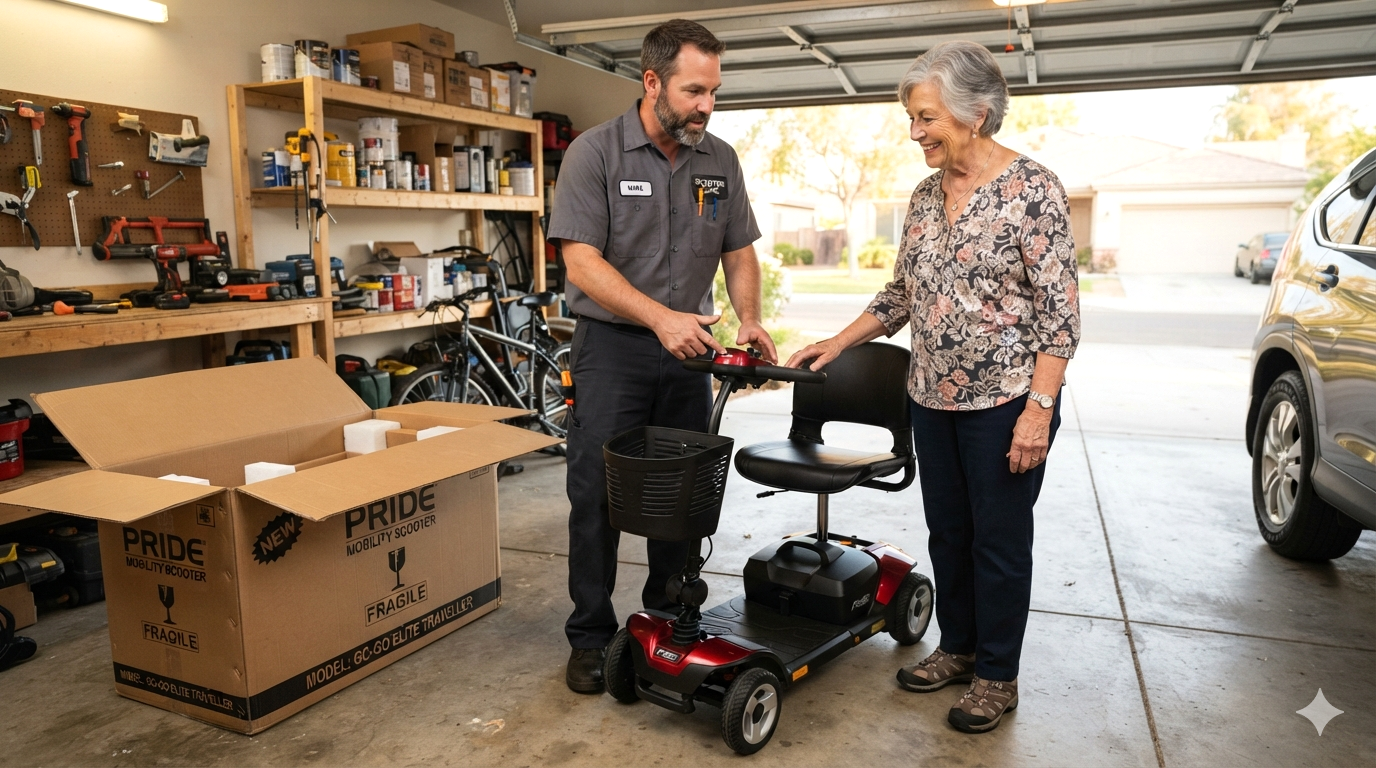
This is exactly what a no-pressure mobility scooter demo or trial is designed to prevent. The difference between a useful trial and a costly mistake is not luck. It is preparation, structure, and a small set of rules that you set before the scooter ever arrives.
This guide is for anyone who wants the confidence of a proper test without the anxiety of a sales conversation. You do not need to be assertive by nature. You need a plan, a timebox, and a clear idea of what you are trying to learn.
Let us start with why the trial is the most underrated tool in the entire buying process.
Why the Trial Is the Most Important Part of the Purchase
A mobility scooter is not a small purchase. Prices range from around $1,000 for entry-level travel models to well over $7,000 for heavy-duty all-terrain scooters, and mid-size models typically sit between $2,000 and $4,000. But the financial cost is only part of the story.
The wrong scooter can leave you unable to navigate your own hallway, unable to lift it into your car, or unable to complete the journeys that matter to you. A proper trial is one of the best ways to avoid an expensive mistake, because it is the only way to test how the equipment feels in real use, with the movements you will actually repeat at home.
The problem is that trials are also the setting where pressure selling is most effective. A showroom has natural exits; your living room does not. A salesperson who is invited into your home has your attention, your hospitality, and—if you are not prepared—your decision. Industry codes of practice are explicit that salespersons must not use high-pressure selling techniques, such as offering inducements to force a quick decision or knowingly taking advantage of vulnerable customers. But codes and laws only help if you know how to structure the interaction so that the pressure never gets a foothold. That is what the rules, the timebox, and the decision criteria are for.
Deeper dive: If you are still in the planning stage and want the full framework for staying in control from first enquiry to final signature, start with the hub: Avoiding Mobility Scooter Sales Pressure.
Rule One: Set the Decision Before the Demo Arrives
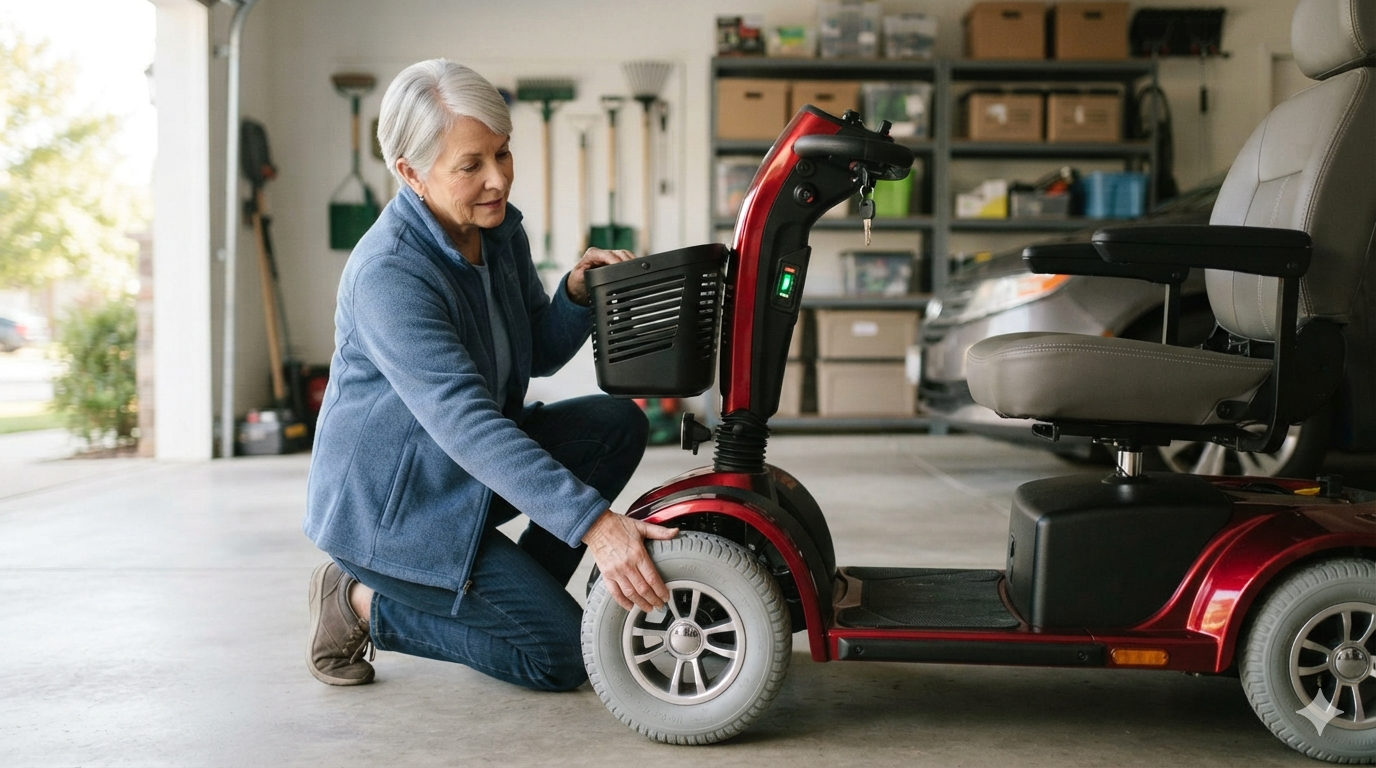
The most common mistake buyers make is treating the demo as the moment they will “see how it feels” and then decide. That is backwards. A trial should answer a specific question you have already defined, not create a decision under pressure. Before the scooter arrives, write down one clear objective. It might be: “Can this scooter turn in my hallway?” or “Can I lift the heaviest piece into my car boot?” or “Can I complete my usual trip to the shops on a single charge?”. A narrow, practical question gives you something concrete to observe, and it gives you a reason to say, “I am still gathering information” when the salesperson asks what you think.
This rule also helps you separate the product demonstration from the clinical fit decision. A salesperson can show you how the controls work, but they cannot judge whether the scooter is clinically suitable for your body, your condition, or your daily needs. That is a question for an occupational therapist (OT) or relevant healthcare professional. Industry guidance recommends that consumers be encouraged to seek appropriate tuition or training from an independent healthcare professional, and for clinically scripted mobility aids, the demonstration should happen in conjunction with the prescribing professional. Your trial is about gathering evidence, not making a medical decision on the spot.
Deeper dive: For the full list of documents and written terms to request before you compare scooters, see: What to ask for in writing before buying a mobility scooter (quote, warranty, returns, servicing).
Rule Two: Timebox the Appointment (and Bring a Witness)
A timebox is a simple boundary: you decide in advance how long the demonstration will last, and you communicate it clearly. For a home demonstration, a 45- to 60-minute window is usually enough to test the scooter on the routes that matter. The British Healthcare Trades Association’s code of practice requires members to conclude a home assessment or sale within three hours and to comply immediately with any request to leave. You do not need to wait for a code to protect you. You can set the timebox yourself.
What to say when you book:
“I would like to book a demonstration for 45 minutes. I have a support person joining me, and we will be testing the scooter on specific routes. We will not be making a purchase decision on the day.”
This script does three things. It sets the time, it signals that you will not be alone, and it removes the expectation of a same-day sale. A legitimate dealer will welcome this. A dealer who resists it is telling you something useful about how they intend to operate. Objecting to a relative, friend, or carer being present is a major red flag, and a reputable dealer should actively encourage a second pair of eyes and ears, especially if you have poor eyesight or find paperwork difficult. Your support person is not there to be rude. They are there to take notes, ask the questions you might forget, and act as a witness to any promises made.
Deeper dive: If the demonstration is happening in your home and you need scripts to end the appointment if it becomes uncomfortable, see the companion guide on home-visit mobility scooter sales (link to be added when published).
Rule Three: Test the Things That Cannot Be Tested in a Showroom
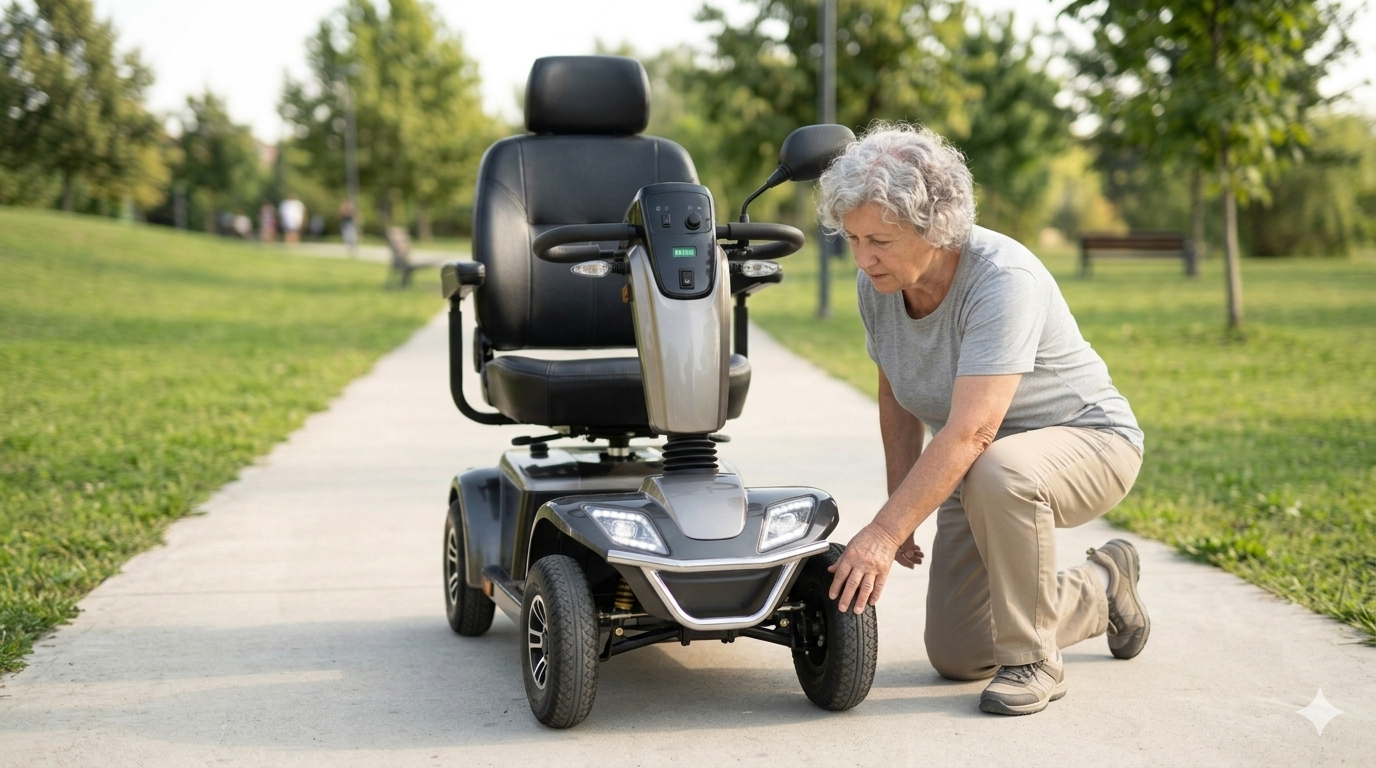
A showroom spin tells you almost nothing about how a scooter will perform in your life. The trial is your chance to test the things that actually matter—the thresholds, the doorways, the car boot, the footpath, the slope. Here is the checklist to work through, ideally with your support person taking notes.
Fit and comfort. Sit on the scooter before anything else. Is the seat comfortable? Can you easily reach the handlebars and controls? Do you feel secure, or stretched, cramped, or wobbly? Adjust the seat height and armrests if possible, and try the tiller adjustment. Try it for long enough to notice what happens after the first few minutes—people naturally sit differently when they are concentrating on a demonstration, and a little extra time often reveals pressure, awkward reach, or a control that initially seemed fine.
Maneuverability. Drive it through the tightest turn you actually need to make—your hallway, your kitchen, the aisle at your local supermarket. Reverse. Steer around corners. Test both slow and slightly faster speeds. A scooter that turns beautifully in an open showroom may be completely unsuited to a narrow hallway, and this is the moment to find out.
Surfaces and thresholds. If possible, test the scooter on the surfaces you will actually encounter: carpet, smooth floors, pavements, grass, gravel, and the threshold between your driveway and your footpath. A lightweight travel scooter might feel great on smooth floors but struggle on uneven ground. The kerbs between your driveway and the footpath are not a minor detail; they can determine whether the scooter is effectively a prisoner in your garage.
Controls and brakes. Try the forward and reverse switches, the horn, the lights, the speed dial, and the brakes. Do they feel intuitive and responsive? Make sure the scooter stops smoothly when you let go of the throttle, and if possible, test the brakes on a slight incline to ensure they hold without rolling. Listen for noise, too—a well-made scooter should operate quietly, and rattling or squeaking can be a sign of poor build quality.
Portability and transport. If you plan to take the scooter in a car, try folding it or removing the battery. Is it too heavy or bulky to lift? Does it fit in the boot? Some scooters come apart in smaller sections for transport; others are bulkier but sturdier. If a partner, family member, or carer will regularly handle the equipment, include them in this part of the trial—pushing, lifting, folding, and adjusting are real tasks, and a solution that works beautifully for one person but creates an unreasonable physical job for somebody else may not work well for the household.
Range and battery. Ask about the battery life and charging times, and think about whether the range is sufficient for your regular journeys. If your weekly shops are 8 km away and the scooter has a 15 km range, the battery may run flat before you get home. A trial is also a good opportunity to ask who will provide training, maintenance, and repairs after the sale.
Deeper dive: For a step-by-step framework that lets you put two quotes side by side with weighted scoring, see the companion guide on comparing quotes with a weighted decision matrix.
Rule Four: Decide What “Good Enough” Looks Like Before You Start
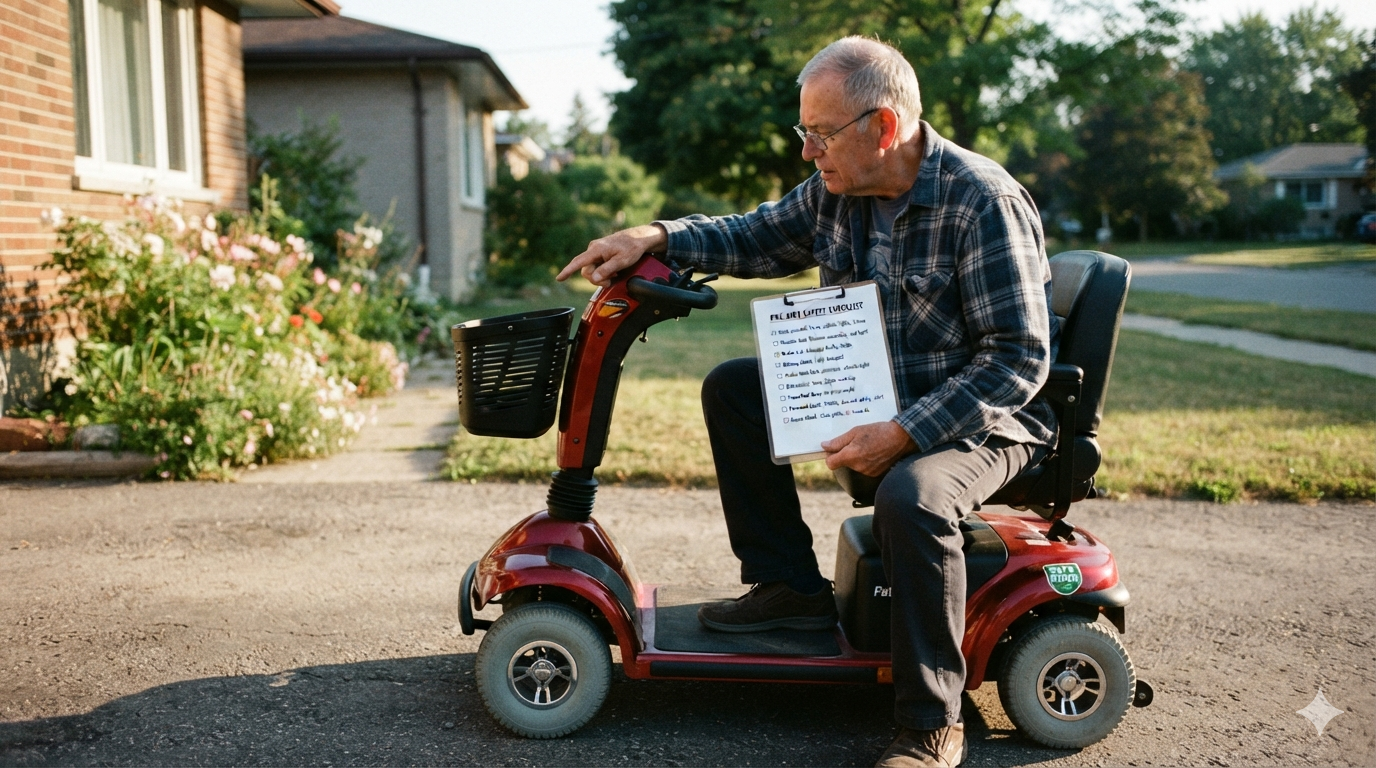
Pressure works best when you have no benchmark. If you do not know what a successful trial looks like, every scooter can be made to seem adequate. Before the demonstration, write down your decision criteria: the specific, observable things that would make you say yes, and the things that would make you say no.
Your criteria might include:
- “The scooter must turn in my hallway without me having to reverse more than once.”
- “I must be able to lift the heaviest piece into the car boot on my own.”
- “The ride on the footpath outside my house must feel stable, not jarring.”
- “The controls must be reachable without stretching, and the seat must be comfortable after 10 minutes.”
- “The dealer must provide a written quote, warranty terms, and return policy before I pay anything.”
When the demonstration is over, you do not need to give an answer on the spot. You need to review your notes against your criteria, in your own time, with your support person. The ACCC’s guidance on door-to-door sales is clear that you do not have to agree to anything on the spot, and if you feel pressured to sign something, you can tell the sales agent you want more time. For unsolicited sales—including demonstrations that you did not invite—there is a statutory cooling-off period of 10 business days, during which you can cancel the contract for any reason without penalty, and the seller cannot request or accept payment during that period. A legitimate dealer will tell you about this before you sign.
Deeper dive: For the full list of deposit and refund questions to ask before you pay anything, see the dedicated guide: Don't Buy on a Handshake: What to Ask for in Writing Before Buying a Mobility Scooter
What to Say When the Demo Is Over (and the Pressure Begins)
The moment the demonstration ends is the moment the sales conversation often begins. Your script for this moment should be short, warm, and final.
When you are asked for a decision:
“Thank you for the demonstration. I have the information I need for now. I will review my notes and the written quote, and I will contact you if I wish to proceed.”
When you are asked for a deposit:
“I am not prepared to pay a deposit until I have the full written quote, the warranty terms, the return policy, and the deposit-refund conditions. Please send those to me, and I will review them.”
When the salesperson offers to “hold” the price:
“I appreciate that. I am still in the research stage, and I will make my decision in my own time.”
These scripts work because they do not argue. They simply return the conversation to your process. The right dealer will respect that. The wrong one will reveal themselves—and you will have learned something valuable without spending a cent.
Deeper dive: For word-for-word scripts to handle every stage of the sales conversation, see: Mobility scooter salesperson scripts: what to say to slow things down and keep control.
The Bottom Line: A Trial Should Feel Like Research, Not a Sales Pitch
A no-pressure mobility scooter demo or trial is not about being difficult or suspicious. It is about giving yourself the time, the structure, and the evidence you need to make a decision you will not regret. Set the decision before the demo. Timebox the appointment. Bring a witness. Test the things that cannot be tested in a showroom. Decide what “good enough” looks like before you start. And when the demonstration is over, take your notes home and make the decision in your own time.
The right dealer will welcome this approach. They will encourage you to bring someone, they will give you the written terms, and they will not rush you. The wrong dealer will resist. Either way, your trial will tell you exactly what you need to know—not just about the scooter, but about the people selling it. And that is information worth having before you spend a single dollar.
Frequently Asked Questions
What is a no-pressure mobility scooter demo or trial?
It is a demonstration or trial where you set the rules, the timebox, and the decision criteria. The goal is to gather evidence about how the scooter performs in your real environment, not to make a purchase decision on the spot.
How long should a mobility scooter demonstration last?
A 45- to 60-minute window is usually enough for a home demonstration. The important thing is to set the timebox in advance and communicate it clearly. Industry codes of practice require home assessments to conclude within three hours and to comply immediately with any request to leave.
Should I bring someone to the demonstration?
Yes. A support person provides another set of ears, another pair of eyes for the paperwork, and a witness to any promises made. A reputable dealer should encourage this; objecting to a relative or carer being present is a major red flag.
What should I test during a mobility scooter trial?
Test fit and comfort, maneuverability in tight spaces, performance on the surfaces you will actually encounter, the controls and brakes, portability and transport, and battery range. The trial should answer specific questions about your home, your car, and your daily routes.
Do I have to buy on the day of the demonstration?
No. You do not have to agree to anything on the spot. For unsolicited sales, there is a statutory cooling-off period of 10 business days, during which you can cancel without penalty. A legitimate dealer will not pressure you to decide on the day.
What if I feel pressured during the demonstration?
You have the right to end the appointment. Say clearly: “I would like to end the demonstration now. Please pack up the equipment.” If the salesperson does not comply, ask them to leave. You do not need to justify your decision.
Stay mobile, stay confident!
Sign up for our monthly Mobility Scooter Newsletter to receive practical guides, expert advice, and inspiring stories that help you make the most of your scooter and download our free "Mobility Scooter Guide for Beginners."
Don't worry — your e-mail address is totally secure.
I promise to use it only to send you our newsletter, "Mobility Matters."
Recent Articles


-
Avoiding Mobility Scooter Sales Pressure Before You Buy
Nov 24, 26 08:55 AM
 Avoiding mobility scooter sales pressure begins with knowledge. This friendly hub walks you through every step—calmly and clearly.
-
How to Run a No-Pressure Mobility Scooter Demo or Trial
Nov 24, 26 08:48 AM
 No-pressure mobility scooter demo or trial: learn how to control the appointment, test the right things, and decide on your own terms.
-
Mobility Scooter Salesperson Scripts: Slow Down, Stay in Control
Nov 24, 26 07:30 AM
Mobility scooter salesperson scripts that actually work. Learn what to say when you feel rushed, pressured, or pushed toward the wrong model.
Ready to Feel More Confident on Your Mobility Scooter?

My Ebook, The Ultimate Guide to Mobility Scooters, walks you through choosing the right scooter, using it safely, and keeping it in top condition — all explained in clear, friendly language.
Give yourself (or someone you love) the gift of independence.




