- Home
- Mobility Scooter Types
- Small Home Storage Friendly Scooters
- Folded Dimensions vs “Parked Footprint”
Folded Dimensions vs “Parked Footprint”: A Measurement-First Method for Choosing a Mobility Scooter
Picture this. You have spent hours comparing scooters online. You have found one with folded dimensions that look perfect on the spec sheet—compact, tidy, promising. It arrives. You fold it. And then you discover that the folded package is 5 cm too tall for the cupboard shelf, and the “parked” scooter, when assembled and ready to use, takes up almost the entire width of your hallway. The numbers were not wrong. They were just the wrong numbers, measured the wrong way, for the wrong question.
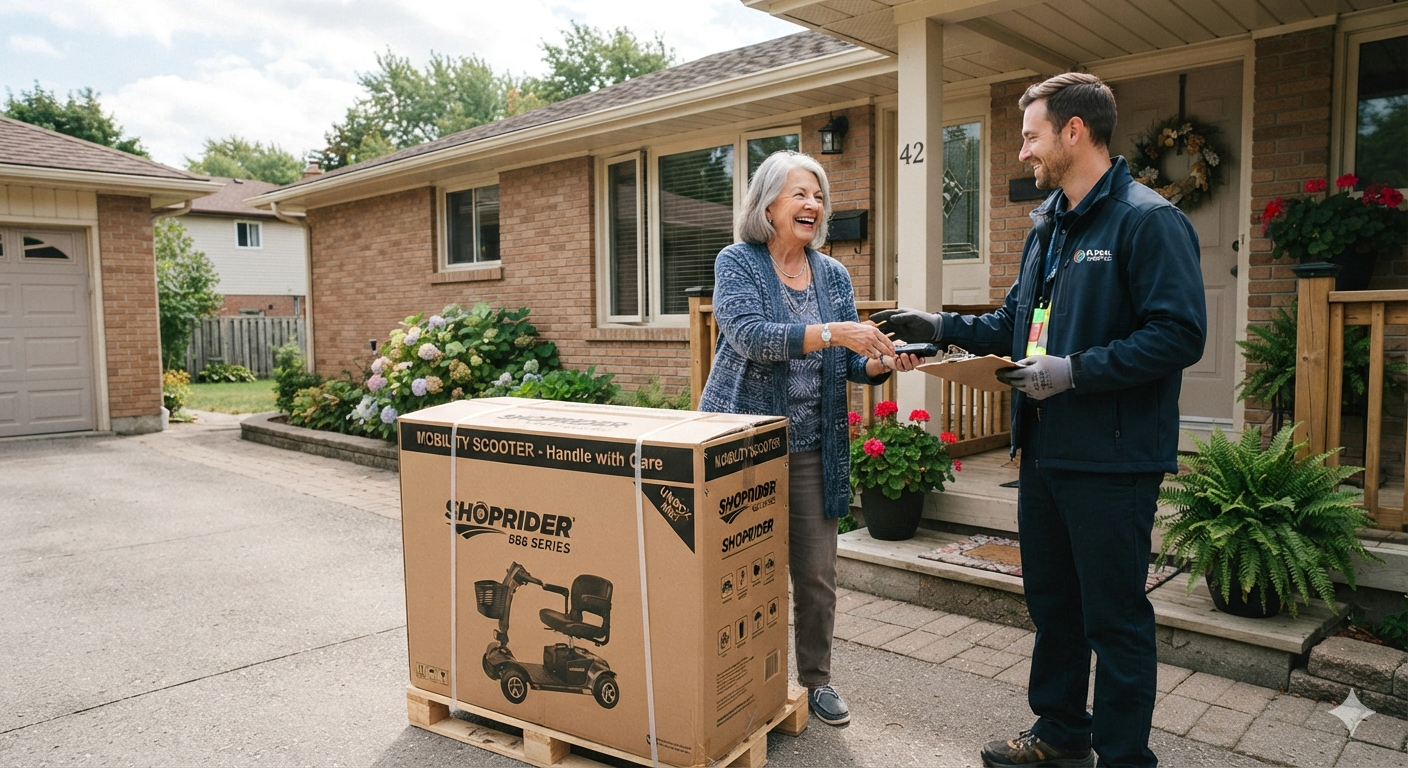
This is the quiet trap at the heart of scooter buying: folded dimensions vs “parked footprint” are two different measurements that answer two different questions. Folded dimensions tell you whether the scooter will store in your space. The parked footprint tells you whether the scooter will live in your space—day after day, between journeys, when it is assembled and waiting.
If you only check one, you are gambling with your money and your patience. This guide walks you through both, gently and practically, so you can make a decision that fits your home and your life.
Let’s take the guesswork out of it.
The Two Numbers, Clearly Defined (And Why Both Matter)
Before we measure anything, let’s name the players. This is the part where the fog starts to lift.
Folded dimensions are the measurements of the scooter when it is collapsed for storage. For a folding scooter, this is the single folded package: length, width, and height. For a dismantling scooter, you will be looking at the dimensions of the largest individual piece rather than a single folded unit. These numbers tell you whether the scooter will fit into a cupboard, a closet, a car boot, or a corner of a spare room. They are the storage numbers.
Parked footprint is the floor space the scooter occupies when it is assembled and ready to use. This includes the length from the front wheel to the rear wheel, the width at the widest point (often the tiller or the rear wheels), and the clearance needed to walk around it or open a door beside it. It is the “living” number—the one that decides whether your hallway becomes a slalom course or stays pleasantly passable.
Here is the key insight that most buying guides miss: a scooter can have excellent folded dimensions and a terrible parked footprint, or vice versa. A folding model might collapse into a neat suitcase-sized package but, when assembled, stretch 120 cm from front to back and block your entire hallway. A dismantling scooter might break into five pieces that tuck into a cupboard beautifully, but the assembled base could be 110 cm long and still dominate your living room between trips.
You need both numbers to make a confident choice .
Why the Spec Sheet Alone Will Let You Down
Product pages are not lying to you. They are just giving you the numbers that make the scooter look good, without the context that makes them useful. A typical folding scooter might list folded dimensions of 760 × 565 × 275 mm . That sounds wonderfully compact. But what the spec sheet does not tell you is that the folded package weighs 19 kg without batteries, and that you will need to lift it over a door threshold and into a cupboard that may have a narrower opening than its interior suggests.
Similarly, a scooter’s overall length might be listed as 1229 mm . That is useful information. But it does not tell you that the turning circle at the end of your hallway is 150 cm wide, and that a scooter with a 1300 mm turning radius will require a three-point turn every time you come home . The spec sheet gives you raw materials. The measurement-first method gives you a decision.
This is why one practical guide advises measuring the whole route, not just one doorway: “Hall corners, threshold lips and a suitable charging space all affect daily use. Start with the smallest pinch point and work outward” . The spec sheet tells you the scooter’s numbers. Your tape measure tells you your home’s numbers. The fit lives where the two meet.
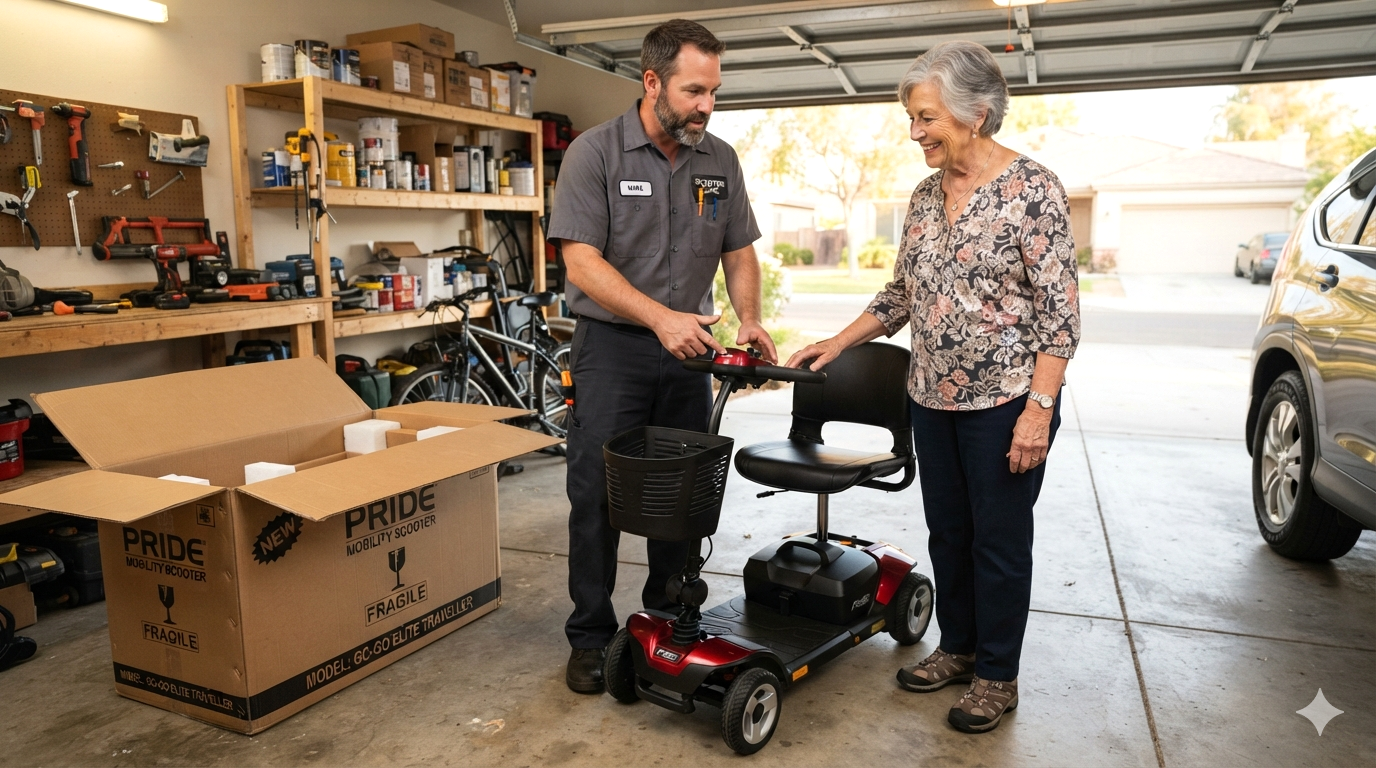
The Measurement-First Method, Step by Step
Here is the method, laid out like a friendly checklist. Grab a tape measure, a notebook, and ten minutes. You do not need to be technical. You just need to be honest.
Step one: Measure the storage spot’s usable space. Not the headline dimensions of the cupboard. The usable space. Measure the internal height, width, and depth. Then measure the door opening separately, because a cupboard with a wide interior and a narrow door is a trap. Leave at least 5 cm of clearance on each side for easy access. If the scooter’s folded dimensions are within a few centimetres of the cupboard’s internal dimensions, treat that as a warning sign, not a green light.
Step two: Measure the parked footprint’s natural home. Where will the scooter sit when it is assembled and charging? This might be the same as the storage spot, or it might be a corner of the hallway, a spot near the front door, or a dedicated charging area. Measure the floor space that spot offers. Then compare it to the scooter’s overall length and width. Can you walk past it? Can you open the door beside it? Can you reach the socket without climbing over it?
Step three: Measure the route between the two. This is the step most people skip. The scooter must travel from its parked spot to its storage spot, and back again. Measure the narrowest doorway on that route, the tightest corner, and any thresholds or lips. A scooter that fits both spots but cannot navigate the path between them is a scooter that will frustrate you daily .
Step four: Write down the heaviest piece. For a dismantling scooter, this is the weight of the single heaviest component you must lift. For a folding scooter, it is the weight of the folded package. Compare it to what you can safely lift on a bad day. If the folded package is 19 kg and your safe limit is 12 kg, the folded dimensions are irrelevant—you cannot use the storage spot. With these four sets of numbers, you can filter out unsuitable scooters before you read a single review.
And the next section shows you what those numbers look like in practice.
Real Numbers, Real Scooters: A Comparison
Let’s make this concrete. The table below shows how folded dimensions and parked footprint can tell different stories for different scooters.
|
Scooter |
Folded Dimensions |
Overall Length / Width |
Turning Radius |
Weight (No Battery) |
|
Pride GoGo Compact |
760 × 565 × 275 mm |
998 mm / 457 mm |
1380 mm |
19 kg |
|
Pride GoGo Carbon Ultra Lite |
Not listed |
1229 mm / 517 mm |
1300 mm |
13.7 kg |
|
Typical compact scooter |
Varies |
500–600 mm width |
Varies |
Varies |
Look at the GoGo Compact. Its folded dimensions are genuinely tidy—760 mm long, 565 mm wide, 275 mm deep . But its overall length when assembled is 998 mm, and its turning radius is 1380 mm . That turning radius is important. If your hallway is 150 cm wide at the tightest turn, you have 12 cm of margin. That is workable, but tight. If your hallway is 140 cm, the GoGo Compact will need a K-turn. That is not a dealbreaker, but it is information you need before you buy.
The GoGo Carbon Ultra Lite tells a different story. It is lighter—13.7 kg without batteries—but longer, at 1229 mm, with a turning radius of 1300 mm . If your storage spot is deep enough for a longer scooter and your turning space is adequate, it might be the better choice. If your cupboard is shallow, it will not work, no matter how light it is.
This is the power of the measurement-first method. It turns a confusing comparison into a clear decision. And once you have your numbers, the final piece of the puzzle is knowing what to do when the fit is not perfect.
When the Numbers Don’t Fit: Honest Options
Sometimes the folded dimensions fit but the parked footprint does not. Sometimes the parked footprint is fine but the heaviest piece is too heavy. Sometimes the route between the two is the bottleneck. These are not failures. They are information.
Option one: adjust the storage plan. If the scooter fits the parked spot but not the cupboard, maybe the cupboard is not the right storage solution. A corner of a room, a dedicated charging area, or a covered outdoor store may work better. The scooter that stays assembled and ready to use is often easier to live with than one that must be folded and lifted every day.
Option two: choose a different mechanism. A dismantling scooter with a light heaviest piece may solve a lifting problem, even if its folded dimensions are less tidy. A folding scooter with a tight turning radius may solve a hallway problem, even if its parked footprint is longer than ideal. The right compromise depends on which number is the binding constraint in your home.
Option three: accept the trade-off. A larger, more comfortable scooter may simply not fit your storage space. A smaller, storage-friendly scooter may be less comfortable outdoors. Neither choice is wrong. The wrong choice is the one made without measuring.

Your Next Step
You now have a method that goes beyond the spec sheet. Measure the storage spot’s usable space, the parked footprint’s natural home, the route between them, and the heaviest piece. Compare those numbers to the scooter’s folded dimensions, overall length and width, turning radius, and weight. If the fit works, you have found a scooter that respects your home. If it does not, you have saved yourself from a daily frustration.
If the route itself is the tricky part, the guide to narrow hallways and tight turns shows how turning radius and length shape daily practicality. And if the storage spot is a cupboard or under-stairs space, the guide to closet and under-stairs storage walks you through the features that make tight spaces safe and workable.
You are closer to a scooter that actually fits than you think.

Frequently Asked Questions
What is the difference between folded dimensions and parked footprint?
Folded dimensions are the measurements of the scooter when collapsed for storage. Parked footprint is the floor space the assembled scooter occupies when ready to use. You need both numbers to choose a scooter that fits your home.
Why do I need to measure both?
Because a scooter can have compact folded dimensions but a large parked footprint, or vice versa. Checking only one can lead to a scooter that stores neatly but blocks your hallway, or one that fits your hallway but will not go in the cupboard.
How do I measure my storage spot correctly?
Measure the internal height, width, and depth, and measure the door opening separately. Leave at least 5 cm of clearance on each side. Compare both sets of numbers to the scooter’s folded dimensions.
How do I measure my parked footprint space?
Mark the scooter’s overall length and width on the floor with masking tape. Check that you can walk past, open doors, and reach the charging socket. Allow extra room if a carer needs to pass.
What turning radius do I need for my hallway?
There is no single number. Measure the clear width at your tightest turn. The space needed for a full U-turn is roughly double the turning radius. A K-turn can reduce that requirement, but you still need enough room to move safely.
What is the heaviest piece, and why does it matter?
For a dismantling scooter, it is the weight of the single heaviest component you must lift. For a folding scooter, it is the folded package weight. Compare it to what you can safely lift on a bad day, not your best day.
Can a scooter with a large parked footprint still be storage-friendly?
Yes, if it folds or dismantles into a compact package. But you must also have somewhere to park it when assembled. A scooter that lives in the hallway between trips needs a parked footprint that does not block your daily life.
What if the folded dimensions fit but the route is too narrow?
The scooter cannot reach its storage spot. Measure the narrowest doorway and tightest corner on the route. If the route fails, the storage spot is irrelevant. Consider a different storage location or a narrower scooter.
How much clearance should I allow around a parked scooter?
Aim for at least 50 mm on each side for walking past, and more if you need to turn, reverse, or pass a hinge . A close fit can scrape paint and make every journey tense.
What are common mistakes people make when measuring for a scooter?
Measuring the cupboard but not the door opening. Forgetting the parked footprint. Ignoring the route between storage and use. And underestimating the heaviest piece. Measure the whole picture, not just one number.
Stay mobile, stay confident!
Sign up for our monthly Mobility Scooter Newsletter to receive practical guides, expert advice, and inspiring stories that help you make the most of your scooter and download our free "Mobility Scooter Guide for Beginners."
Don't worry — your e-mail address is totally secure.
I promise to use it only to send you our newsletter, "Mobility Matters."
Recent Articles


-
Small Home Storage Friendly Scooters That Actually Fit Your Flat
Nov 10, 26 09:10 PM
 Small Home Storage Friendly Scooters start with your tape measure. Learn the route, not just the spot, before you spend a penny.
-
Folded Dimensions vs “Parked Footprint”: The Real Fit Test
Nov 10, 26 08:53 PM
 Folded dimensions vs “parked footprint” is the measurement method that prevents scooter regret. Learn both numbers before you buy
-
What “Heaviest Piece” Really Means for Disassembling Scooters
Nov 10, 26 10:41 AM
What “heaviest piece” really means: the single number that decides if you can store and handle a scooter daily. Learn the test.


Ready to Feel More Confident on Your Mobility Scooter?

My Ebook, The Ultimate Guide to Mobility Scooters, walks you through choosing the right scooter, using it safely, and keeping it in top condition — all explained in clear, friendly language.
Give yourself (or someone you love) the gift of independence.




