- Home
- Mobility Scooter Types
- Small Home Storage Friendly Scooters
- What “Heaviest Piece” Really Means
What “Heaviest Piece” Really Means: Choosing a Disassembling Scooter When Storage Space Is Tight and Lifting Is Limited
Picture this. You have done the measuring. The cupboard is tight but workable. The folded dimensions fit. You have even checked the route through the hallway. And then you read the spec sheet one more time and see a number that stops you cold: total weight, 48 kg. Your heart sinks.
There is no way you can lift that!
You close the browser tab, defeated—and you never discover that the scooter’s heaviest single piece is actually just 13 kg. The purchase that could have changed your daily life slips away because of a number that was never the right number to begin with.

This is why understanding what “heaviest piece” really means is one of the most empowering pieces of knowledge in the entire scooter-buying journey. It is the difference between a scooter you can live with and one you dread. It is the difference between independence and dependence on a carer. And it is the number that Page 1 product pages bury beneath glossy photos and vague promises.
Let’s bring it into the light, gently and practically, so you can make a decision that respects your strength, your space, and your dignity.
The Number That Actually Matters (And the One That Doesn’t)
When you look at a disassembling scooter, you will see two weights that matter: the total weight and the heaviest piece. Most buyers focus on the first. They should focus on the second.
Total weight is the weight of the entire scooter, assembled. It tells you how much the scooter weighs as a complete object. It is useful for understanding shipping, or for knowing whether a vehicle lift might be needed. But for daily storage in a small home, total weight is a distraction. You are not lifting the whole scooter. You are lifting it in pieces.
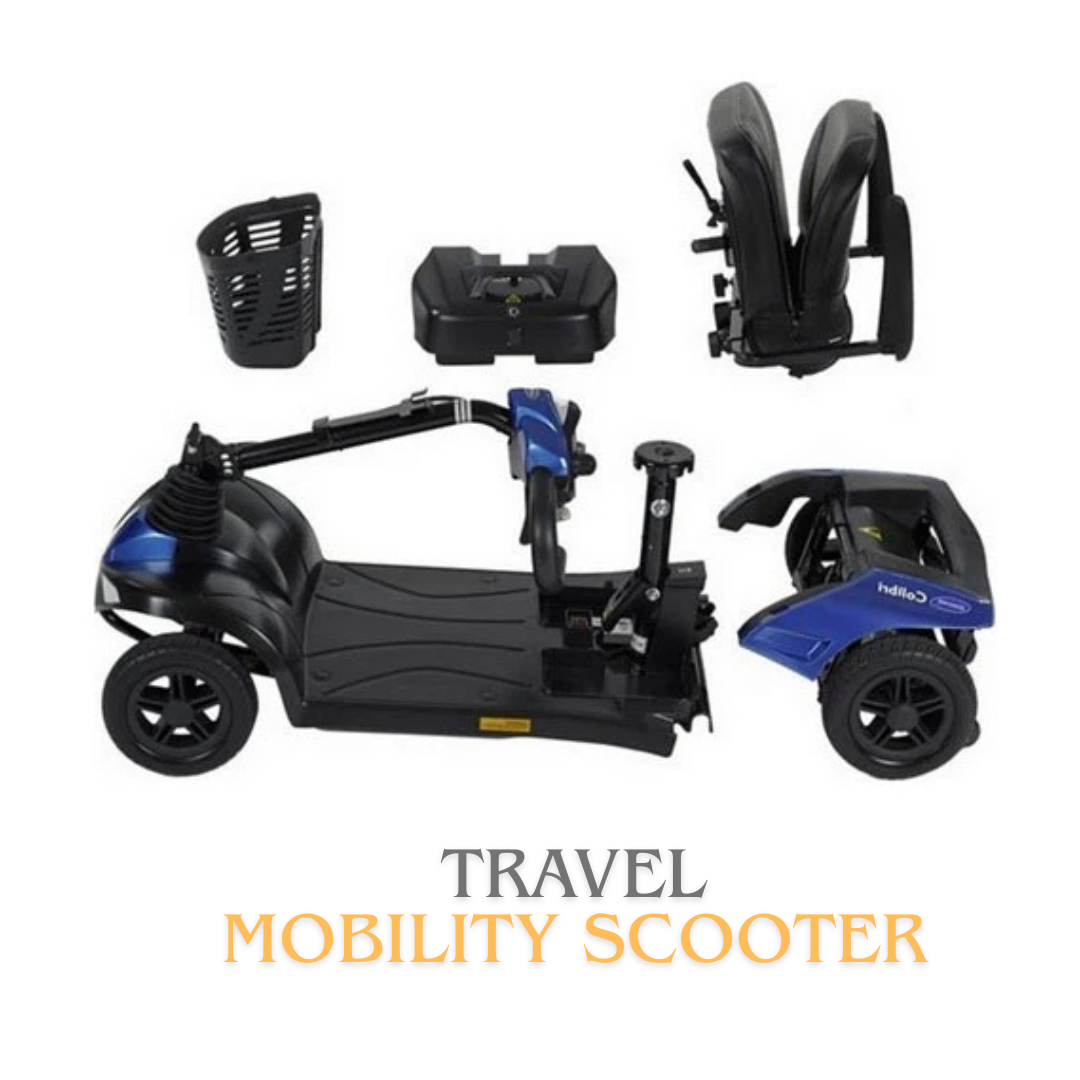
Heaviest piece is the weight of the single heaviest component you must lift when the scooter is dismantled. This is the real limit on who can store and handle the scooter independently. It is the number that decides whether you can carry the scooter to the cupboard, lift it onto a shelf, or load it into a car without help. And here is the liberating truth: a scooter with a total weight of 46 kg might have a heaviest piece of just 13 kg . That changes everything.
The scooter brands that understand this make it a headline feature. The Aspire Ultralight Compact disassembles into five pieces with a heaviest component of only 10.2 kg . The Apex Alumalite boasts a heaviest piece of 11.2 kg despite a total weight of 28.8 kg . The Aspire Midi Pull Apart splits into five pieces with a heaviest piece of 13.7 kg . These are not marketing tricks. They are the numbers that make independent living possible.
And once you know to look for them, the entire shopping experience changes.
Why the Heaviest Piece Is the True Test of Independence
Here is the emotional truth that spec sheets rarely capture: the heaviest piece is not just a weight. It is a measure of who can do this alone.
If you are the person who will be storing the scooter every day—lifting it into a cupboard, carrying it through to the hallway, loading it into the car—then the heaviest piece must be within your safe lifting ability. Not your best-day ability. Not your “I’ll manage” ability. Your bad-day ability. The day your back is stiff, your hands are cold, and you are tired. That is the day the number matters.
If a carer or family member will handle the scooter, then the heaviest piece must be within their safe lifting ability. Buying for your own strength when your partner does the lifting is a recipe for frustration and resentment. One mobility guide puts it with refreshing honesty: “Be honest about the worst day, not the best one. If it is always your partner, buy for their strength” .
And if no one in the household can safely lift the heaviest piece, that is not a failure. It is information. It tells you that a dismantling scooter may not be the right solution for your home, and that a different approach—an outdoor store, a ground-floor spot, a scooter that stays assembled—might serve you better.
Knowing the number early saves you from discovering it late.
How Heavy Is Too Heavy? A Practical Lifting Guide
You do not need a medical degree to assess lifting ability. You need honesty and a simple framework. Here is a practical guide that mobility retailers use, adapted for real life :
Up to 13 kg: Most people who can lift at all can manage this. It is roughly the weight of a full suitcase or a large bag of shopping. For many dismantling scooters, the heaviest piece falls in this range.
13–18 kg: Fine for many people, but try it first. Lift something of equivalent weight—a full box, a heavy bag—and see how it feels. Remember that lifting a scooter piece is often harder than lifting a box, because you are reaching forward, over a lip, sometimes with your back bent.
18–25 kg: Realistically, this is a two-person lift, or a one-person lift for someone who is fit and confident. If you are buying for yourself and this is your range, consider whether you will always have help available.
Over 25 kg: Consider a hoist or a different solution. Lifting this weight repeatedly, especially with a bent back or in a tight space, is a genuine injury risk.
These are guides, not rules. Your own strength, flexibility, and confidence matter more than any table. But the framework gives you a starting point—and a language to use when you are comparing scooters. The question is not “how heavy is the scooter?”
It is “how heavy is the heaviest piece, and can I lift it safely, on a bad day, without help?"
The Storage Connection: Why the Heaviest Piece Shapes Your Cupboard Plan
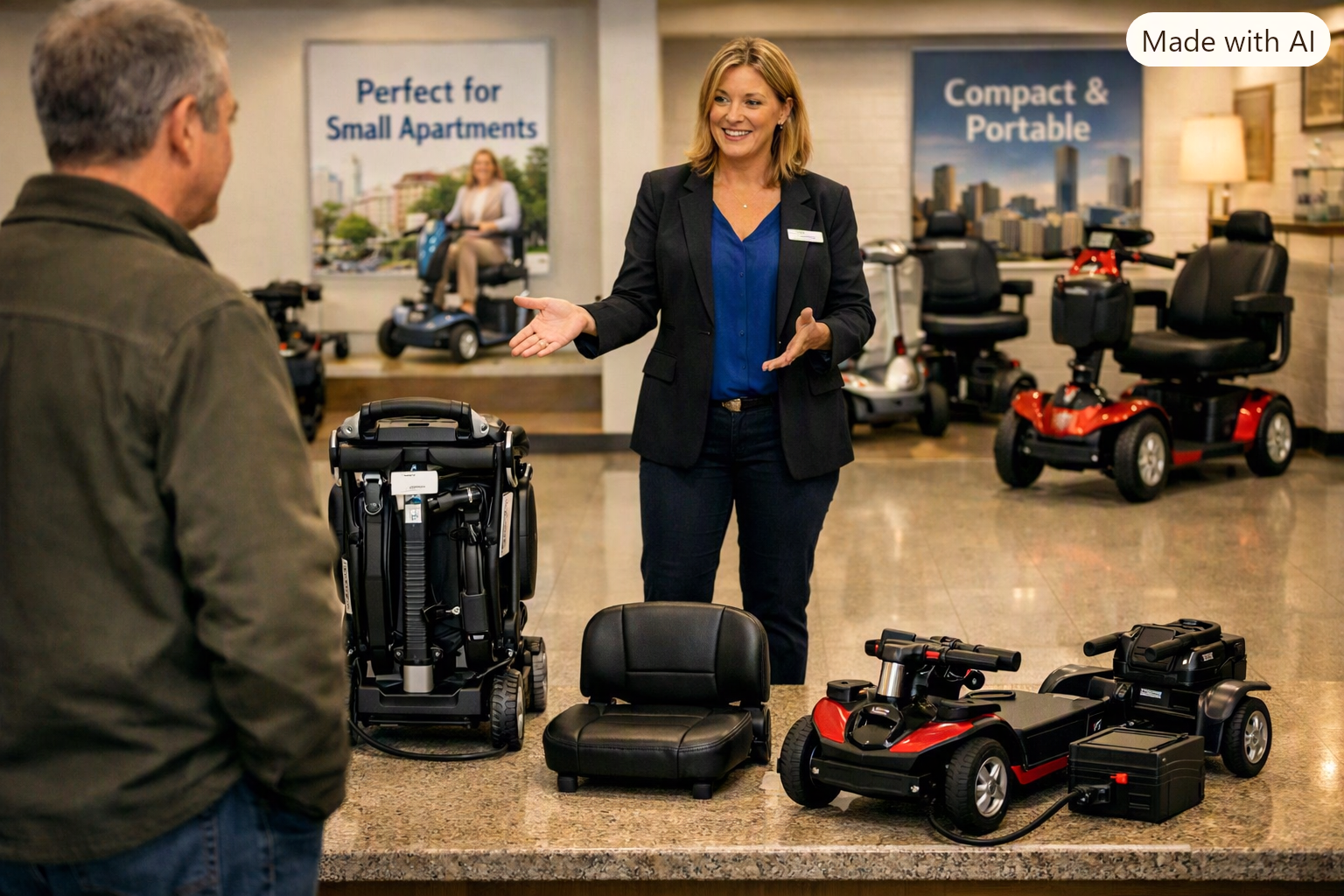
The heaviest piece does not just affect lifting. It shapes the entire storage plan. A cupboard that works for a 10 kg piece may be entirely wrong for an 18 kg piece, because the weight changes how you move, how often you move it, and whether you dread the task.
If the heaviest piece is light—say, 10–13 kg—you can carry it in one hand, navigate a narrow hallway, and lift it onto a shelf or into a cupboard with relative ease. The storage spot can be tighter, because you are not wrestling with a heavy object. You can take the scooter apart and store the pieces in different places: the seat on a shelf, the battery indoors, the frame in the cupboard.
If the heaviest piece is heavier—18 kg or more—the storage plan must be more forgiving. You need a clear path, a flat floor, and a storage spot that does not require lifting the piece above waist height. You may need to store the scooter closer to where you use it, or accept that the cupboard is not the right home. The weight dictates the geography.
This is why the storage guides that tell you to “measure your cupboard” are only half right. You must also measure your lifting ability. The cupboard’s dimensions tell you whether the scooter fits. The heaviest piece tells you whether you can get it there.
When the Heaviest Piece Is Still Too Heavy: Honest Alternatives
Sometimes the numbers do not work. The lightest dismantling scooter on your shortlist still has a heaviest piece of 18 kg, and your safe lifting limit is 12 kg.
What then?
Option one: a folding scooter that rolls. Some folding scooters are designed to be wheeled rather than carried, like a suitcase. You do not lift the full weight; you tilt and roll. This can work in a home with smooth floors and a clear route, though it requires a different kind of handling.
Option two: a different storage location. If you cannot lift the scooter into a cupboard, maybe the cupboard is not the answer. A ground-level spot—a corner of a room, a dedicated space near the door—may work better, even if it is less tidy. A scooter that stays assembled and is driven in and out is easier than one that must be lifted.
Option three: a hoist or a helper. If the scooter genuinely suits your needs but the heaviest piece is beyond your limit, a carer or family member may be able to help. Alternatively, a portable hoist can lift the scooter into a car boot or onto a storage platform. This adds cost and complexity, but it preserves independence.
Option four: accept the compromise. A larger, more comfortable scooter that stays outdoors or in a secure store may serve you better than a smaller, lighter scooter that fights you every day. As one guide notes, people often buy portability they use twice a year and live with a smaller, harsher scooter for the other 363 days .
The heaviest piece is a tool for making an honest decision, not a test you must pass.
Your Next Step
You now know what the spec sheet was hiding. The heaviest piece is the number that decides whether a scooter is a daily joy or a daily struggle. It is the weight of the single component you must lift—not the total weight of the scooter—and it is the true measure of independence in a small home with limited lifting.
Before you buy, find the heaviest-piece specification. Write it down. Compare it to your safe lifting ability on a bad day. If it fits, you have found a scooter that respects your strength. If it does not, you have found valuable information that will lead you to a better solution. Either way, you are making a decision from knowledge, not from hope.
If you are still working out how the heaviest piece fits into the wider storage picture, the guide to closet and under-stairs storage shows how to match scooter features to tight spaces safely. And if the hallway itself is the bottleneck, narrow hallways and tight turns walks you through the route-first measurement that prevents daily frustration.
You are closer to a scooter you can actually handle than you think.

Frequently Asked Questions
What does “heaviest piece” mean on a mobility scooter?
It is the weight of the single heaviest component you must lift when the scooter is disassembled. For a dismantling scooter, it is usually the rear frame or base section. It matters more than total weight because it is the real limit on who can store and handle the scooter independently.
Why is the heaviest piece more important than total weight?
Because you do not lift the whole scooter when it is in pieces. A scooter with a total weight of 46 kg might have a heaviest piece of just 13 kg, making it far easier to manage than its total weight suggests . The heaviest piece is the number that decides whether you can do it alone.
How do I find the heaviest piece for a specific scooter?
Check the product specification sheet or the user manual. Reputable retailers list it alongside total weight and dimensions. If it is not listed, ask the retailer directly before buying—it is too important to guess.
What is a safe lifting weight for most people?
Up to 13 kg is manageable for most people who can lift at all. 13–18 kg is fine for many but should be tested first. 18–25 kg realistically requires two people or one fit person. Over 25 kg should involve a hoist or a different solution .
Can I use a dismantling scooter if I cannot lift 15 kg?
Possibly, if the heaviest piece is under 13 kg. Many compact dismantling scooters have a heaviest piece in the 10–13 kg range. Compare the spec to your safe limit, and try lifting something of equivalent weight before you buy.
What if my carer does the lifting?
Buy for your carer’s strength, not yours. The heaviest piece must be within their safe lifting ability on a bad day, not just their best day. A scooter that is manageable for them is a scooter that will actually get used.
Does a lighter heaviest piece mean a less stable scooter?
Not necessarily. Many lightweight dismantling scooters are designed for stability and comfort, with larger seats and better suspension than ultra-compact folding models . The trade-off is usually assembly time, not stability.
Can I store a dismantling scooter if I cannot lift the pieces onto shelves?
Yes, if you store the pieces at floor level or on low surfaces. The heaviest piece does not need to be lifted high—it needs to be moved from the scooter’s location to the storage spot. A flat, clear route matters as much as the weight itself.
What are common mistakes people make with the heaviest piece?
Buying based on total weight. Assuming they can lift more than they safely can. Forgetting that lifting a scooter piece is harder than lifting a box because of the reach and posture involved. And not testing the weight before committing.
Is a folding scooter ever better than a dismantling scooter if lifting is limited?
A folding scooter that can be rolled rather than carried may work, but most folding scooters require lifting the full folded weight, often 20–30 kg . For limited lifting, a dismantling scooter with a light heaviest piece is usually the safer choice.
Stay mobile, stay confident!
Sign up for our monthly Mobility Scooter Newsletter to receive practical guides, expert advice, and inspiring stories that help you make the most of your scooter and download our free "Mobility Scooter Guide for Beginners."
Don't worry — your e-mail address is totally secure.
I promise to use it only to send you our newsletter, "Mobility Matters."
Recent Articles


-
Small Home Storage Friendly Scooters That Actually Fit Your Flat
Nov 10, 26 10:48 AM
 Small Home Storage Friendly Scooters start with your tape measure. Learn the route, not just the spot, before you spend a penny.
-
What “Heaviest Piece” Really Means for Disassembling Scooters
Nov 10, 26 10:41 AM
 What “heaviest piece” really means: the single number that decides if you can store and handle a scooter daily. Learn the test.
-
Narrow Hallways and Tight Turns: Will a Scooter Actually Fit?
Nov 10, 26 03:55 AM
 Narrow hallways and tight turns decide whether a scooter is a joy or a daily fight. Learn the geometry, the measurements, and the fix.


Ready to Feel More Confident on Your Mobility Scooter?

My Ebook, The Ultimate Guide to Mobility Scooters, walks you through choosing the right scooter, using it safely, and keeping it in top condition — all explained in clear, friendly language.
Give yourself (or someone you love) the gift of independence.




