- Home
- Mobility Scooter Travel and Transport
- Storage Planning for Small Spaces
- Mobility Scooter Storage When You Can't Lift
How Do I Store a Mobility Scooter in a Small Unit When I Can't Lift It (Layout and Equipment Options)?
Picture this. You love your mobility scooter. It gets you to the shops, to appointments, and to visit friends. But every time you come home, a familiar dread creeps in. You have to park it. And parking it means lifting, shifting, or wrestling it into a spot that was never designed for a scooter. Your back aches. Your arms are tired. And you are starting to wonder if the scooter is more trouble than it is worth. It is not. The problem is not you—it is your storage setup.
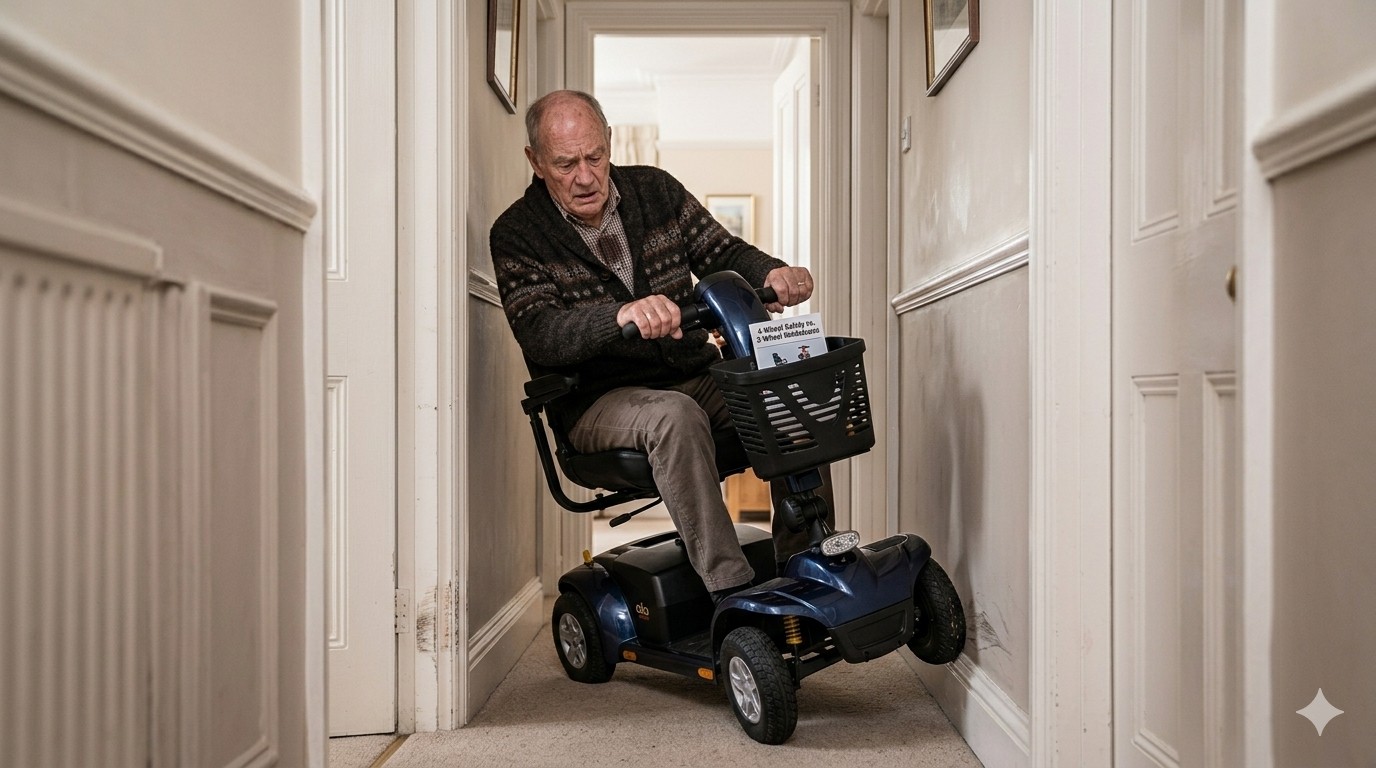
Learning how do I store a mobility scooter in a small unit when I can't lift it is not about finding a bigger home or a stronger back. It is about finding the right equipment and layout that lets you move the scooter without lifting it at all.
This guide will walk you through every option—ramps, hoists, turntables, wall-mounted racks, and clever layout strategies—using metric measurements and honest practical advice. By the end, you will have a storage system that protects your body and preserves your independence.
Let's start by rethinking what "storage" actually means.
Rethinking Storage: You Don't Have to Lift
The single most important mindset shift is this: storage does not require lifting. If you can roll, slide, or glide your scooter into place, you have solved the problem. The goal is to eliminate the moment where the scooter leaves the ground.
This means thinking about your storage spot differently. Instead of asking "Can I lift the scooter into that corner?", ask "Can I roll the scooter into that corner?" or "Can I slide the scooter along the floor into that space?" The answer is almost always yes—if you have the right tools and a layout that supports them.
There is also an emotional dimension here. When you cannot lift your scooter, it is easy to feel like a burden or a problem. You are neither. You are a person who needs a storage system that respects your body.
That system exists, and it is more affordable and accessible than you might think. Let's look at the equipment that makes it possible.
Equipment Option 1: Ramps—Roll, Don't Lift
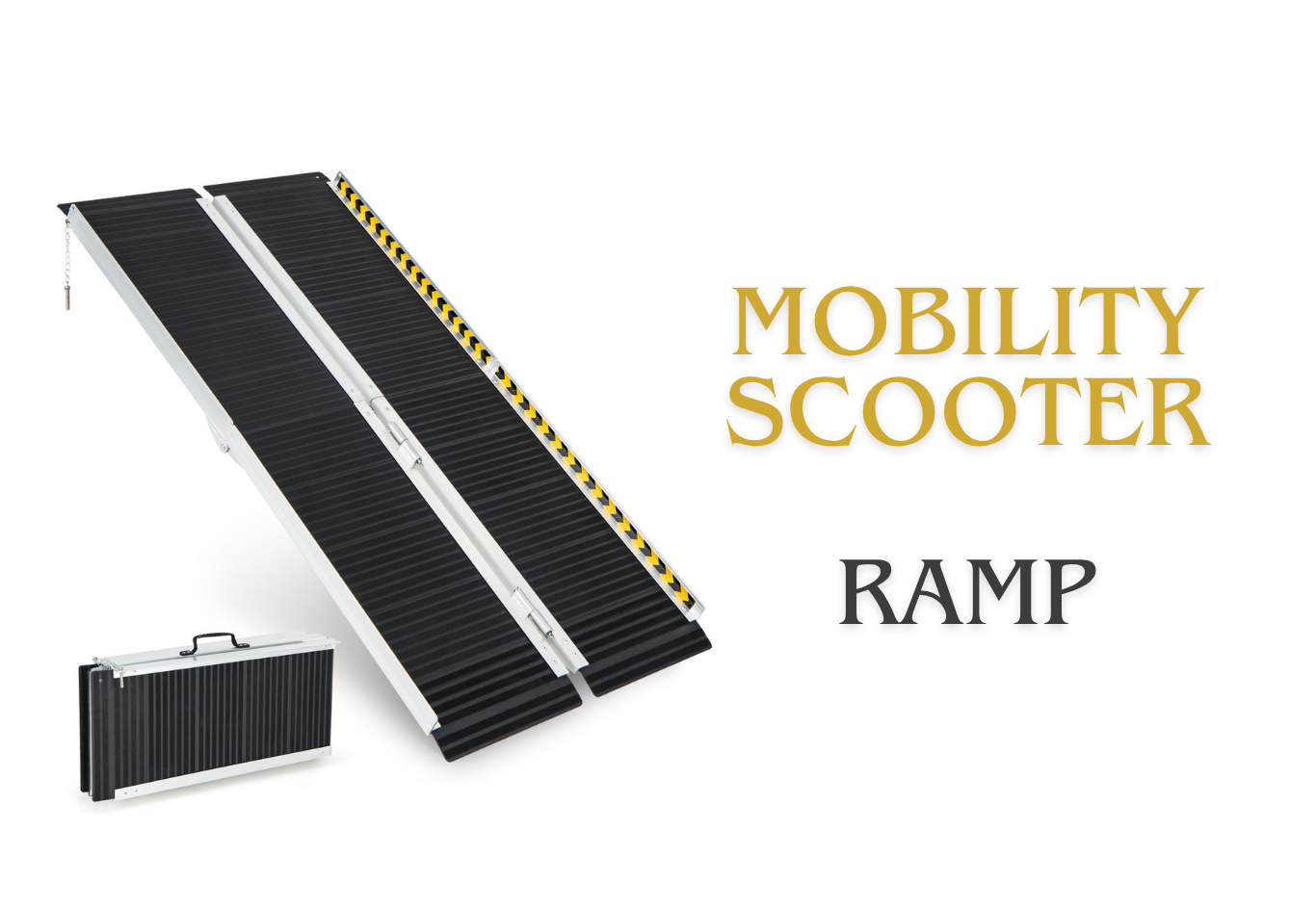
If your storage spot is at a different level—a garage with a step, a balcony with a threshold, or a car boot—a ramp is your best friend. A lightweight aluminium ramp allows you to roll the scooter up or down without any lifting at all.
What to Look For
Portable folding ramps are widely available and designed for exactly this purpose. A typical two-section folding ramp can be folded in half and carried like a suitcase when not in use. , for example, is described as an "ultra lightweight ramp" that "takes away the need to lift or dismantle heavy wheelchairs or scooters". It folds to half its length and has a slip-resistant surface, with standard lengths between 1680mm and 2135mm.
For a threshold or a small step, a shorter threshold ramp may be sufficient. These are often foldable and can be stored against a wall or behind a door when not in use.
How to Use a Ramp for Storage
The principle is simple. Position the ramp between the ground and your storage spot. Roll the scooter up the ramp and into position. Remove the ramp and store it nearby—perhaps hanging on a hook or leaning against a wall. When you need the scooter again, reposition the ramp and roll it back down.
For someone with limited strength, a ramp eliminates the most physically demanding part of storage. You are not lifting; you are guiding. The scooter does the work.
Now that we have covered ramps, let's look at what to do when the storage spot itself is above floor level—or when you need to move the scooter into a vehicle.
Equipment Option 2: Hoists and Lifts—Powered Assistance
If rolling is not possible—for example, if you need to lift the scooter into a car boot or onto a raised platform—a hoist or lift can do the heavy work for you.
Vehicle Hoists
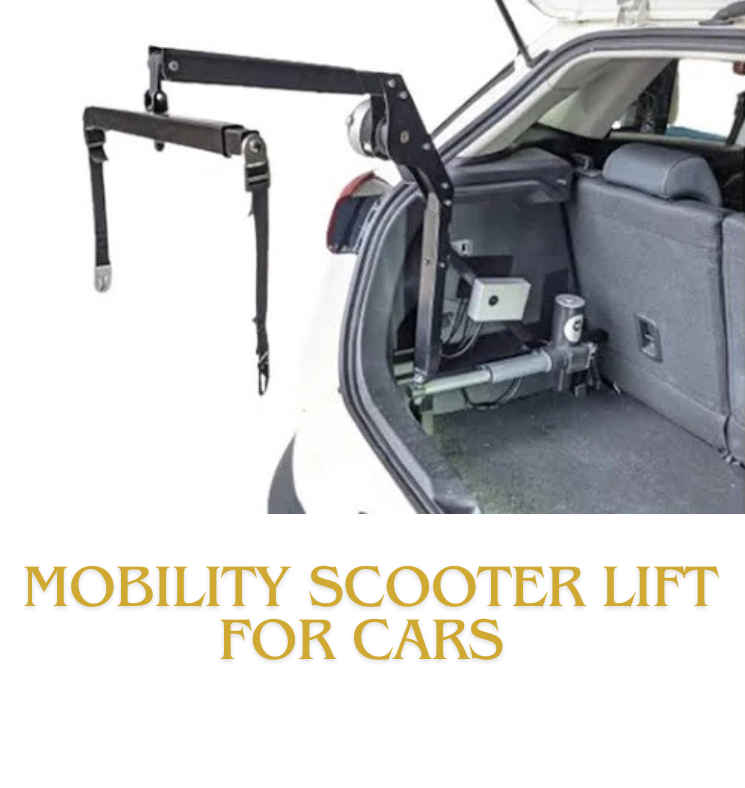
For car transport, a compact vehicle hoist can lift a scooter into the boot without any manual effort. The Mobility Innovations Smart Lifter LM, for example, is designed for smaller mobility scooters weighing up to 175lbs (approximately 79kg). It features a "unique folding arm" that allows it to be stowed in small vehicles including hatchbacks. It has motors for both up/down motion and in/out motion, "relieving you from all the effort of loading".
The FADIEL SG50 Wheelchair Hoist, available in Australia, can lift mini scooters up to 50kg and can be laid in the boot to minimise space when not in use.
Home Hoists and Lifts
For home storage, a wall-mounted lift system can raise a folding scooter off the floor and store it vertically against a wall. These systems are designed for compact storage areas and can maximise unused wall space.
A ceiling-mounted hoist is another option for very tight spaces, allowing you to store the scooter overhead and lower it when needed.
The Trade-Offs
Hoists and lifts are more expensive than ramps, and they require installation. But for someone who genuinely cannot lift—or who has a carer who cannot lift—they are transformative. They turn an impossible task into a button press. If budget allows, this is the most empowering option available.
Now let's look at a simple, low-cost tool that can solve the turning problem in tight spaces.
Equipment Option 3: Turntables—Spin in Place
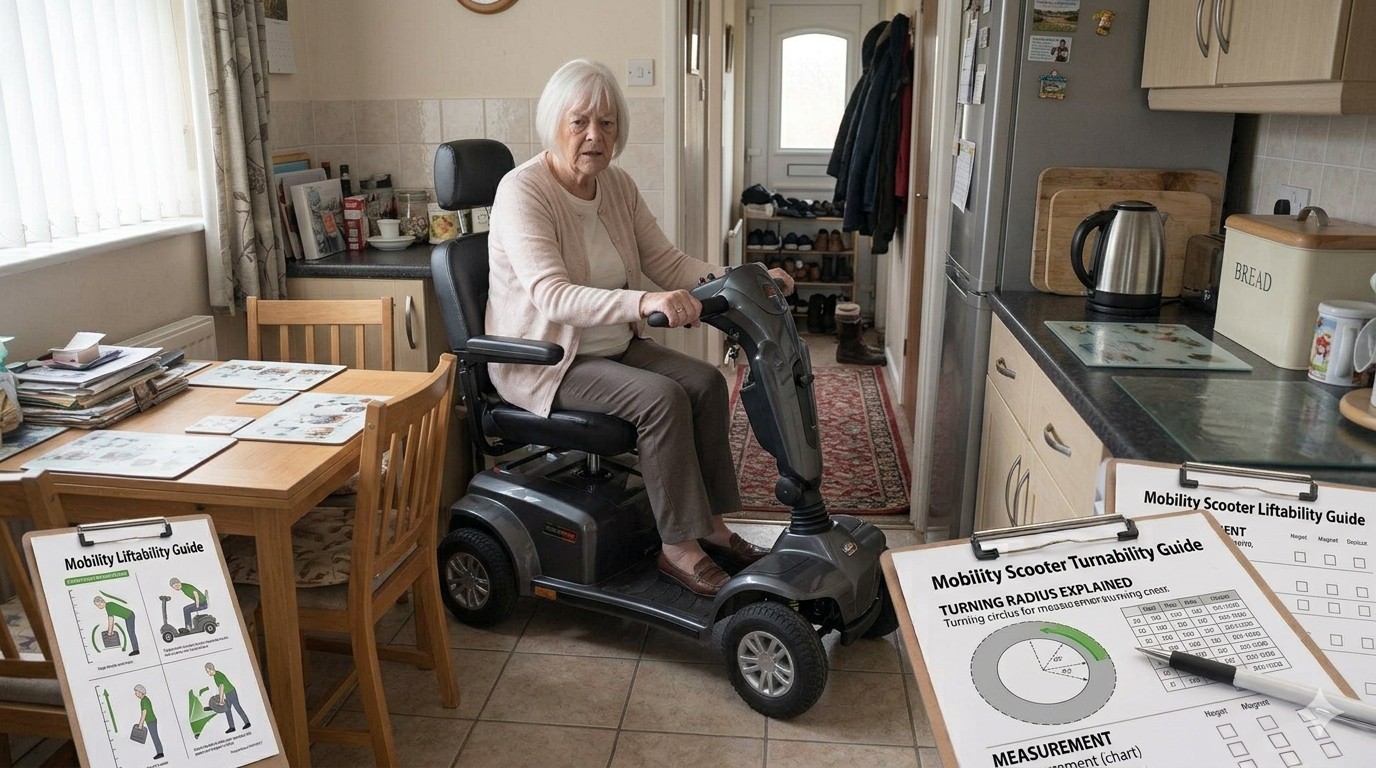
One of the most overlooked challenges in small-space storage is turning. Even if you can roll the scooter into a corner, getting it out again may require turning it around—and in a narrow hallway or a tight corner, that can be impossible.
A drive-on platform for scooters solves this problem.
If you need to spin your entire electric scooter around in a tight space (like a shed, hallway, or patio), a heavy-duty mechanical platform is the best tool.
How to Use a Turntable for Scooter Storage
Place the platform on the floor in your storage spot. Roll the front wheel of the scooter onto the turntable. Then, simply rotate the scooter in place. You can turn it to face the direction you need without any lifting or reversing. This is particularly useful if your storage spot is a dead-end corner or a narrow alcove.
These patform turntables are expensive though, and may require installation. They are an excellent first purchase for anyone struggling with turning space.
Next, let's look at how to use your walls—not your floor—to store your scooter.
Equipment Option 4: Wall-Mounted Racks and Hooks—Use Vertical Space
When floor space is scarce, look up. Wall-mounted racks and heavy-duty hooks can hold a folded scooter vertically, freeing up valuable floor area.
What to Look For
A simple, heavy-duty hook designed for bikes can often work for a folding scooter, as long as it is rated for the weight. More specialised wall-mounted racks are available, including systems designed specifically for folding scooters. These racks hold the scooter upright against the wall, taking up no more floor space than a coat rack.
What to Consider
You need a wall that can bear the weight of the scooter—typically 15kg to 25kg for a folding model. You also need to be able to lift the scooter onto the hook, which may not be possible if lifting is your primary limitation. In that case, a wall-mounted lift system is a better option: it raises the scooter for you, then holds it in place.
If you can manage a partial lift—or if you have a carer who can help with the initial placement—a simple wall hook is a cost-effective and space-saving solution.
Now that we have covered the equipment, let's look at how to design a layout that minimises effort.
Layout Strategies: Design for No-Lift Living
Equipment is only half the solution. The other half is layout. A well-designed layout means you never have to lift, twist, or strain—even if you have the equipment to do so.
Strategy 1: Store at Floor Level, Roll Into Place
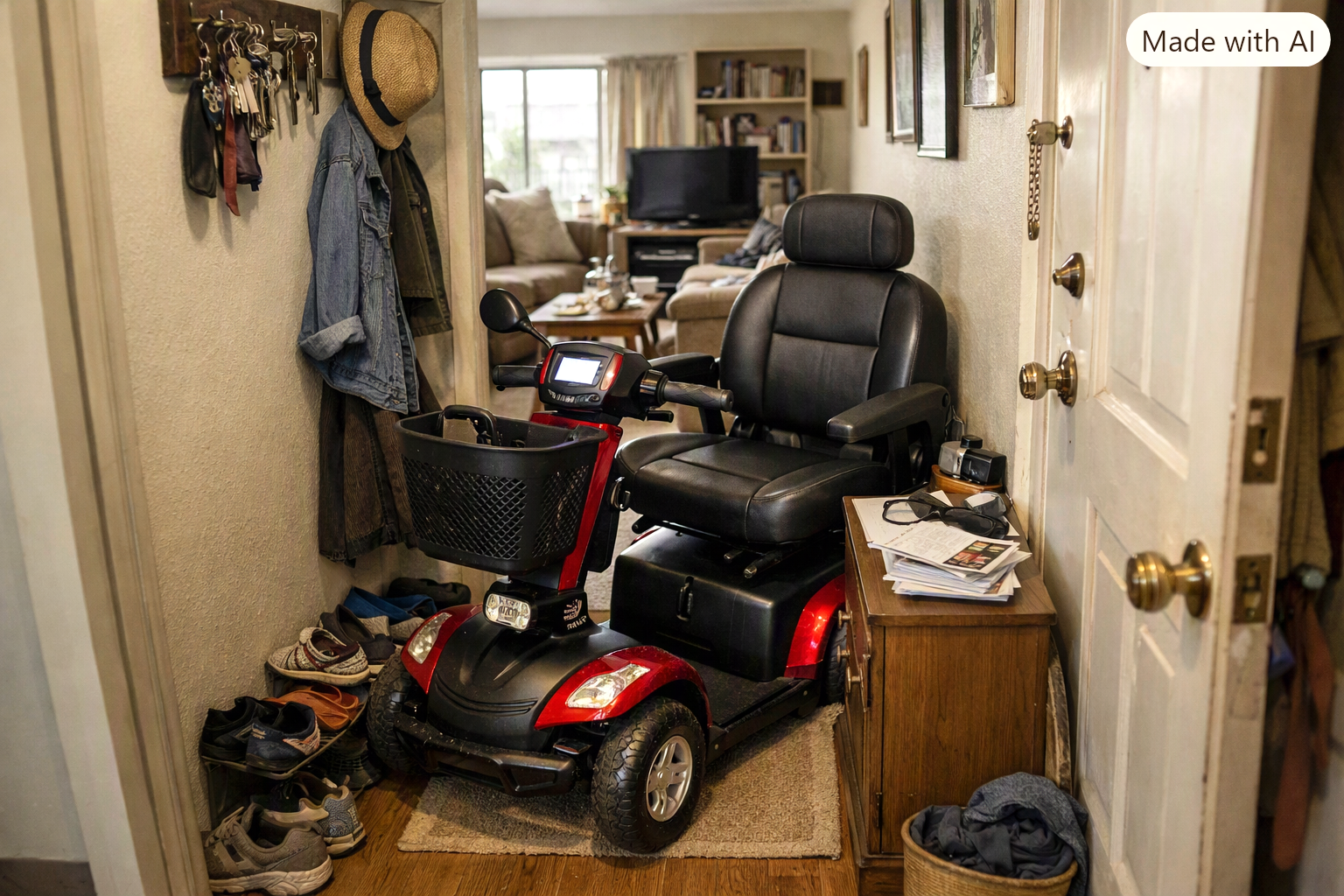
The simplest layout is one where the scooter lives on the floor and never leaves it. Choose a storage spot that is directly accessible from your entry route. Roll the scooter in, roll it out. No lifting, no ramps, no hoists. This works best with a folding scooter that can be stored upright or a compact model that fits in a corner.
Strategy 2: Create a Dedicated "Parking Bay"
If you have a hallway alcove, a laundry nook, or an entryway corner, consider making it a dedicated scooter parking bay. Mark the spot with a rubber parking mat or a wall bumper to protect your walls and make the routine consistent. A parking mat also prevents the scooter from sliding and makes it easier to position.
Strategy 3: Use a Storage Caddy with Wheels
For very tight spaces, a storage caddy with omnidirectional wheels can allow you to "glide the scooter into tight spots with one hand". These caddies reduce friction and make even a heavy scooter easy to move. If your scooter is too heavy to roll directly, a caddy can be a game-changer.
Strategy 4: Position Near the Door, Not in a Corner
The easiest storage spot is the one closest to where you enter and exit. If you can store the scooter near the front door—without blocking egress—you minimise the distance you need to move it. This is especially important if you have limited energy. A folding scooter stored upright beside the door, secured with a lock, can be retrieved and returned with almost no effort.
Now that you have the equipment and layout strategies, let's look at the scooters themselves that make no-lift storage easier.
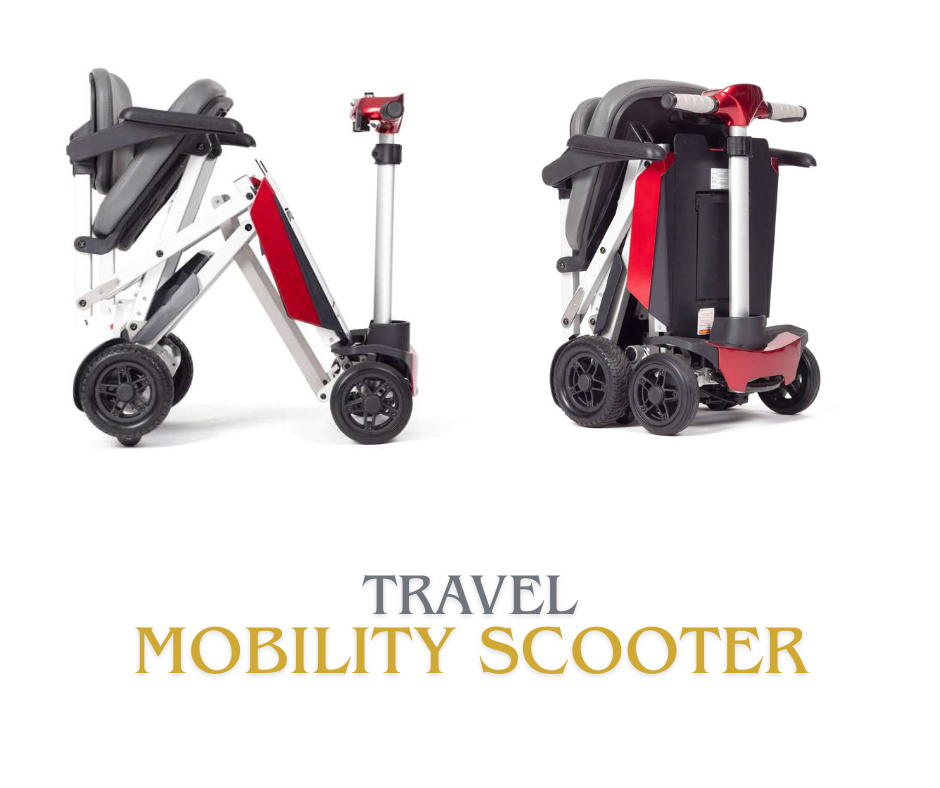
Choosing a Scooter That Supports No-Lift Storage
If you are still choosing a scooter, or if you are replacing one, there are features that make no-lift storage dramatically easier.
Lightweight construction. A scooter that weighs under 20kg is manageable for many people, even with limited strength. Some modern folding models weigh as little as 17kg without the battery, which makes a "dramatic difference when lifting".
Removable battery. A removable battery reduces the weight you need to move. The Invacare Colibri, for example, has a "LiteLock system" that enables "quick, tool-free disassembly into manageable parts". Removing the battery first can make the remaining scooter significantly lighter.
One-piece folding design. A scooter that folds as one unit is often easier to manage than one that breaks into multiple pieces. As one guide notes, "a compact, one-piece folding design often feels more stable to lift than multiple dismantled sections".
Towable or dragable design. Some scooters, like the T580 carbon fibre model, can be "dragged like a suitcase" when folded, making them "ideal for users who can't lift heavier scooters". If you can drag rather than lift, you have more options.
Frequently Asked Questions
How do I store a mobility scooter if I can't lift it at all?
Use a ramp to roll it into place, a turntable to turn it, or a hoist to lift it mechanically. If none of those are possible, choose a storage spot that requires no lifting—at floor level, directly accessible from your entry route.
What equipment helps with storing a mobility scooter without lifting?
Ramps, vehicle hoists, wall-mounted lift systems, turntables, and storage caddies with wheels. Each addresses a different challenge: ramps for level changes, hoists for vehicle loading, turntables for turning, and caddies for moving heavy scooters.
Can I store a mobility scooter on a wall without lifting it?
Yes, if you use a wall-mounted lift system that raises the scooter for you. A simple wall hook requires an initial lift, which may not be possible. A powered lift eliminates the lifting entirely.
What is the best scooter for someone who can't lift?
A lightweight folding scooter under 20kg, preferably with a removable battery and a one-piece folding design. Some models can be dragged like a suitcase, which requires no lifting at all.
How much does a mobility scooter hoist cost?
Vehicle hoists typically cost between $2,000 and $5,000, depending on capacity and installation requirements. Wall-mounted home lifts are generally less expensive but still represent a significant investment. Ramps and turntables are far cheaper alternatives.
Can I use a ramp to store a scooter in a small unit?
Yes. A portable folding ramp can bridge a threshold, a step, or a small level change. When not in use, it folds and can be stored against a wall or behind a door.
What if my storage spot is too small for a ramp?
If a ramp is not feasible, a turntable can help you rotate the scooter in place. If the spot is still too tight, consider a storage caddy with wheels or a wall-mounted lift that stores the scooter vertically.
How do I protect my walls when rolling a scooter into a tight spot?
Use a wall bumper, a rubber parking mat, or adhesive wall protectors. These absorb impact and prevent scuffs. A scooter with a tight turning circle also reduces the risk of wall contact.
You Can Store Your Scooter Without Lifting
Storing a mobility scooter when you cannot lift it is not a problem without a solution. It is a problem with many solutions—ramps, hoists, turntables, wall-mounted racks, and layouts designed around rolling rather than lifting. The right combination depends on your space, your budget, and your body. But the principle is always the same: you should never have to lift your scooter to store it.
You have already done the hardest part by thinking this through. If you are still planning your storage setup, our guide to storage planning for small spaces will help you map out the rest.
If measuring your space is your next step, our guide to how to measure your home for a mobility scooter walks you through every dimension that matters.
And if you are weighing up folding versus disassembly, our guide to the best storage plan for a folding scooter vs a disassembly scooter in a small apartment has you covered.
You have got this—and we are here to help every step of the way.
Stay mobile, stay confident!
Sign up for our monthly Mobility Scooter Newsletter to receive practical guides, expert advice, and inspiring stories that help you make the most of your scooter and download our free "Mobility Scooter Guide for Beginners."
Don't worry — your e-mail address is totally secure.
I promise to use it only to send you our newsletter, "Mobility Matters."
Recent Articles


-
Storage Planning for Small Spaces: Measure, Plan, Store Safely
Oct 14, 26 09:02 AM
 Storage planning for small spaces doesn't have to be stressful. Learn how to measure, charge, and safely store your mobility scooter at home.
 -
Mobility Scooter Security When Stored Near the Door at Home
Oct 14, 26 08:58 AM
 How can I secure a mobility scooter at home when indoor space forces "near-the-door" storage—a layered security guide for peace of mind.
 -
Car Boot & Home Storage for Mobility Scooters: Make It Work
Oct 14, 26 07:00 AM
How do I plan storage for a mobility scooter in a car boot and at home so it works day to day? Read this before you buy.

Ready to Feel More Confident on Your Mobility Scooter?

My Ebook, The Ultimate Guide to Mobility Scooters, walks you through choosing the right scooter, using it safely, and keeping it in top condition — all explained in clear, friendly language.
Give yourself (or someone you love) the gift of independence.




