- Home
- Mobility Scooter Types
- Electric Scooter
- Folding Disability Scooter
Folding Disability Scooters for Seniors and People with Disabilities
Are you exploring folding disability scooters?
Chances are you—or someone you love—are searching for a mobility solution that feels safe, practical, and empowering. Maybe you’re feeling a bit overwhelmed by all the choices, or worried about choosing the wrong model. That’s completely normal, and you’re not alone.
With the right guidance, this journey becomes much easier, and that’s exactly what this warm, friendly guide is here to offer as you take the next step.
Let’s walk through everything you need to know, one clear and reassuring section at a time.

What Are Folding Disability Scooters—and Why Do They Matter?
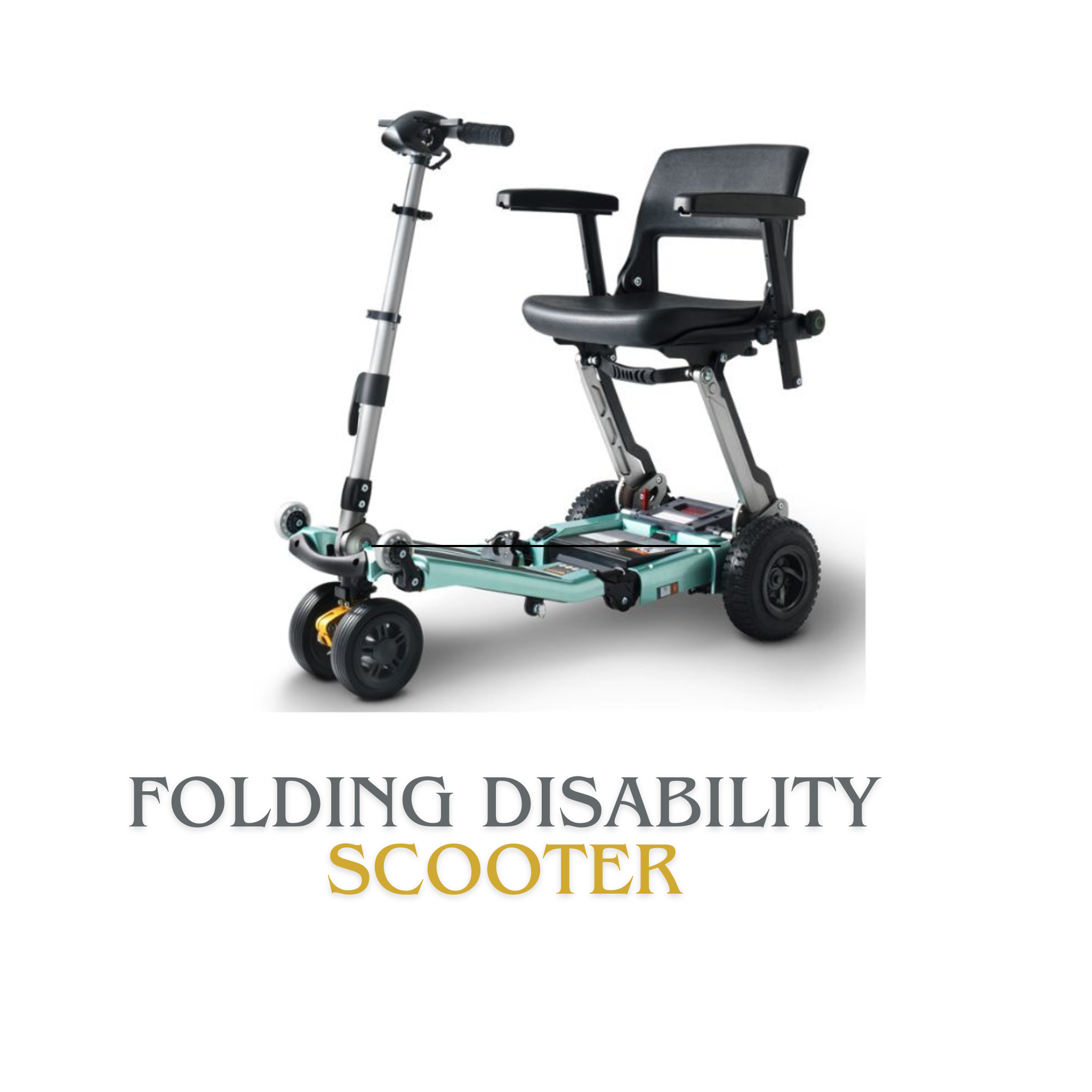
Folding disability scooters are compact mobility scooters designed to fold down for easy transport and storage. They’re built for people who want independence without the bulk of a traditional scooter.
Whether you’re navigating daily errands, traveling, or simply moving around your home or community, these scooters offer a blend of accessibility, portability, and confidence that many people find life‑changing.
They matter because they remove barriers—physical, emotional, and logistical—so you can stay active and connected. And as you’ll see, the benefits go even deeper as we explore what makes these scooters so special.
Why People Choose Folding Disability Scooters
Choosing a mobility device is deeply personal. It’s not just about wheels and batteries—it’s about dignity, freedom, and peace of mind. Here’s why disability folding scooters are becoming a trusted choice for many.
1. Independence You Can Feel
A folding scooter gives you the ability to move freely without relying on others. That sense of independence is priceless, and it’s often the first thing people mention after making the switch.
2. Portability That Fits Your Life
These scooters fold like a suitcase or collapse into compact sections. That means:
• Easy to lift into a car
• Simple to store in small homes
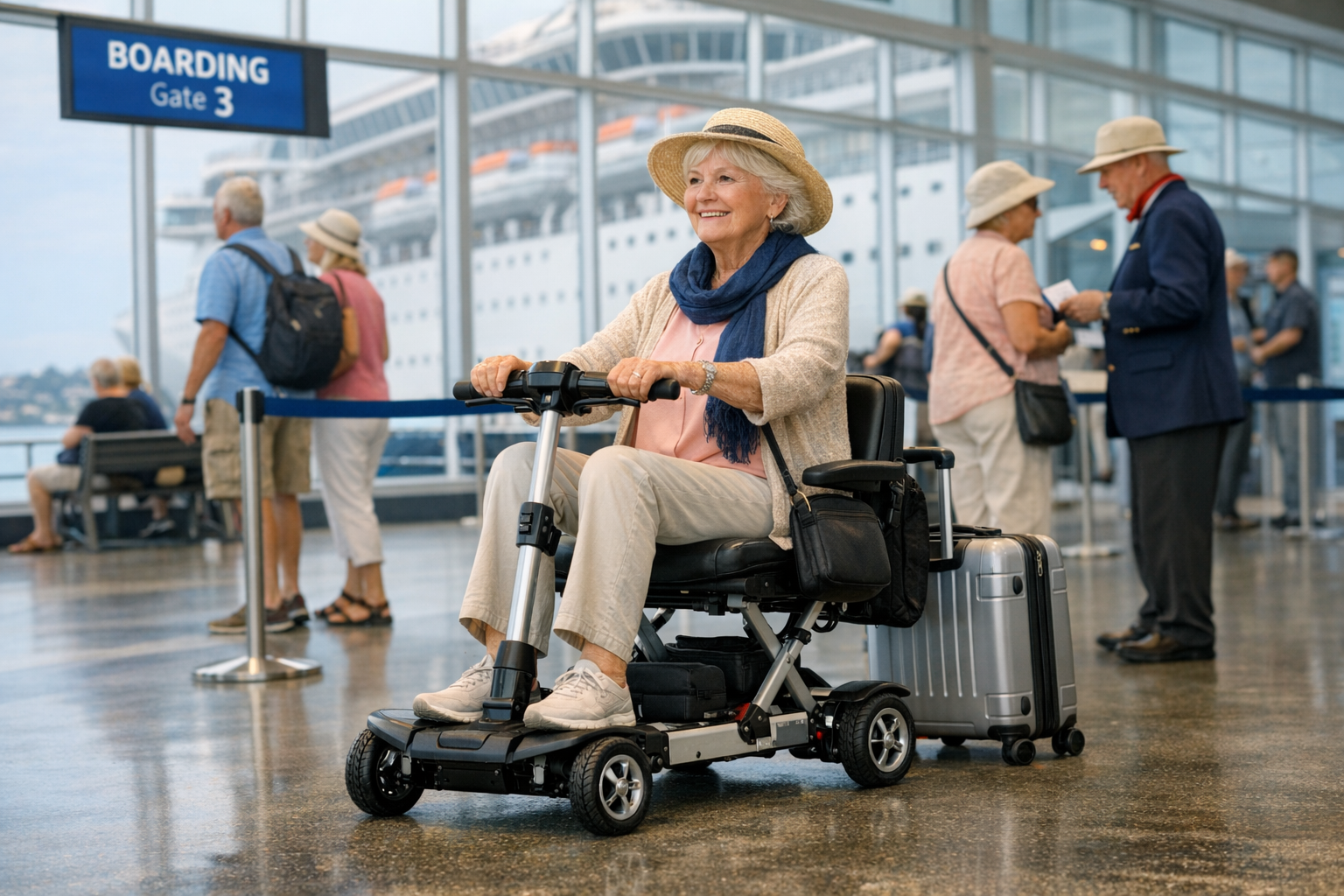
• Convenient for travel, including flights and cruises
If you’ve ever struggled with bulky equipment, this is a breath of fresh air.
3. Accessibility Without the Stress
Folding scooters are designed to reduce friction in your day. No complicated assembly. No heavy lifting. No awkward maneuvering. Just smooth, simple mobility that keeps you moving.
4. Confidence in Every Ride
Stability, comfort, and intuitive controls help you feel secure—whether you’re navigating a grocery aisle or rolling through a park.
5. Affordability Compared to Larger Scooters
Because they’re smaller and lighter, folding models often cost less than full‑size mobility scooters. That makes them a practical option for people balancing budget and functionality.
And as we continue, you’ll see how these benefits translate into real‑world scenarios that make everyday life easier.
How Folding Disability Scooters Work (Simple, Clear, No Jargon)
At their core, disability folding scooters are built to be:
• Lightweight
• Portable
• Easy to operate
• Comfortable for daily use
Here’s how they function in everyday terms:
Folding Mechanism
Most models fold in one of two ways:
• Manual fold: You release a latch and fold it like a stroller.
• Automatic fold: Press a button and the scooter folds itself.
Both options are designed to be quick and stress‑free.
Battery & Range
These scooters typically use lithium‑ion batteries, known for being lightweight and airline‑friendly. Expect ranges between 10–20 km depending on terrain and weight.
Controls
A simple tiller (handlebar) with:
• Forward/reverse levers
• Speed adjustment
• Battery indicator
If you can use a bicycle handle or a TV remote, you can operate a folding scooter.
Comfort Features
Even compact scooters offer:
• Padded seats
• Adjustable tillers
• Anti‑tip wheels
• Smooth acceleration
These features help you feel safe and supported, especially if you have balance or strength challenges.
Now that you know how they work, let’s explore how to choose the right one.
Buyer’s Guide: How to Choose the Best Folding Disability Scooter
Buying a mobility scooter can feel intimidating, but this guide breaks it down into simple, friendly steps.
1. Start With Your Lifestyle
Ask yourself:
• Do you travel often?
• Do you need something ultra‑light?
• Will you use it indoors, outdoors, or both?
Your daily routine is the best starting point.
2. Check the Weight Capacity
Most folding scooters support 100–130 kg. Choose a model with at least 10–15 kg of buffer for comfort and performance.
3. Consider the Total Weight of the Scooter
If you or a carer will lift it into a vehicle, look for models under 25 kg. Some go as low as 17 kg.
4. Look at the Folding Method
• Automatic fold: Best for people with limited strength or dexterity.
• Manual fold: Usually more affordable.
5. Battery Type and Airline Approval
If travel is part of your life, choose a scooter with an airline‑approved lithium battery.
6. Comfort and Stability
Look for:
• A stable wheelbase
• Anti‑tip wheels
• Adjustable tiller
• Comfortable seat height
Comfort equals confidence.
7. Warranty and After‑Sales Support
A good scooter is an investment. Choose brands with strong support, accessible parts, and clear warranties.
8. Budget and Affordability
Folding disability scooters range from budget‑friendly to premium. The goal is to find the sweet spot where affordability meets reliability.
As you keep reading, you’ll see how these factors play out in real‑life situations.
Safety Considerations You Should Know
Safety is a top priority, especially for seniors and people with disabilities. Here’s what to keep in mind:
1. Terrain Awareness
Folding scooters are best for:
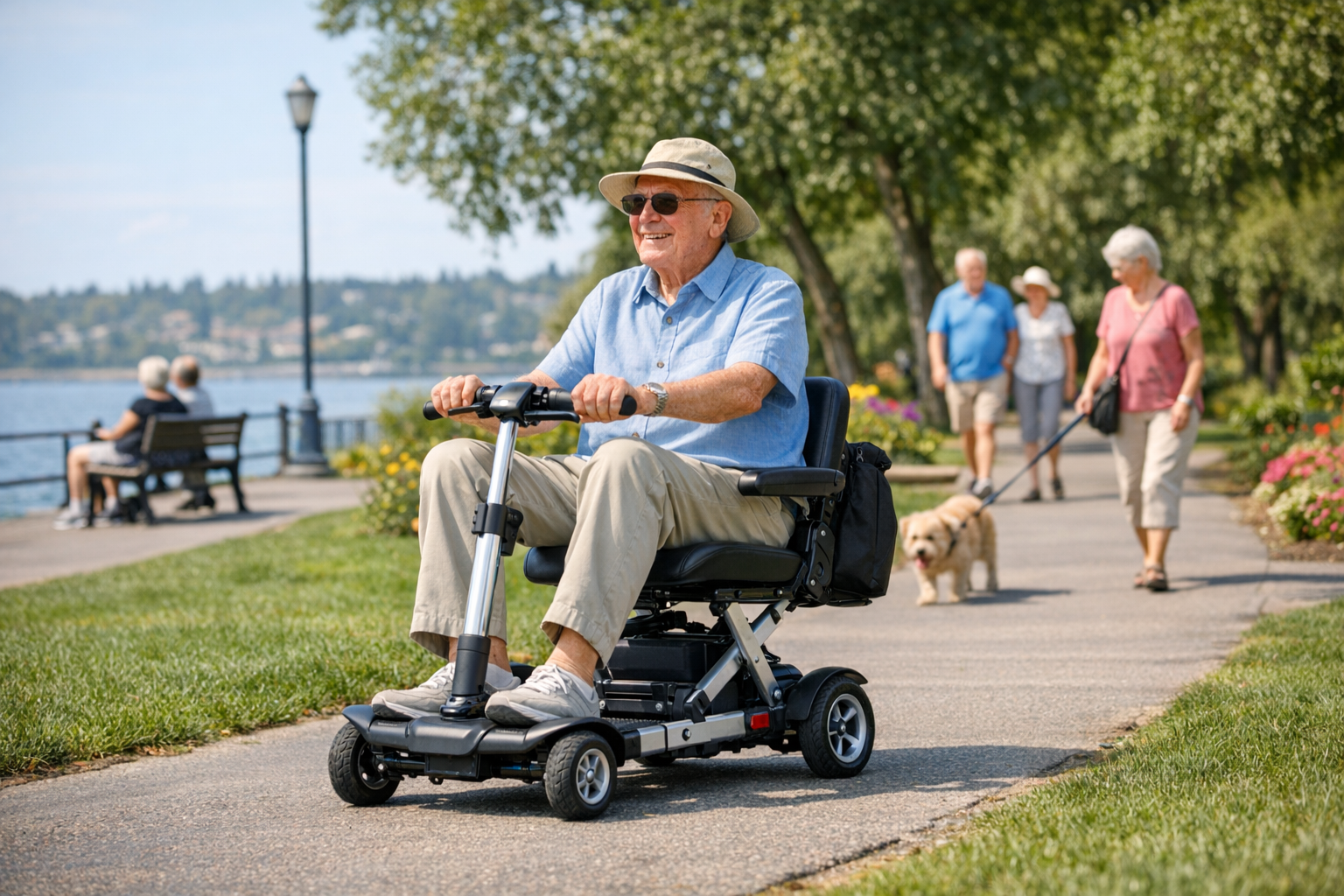
• Pavements
• Shopping centres
• Smooth outdoor paths
They’re not designed for rough terrain or steep hills.
2. Weight Distribution
Avoid leaning too far forward or carrying heavy bags on the tiller. This keeps the scooter stable.
3. Regular Maintenance
Simple checks go a long way:
• Tire pressure
• Battery charge
• Brake responsiveness
A quick weekly check keeps your scooter running smoothly.
4. Safe Speeds
Most folding scooters have modest top speeds (4–6 km/h), which is ideal for safety and control.
5. Visibility
Choose models with lights or add reflective stickers for evening use.
With these basics covered, let’s look at how folding scooters support real people in real situations.
Real‑World Scenarios: How Folding Scooters Change Lives
Scenario 1: The Travelling Senior
Maria, 72, loves visiting her grandchildren. Her folding scooter fits in the car boot and folds with a button. She no longer worries about long airport walks—and her confidence has soared.
Scenario 2: The Busy Carer
Daniel cares for his mother, who has arthritis. A lightweight folding scooter means he can lift it alone without strain. Their outings are now easier and more joyful.
Scenario 3: The Independent Professional
Liza, 45, uses a folding scooter to navigate her office building and commute. It folds under her desk and gives her the independence she needs to stay active at work.
These stories reflect what many people experience: a return to freedom, dignity, and connection.
Empowering Conclusion
Choosing a mobility device is more than a purchase—it’s a step toward independence, confidence, and peace of mind. Folding disability scooters offer a practical, accessible, and uplifting way to stay mobile without feeling limited by bulky equipment or complicated setups.
If you’re feeling uncertain, that’s okay. You’re taking the time to learn, explore, and make the best choice for yourself or someone you love. And that alone is a powerful act of care.
With the right scooter, everyday life becomes easier, safer, and more joyful. And you deserve nothing less.
Stay mobile, stay confident!
Sign up for our monthly Mobility Scooter Newsletter to receive practical guides, expert advice, and inspiring stories that help you make the most of your scooter and download our free "Mobility Scooter Guide for Beginners."
Don't worry — your e-mail address is totally secure.
I promise to use it only to send you our newsletter, "Mobility Matters."
Recent Articles


-
Portable vs Travel vs Folding Mobility Scooters Buyer's Guide
Sep 15, 26 11:01 AM
 Confused by "portable," "travel," and "folding" mobility scooter listings? This guide explains what Australian sellers actually mean, with real weight comparisons and a decision framework.
 -
Mobility Scooter Types Overview: No More Confusion
Sep 15, 26 10:54 AM
 Mobility scooter types explained in plain English. Includes Australian footpath rules, airline battery limits, and the one mistake most first-time buyers make.
 -
How to Choose a Mobility Scooter in Australia Guide (2026)
Sep 15, 26 07:29 AM
 Choosing a mobility scooter in Australia? This guide covers registration requirements by state, public transport dimensions, NDIS funding steps, and practical testing advice.


Ready to Feel More Confident on Your Mobility Scooter?

My Ebook, The Ultimate Guide to Mobility Scooters, walks you through choosing the right scooter, using it safely, and keeping it in top condition — all explained in clear, friendly language.
Give yourself (or someone you love) the gift of independence.

