- Home
- Services and Shopping
- Mobility Scooter Service Options
- Dealer Servicing vs Independent Repairers
Dealer Servicing vs Independent Repairers: What’s Safer for Warranty, Parts, and Turnaround Time
Picture this: You’re ready for a peaceful afternoon ride. The weather is perfect, the path looks inviting, and you’re already thinking about where you’ll stop for a treat.
You press the power button… and something feels wrong. Maybe it’s a strange noise, a flickering display, or a wobble that wasn’t there yesterday. Suddenly, you’re faced with a decision you didn’t expect: dealer servicing vs independent repairers — and which one is safer for your warranty, parts, and turnaround time.
It’s a moment that can feel overwhelming, especially when your scooter is your independence. But don’t worry — we’ll walk through this together.

This guide is your warm, friendly companion for understanding dealer servicing vs independent repairers, without the stress or confusion.
Think of it as a knowledgeable friend taking your hand, explaining the differences clearly, and helping you make a confident choice that protects your scooter — and your peace of mind.
And yes, by the end of this page, you’ll know exactly what to do next, so let’s keep going.
Why This Decision Matters
Choosing between dealer servicing and independent repairers isn’t just about price — it’s about safety, warranty protection, parts availability, and how quickly you can get back on the road.
Your scooter is your mobility, your independence, and your connection to the world. That’s why understanding dealer servicing vs independent repairers matters so much.
Once you see the differences clearly, everything becomes easier, so let’s take this step together.
Dealer Servicing: The Brand‑Certified Option
Dealer servicing is often seen as the “official” choice. Dealers are authorised by the manufacturer, trained on specific models, and equipped with brand‑specific diagnostic tools.
This gives them a strong advantage when it comes to warranty safety and complex repairs.
Warranty Safety
Dealers are usually the safest option for warranty work. Because they’re authorised by the manufacturer, their repairs won’t void your warranty. They also have access to official documentation, recall notices, and brand‑specific repair procedures.
If your scooter is still under warranty, dealer servicing is often the recommended path — and we’ll explore why shortly.
Let’s keep building your confidence.
Parts Availability
Dealers typically have direct access to OEM (original equipment manufacturer) parts. This means:
- Faster access
- Guaranteed compatibility
- Higher reliability
If your scooter needs brand‑specific electronics, motors, or controllers, dealers often have the right parts on hand — or can order them quickly.
Let’s keep exploring the differences.
Turnaround Time
Dealer turnaround time can vary.
For simple repairs, they may be fast. But for complex issues or busy periods, you may wait longer. Dealers often prioritise warranty work and scheduled servicing, which can delay non‑warranty repairs.
Let’s keep uncovering the essentials.
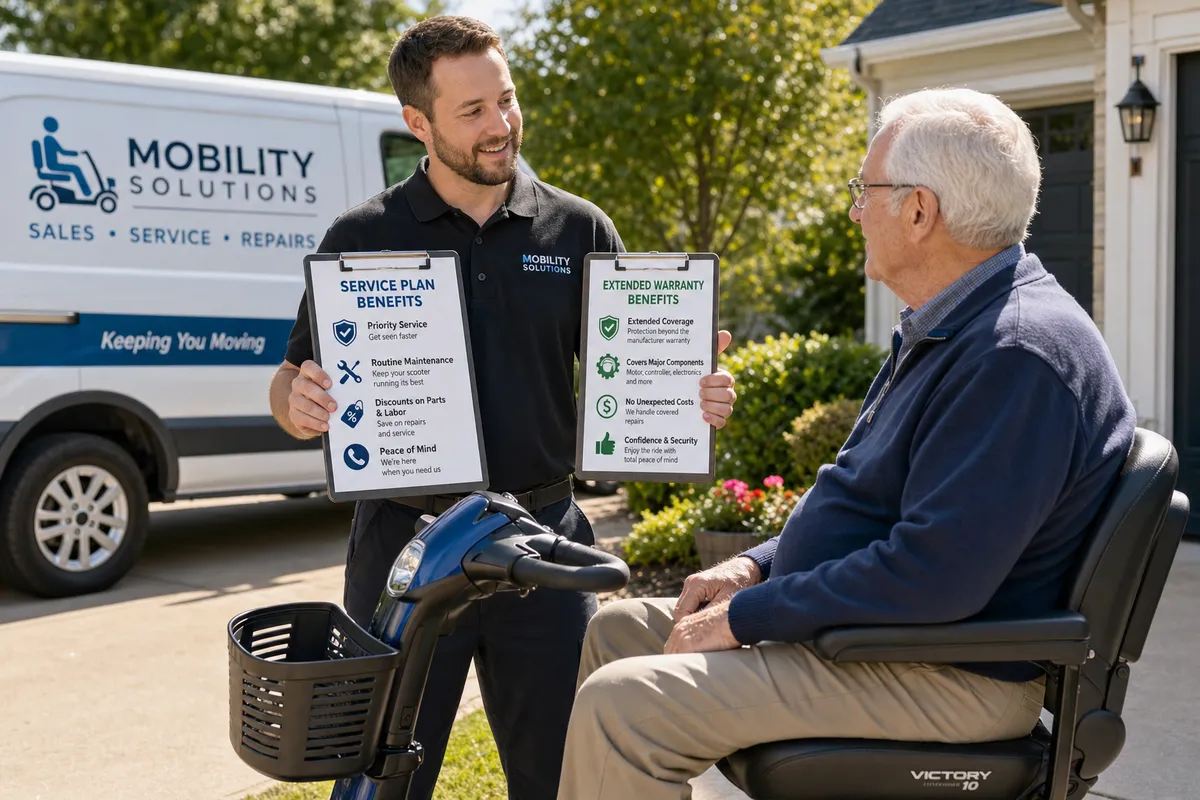
Independent Repairers: The Flexible, Cost‑Effective Option
Independent repairers are often more affordable, more flexible, and sometimes faster than dealers. They serve a wide range of scooter brands and models, and many have years of hands‑on experience with mobility equipment.
Warranty Considerations
Independent repairers can safely handle many repairs, especially once your warranty has expired. However, some manufacturers may void warranties if non‑authorised technicians perform certain repairs.
This is why it’s important to check your warranty terms before booking — and we’ll explore how to do that shortly.
Let’s keep building clarity.
Parts Availability
Independents often use high‑quality aftermarket parts or source OEM parts through distributors. This can be:
- Cheaper
- Faster
- More flexible
However, for brand‑specific electronics or proprietary components, independents may need to order parts, which can affect turnaround time.
Let’s keep exploring your options.
Turnaround Time
Independent repairers often have faster turnaround times because they:
- Handle fewer warranty claims
- Have more flexible scheduling
- Can prioritise urgent repairs
Many seniors and carers appreciate the speed and convenience of independents, especially for common issues like tyres, tubes, batteries, and brake adjustments.
Let’s keep uncovering the differences.

Comparison Chart: Dealer Servicing vs Independent Repairers
Here’s a simple, friendly comparison chart to help you see the differences clearly:
|
Factor |
Dealer Servicing |
Independent Repairers |
|
Warranty Safety |
Safest option; authorised by manufacturer |
Depends on brand; check warranty terms |
|
Parts Availability |
OEM parts; fast access |
OEM + aftermarket; flexible sourcing |
|
Turnaround Time |
Can be slower during busy periods |
Often faster and more flexible |
|
Cost |
Higher due to OEM parts and authorised labour |
Lower; more budget‑friendly |
|
Complex Repairs |
Best for electronics, controllers, diagnostics |
Best for wear‑and‑tear repairs |
|
Convenience |
Structured process; may require workshop visits |
Flexible scheduling; mobile servicing common |
|
NDIS Familiarity |
Strong for major brands and authorised repairs |
Strong for common repairs and maintenance |
This chart gives you a quick snapshot — but the real clarity comes from understanding how each factor affects your situation, so let’s keep going.
When Dealer Servicing Is the Safer Choice
Dealer servicing is usually best when:
- Your scooter is still under warranty
- The issue involves electronics or controllers
- You need brand‑specific diagnostics
- You’re dealing with a recall
- You want guaranteed OEM parts
If any of these apply, dealer servicing is the safest path — and you’ll feel more confident knowing your warranty is protected.
Let’s keep exploring the other side.
When Independent Repairers Are the Better Choice
Independent repairers shine when:
- Your warranty has expired
- You need fast turnaround
- You want lower costs
- You need common repairs (tyres, tubes, batteries)
- You prefer flexible scheduling
Independents often provide more personalised service, clearer communication, and faster repairs — especially for everyday issues.
Let’s keep building clarity.
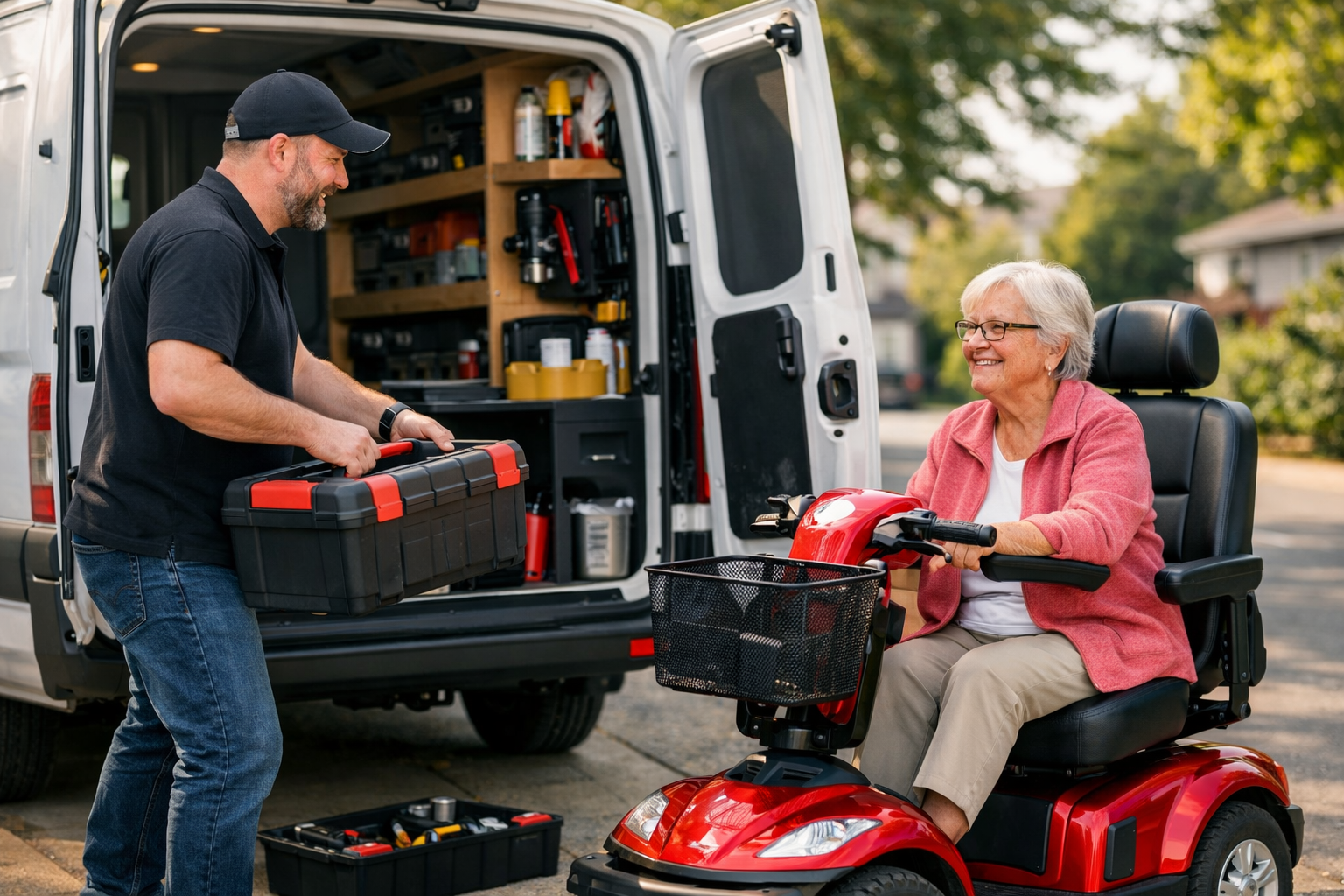
Warranty Safety: What You Need to Know
Warranty terms vary by brand, but here’s the general rule:
Dealer servicing = safest for warranty
Independent servicing = safe for many repairs, but check your terms
Some warranties specify:
- “Authorised technicians only”
- “OEM parts required”
- “Electrical repairs must be performed by dealer”
A quick check of your warranty booklet can save you stress later — and we’ll explore how to do that in the deeper guide.
Let’s keep exploring your options.
Parts Availability: Why It Matters
Parts availability affects:
- Cost
- Turnaround time
- Repair quality
Dealers have direct access to OEM parts. Independents have access to OEM + aftermarket parts. Both options can be safe — but for proprietary electronics, dealers often have the edge.
Let’s keep building your confidence.
Turnaround Time: What to Expect
Turnaround time depends on:
- Technician workload
- Parts availability
- Repair complexity
Independents often win on speed. Dealers often win on precision. Knowing what matters most to you helps you choose confidently.
Let’s keep exploring your decision.
How to Choose Between Dealer and Independent Repairers
Ask yourself:
- Is my scooter still under warranty?
- Is the issue electrical or mechanical?
- Do I need OEM parts?
- How fast do I need the repair?
- What’s my budget?
Your answers will guide you toward the safest choice — and you’ll feel more confident knowing you’ve considered everything.
Let’s keep moving toward clarity.
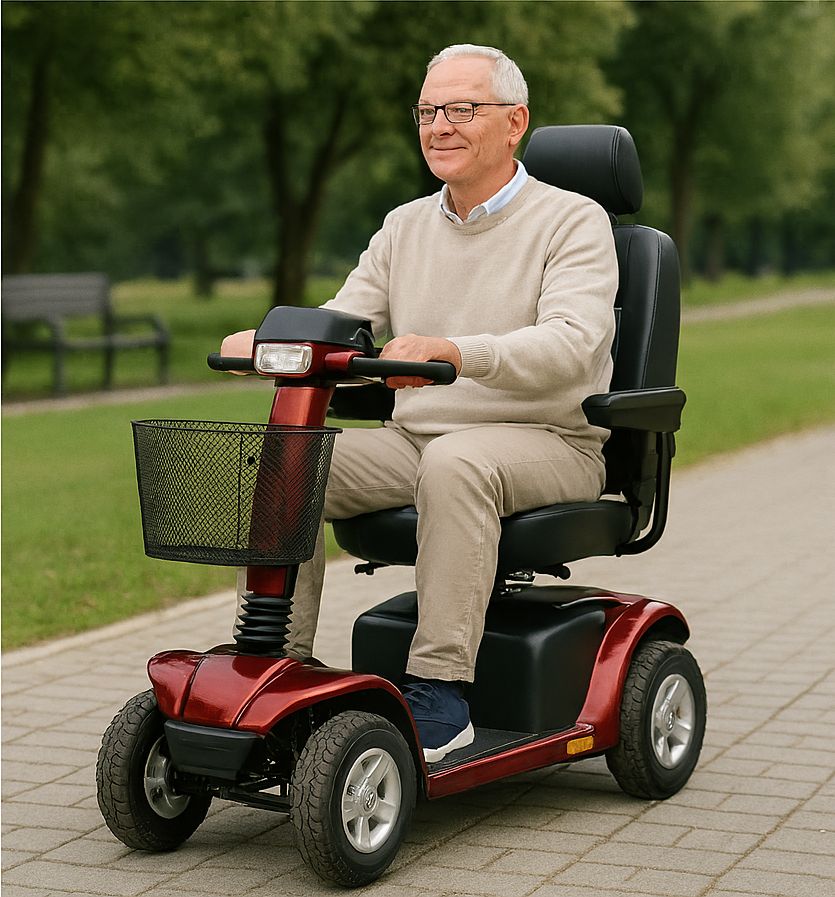
Final Thoughts: You’re Not Alone in This
Choosing between dealer servicing vs independent repairers doesn’t have to be confusing. With clear guidance, warm support, and practical steps, you can protect your warranty, avoid unnecessary costs, and feel confident every time you head out.
And whenever you’re ready to explore deeper topics — like servicing costs, roadside assistance, or choosing a trustworthy technician — your next steps are waiting.
Let’s keep you moving — one clear, supportive step at a time.
Stay mobile, stay confident!
Sign up for our monthly Mobility Scooter Newsletter to receive practical guides, expert advice, and inspiring stories that help you make the most of your scooter and download our free "Mobility Scooter Guide for Beginners."
Don't worry — your e-mail address is totally secure.
I promise to use it only to send you our newsletter, "Mobility Matters."
Recent Articles


-
Portable vs Travel vs Folding Mobility Scooters Buyer's Guide
Sep 15, 26 11:01 AM
 Confused by "portable," "travel," and "folding" mobility scooter listings? This guide explains what Australian sellers actually mean, with real weight comparisons and a decision framework.
 -
Mobility Scooter Types Overview: No More Confusion
Sep 15, 26 10:54 AM
 Mobility scooter types explained in plain English. Includes Australian footpath rules, airline battery limits, and the one mistake most first-time buyers make.
 -
How to Choose a Mobility Scooter in Australia Guide (2026)
Sep 15, 26 07:29 AM
 Choosing a mobility scooter in Australia? This guide covers registration requirements by state, public transport dimensions, NDIS funding steps, and practical testing advice.


Ready to Feel More Confident on Your Mobility Scooter?

My Ebook, The Ultimate Guide to Mobility Scooters, walks you through choosing the right scooter, using it safely, and keeping it in top condition — all explained in clear, friendly language.
Give yourself (or someone you love) the gift of independence.

