- Home
- Services and Shopping
- Mobility Scooter Service Options
- Mobility Scooter Cleaning and Storage Guide
Mobility Scooter Cleaning and Storage Guide: Keep Your Independence Rolling
Picture this.
You've just finished a lovely morning out – a trip to the local shops, maybe a coffee with a friend, or a gentle ride through the park. You park your mobility scooter in the garage, head inside, and don't give it another thought.
Weeks pass. Maybe months.
Then one day, you need to go out again. You turn the key, and nothing happens. Or worse, the scooter moves but makes a horrible grinding noise. The battery is dead. Rust has formed on the connections. Dirt has worked its way into the joints. Your reliable companion has become a frustrating paperweight.
That sinking feeling? We're going to help you avoid it entirely.

If you've been searching for a mobility scooter cleaning and storage guide, you're already taking the right step. Because here's the truth that too many owners learn the hard way: "A mobility scooter is only as reliable as the care behind it".
Most breakdowns aren't due to mechanical failures – they're caused by a neglected battery, a flat tyre, or dirt and moisture damaging the components.
The good news? With a simple routine of cleaning and proper storage, you can protect your scooter, extend its life, and avoid costly repairs.
Let's walk through it together, step by step.
Why Cleaning and Storage Matter
Your mobility scooter works hard for you. It takes you to the shops, to appointments, to visit friends. It gets you outside and keeps you connected. But it also gets dirty. Dust, dirt, moisture, and grit build up over time, working their way into joints, wiring, and moving parts.
"Dust, dirt, and debris can accumulate on the frame and components, leading to wear and tear". Moisture causes rust and corrosion. Dirt in the wrong place can damage electrical systems.
Regular cleaning isn't just about making your scooter look nice. It's about:
- Preventing corrosion and rust
- Protecting electrical components
- Maintaining smooth moving parts
- Extending the life of wheels and tyres
- Keeping your scooter safe and reliable
And proper storage? That's just as important. "Storage significantly affects lifespan". A scooter stored correctly will last years longer than one left exposed to the elements.
Let's break this down into a simple, manageable routine.
Part One: Your Cleaning Routine
Think of cleaning your scooter like caring for a trusted friend. A little attention goes a long way.
Daily: The Quick Wipe-Down
After each use, take just a minute to wipe down your scooter. "Wipe down the frame, seat, and control panel with a damp cloth and mild soap".
This removes dust and moisture before they can cause problems. It also gives you a chance to spot any issues early – a loose screw, a frayed cable, or a tyre that's losing air.
This quick habit prevents most long-term damage and takes less time than making a cup of tea.
Weekly: The Deeper Clean
Once a week, spend a little more time. Here's your weekly checklist:
1. Turn Off and Unplug
Before you start cleaning, "Switch off the scooter, remove the key, and unplug from charger". If the battery is removable, take it out first.
2. Clean the Frame and Body Panels
Use a soft cloth with mild warm soapy water. "Only use a soft damp cloth and a non-abrasive cleaning solution or mild detergent". Gently wipe the seat base, chassis frame, armrests, and rear panels.
Important: The cloth should be damp, not dripping. "Avoid soaking the scooter".
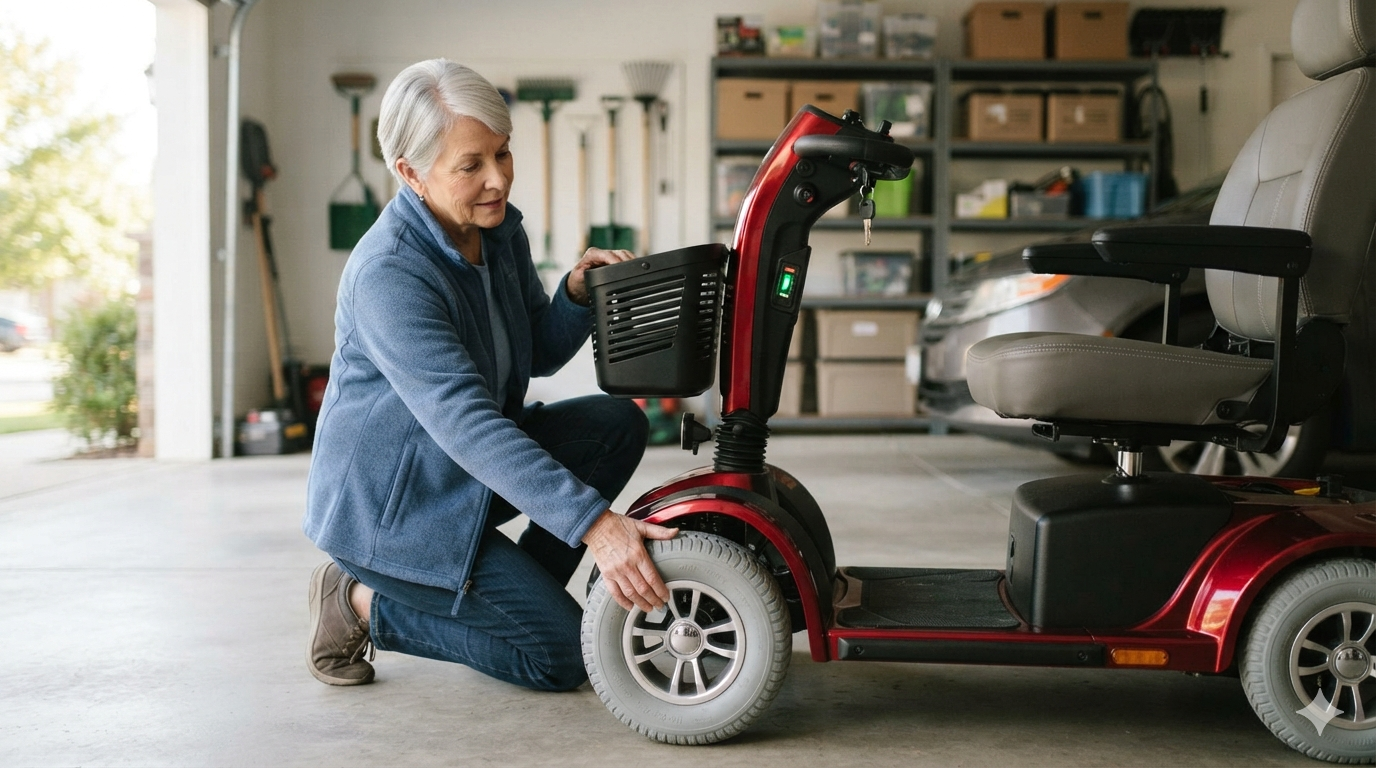
3. Clean the Wheels and Undercarriage
Wheels collect mud, small stones, and road grit. Use a soft brush to remove debris from tyres, wheel hubs, and around axles. This helps maintain smooth rolling and protects the motor from strain.
While you're at it, "remove hair, thread, and grit from around axles and casters".
4. Clean the Control Panel Carefully
The tiller and control display are sensitive areas. Use a dry or slightly damp cloth. "Never spray water directly" and "avoid cleaning fluids with alcohol or solvents". "Moisture entering the control panel is one of the most common avoidable faults".
5. Pay Attention to Folding Mechanisms
If you own a folding scooter, "wipe down hinges, remove trapped dirt, and check for smooth movement". Occasionally applying manufacturer-approved light lubrication (if recommended) keeps folding smooth.
6. Dry Thoroughly
This is crucial. "Towel dry any wet areas after cleaning". "Trapped moisture causes corrosion over time". Ensure the scooter is completely dry before charging or storing.
7. Check Tyre Pressure and Tread
While cleaning, "check tyre pressure against the PSI printed on the tyre or in the manual". "Inspect the tread for wear, cracking, or embedded debris like glass or grit". "Tyres in poor condition are one of the most common causes of an unstable ride".
Monthly: The Deep Clean
Once a month, go a level deeper. "Clean underneath the seat and around the battery compartment, where moisture and debris tend to collect unnoticed".
Check all visible wiring and cables for fraying or cracking. Test that the throttle returns smoothly to neutral. Give the brakes a proper test – they should engage almost instantly.
After Rain or Muddy Conditions
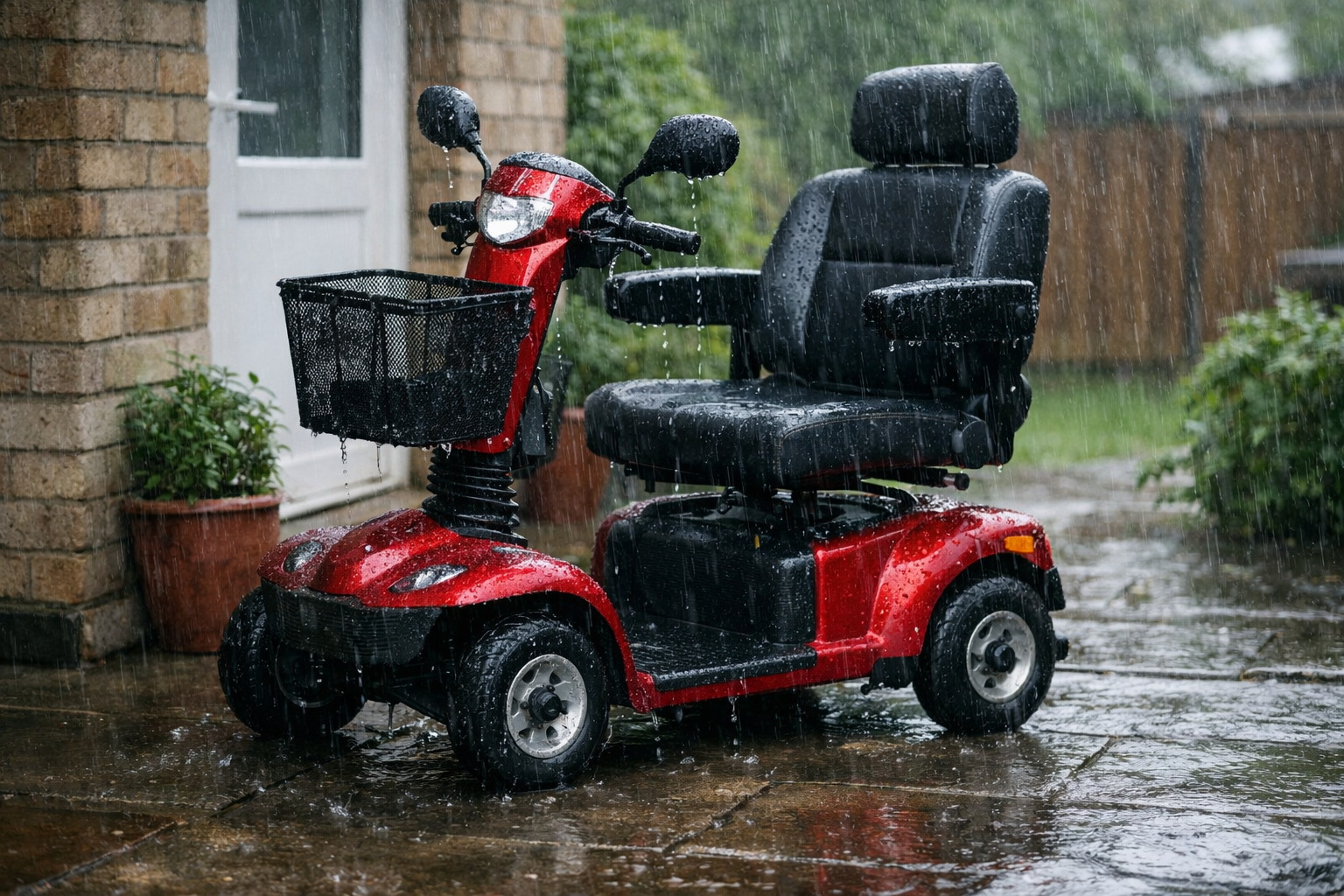
If you've been out in wet or muddy conditions, "clean and dry as soon as possible". "Avoid folding while wet". Moisture left to sit is one of the fastest ways to damage your scooter.
Part Two: What NOT to Do When Cleaning
These are the mistakes that can cost you hundreds of dollars in repairs.
✘ Never Use a Pressure Washer or Hose
"NEVER use a hose to wash the scooter". "High-pressure water can force moisture into electrical systems, leading to costly repairs".
✘ Never Submerge Any Part
"Do not submerge any part". Your scooter is not waterproof.
✘ Never Clean While Charging
"Never clean while charging". Turn off and unplug first.
Part Three: Your Storage Guide
How you store your scooter is just as important as how you clean it. "Proper storage is often overlooked but is vital for maintaining your mobility scooter".
Where to Store Your Scooter
The ideal storage location should be dry, sheltered, and protected from the elements.
Good options include:
- A dry garage
- A hallway inside your home
- A clean, dry shed
Avoid:
- Outdoor storage exposed to rain and weather
- Damp places where moisture can accumulate
- Areas with extreme temperatures
- Direct sunlight, which can damage the battery and other components
"A build up of moisture can cause rusting – not ideal for your scooter's sensitive components".
If you must store your scooter in a garage or shed, consider using a waterproof cover – but "make sure that the cover fits properly and avoids keeping moisture inside".

Fire Safety: A Critical Australian Consideration
This is especially important. Fire and Rescue NSW advises that "LEVs (Light Electric Vehicle) should be stored and charged away from living spaces in the home". "Storing and charging them in a garage, shed or carport and away from any exit doors, escape routes, and other combustible materials is recommended".
Key safety points:
- Don't charge or store on combustible surfaces like beds, sofas, or carpet.
- Keep away from flammable materials like blankets, clothing, and paper.
- Install a smoke alarm or heat alarm in garages where your scooter is stored.
- Never store batteries or devices in areas where they can be exposed to heat or moisture.
- Don't leave devices in direct sunlight or in parked vehicles where they can quickly heat up.
The Queensland Government also recommends storing electrical devices in "cool, dry, and well-ventilated" areas, away from children's play zones and flammable materials.
Part Four: Battery Care During Storage
"Charging habits have more impact on battery lifespan than almost anything else". When storing your scooter, battery care is critical.
Before Storage: Charge the Battery
"It is crucial that you fully charge the battery on your mobility scooter before storage". This is important to maintain the lifespan of the battery.
For sealed lead-acid (SLA) batteries (the most common type), store at or near full charge.
For lithium (LiFePO4) batteries, store around 40–60% state of charge.
During Storage: Regular Top-Ups
"Charge your battery every few weeks during the winter or recharge fully if required". "Batteries can suffer from long-term inactivity".
Most experts recommend charging every 4–6 weeks during storage. "Never leave the battery fully discharged". "Batteries degrade faster when left flat."
Disconnect the Battery
If storing for an extended period, "disconnect the battery to prevent any drain". "If you're storing the scooter for a long period, consider charging the battery at least once a month to maintain its health".
Temperature Matters
"Store your battery and scooter in a cool, dry place where the temperature will not get above 85 degrees or below freezing".
In cold weather, bring the battery indoors if garage temperatures will drop below freezing. "Never charge a frozen or near-freezing lithium pack. Warm it to room temperature first".
In hot weather, "keep batteries out of direct sunlight". "Prolonged heat is a silent battery killer".
Part Five: Your Quick Reference Checklist
Print this out and keep it near your scooter.
Daily (After Each Use)
☐ Wipe down frame, seat, and controls with a damp cloth
☐ Remove obvious dirt and moisture
☐ Check battery indicator shows enough charge
Weekly
☐ Turn off and unplug before cleaning
☐ Clean frame, seat, armrests with mild soapy water
☐ Clean wheels and undercarriage with a soft brush
☐ Wipe control panel with dry or slightly damp cloth
☐ Dry thoroughly with a towel
☐ Check tyre pressure (around 34 psi / 240 kPa)
☐ Inspect tyre tread for wear or damage
☐ Remove debris from around axles and casters
Monthly
☐ Deep clean under seat and around battery compartment
☐ Check all visible wiring and cables for fraying
☐ Test throttle returns smoothly
☐ Test brakes – should engage instantly
Before Storage
☐ Clean scooter thoroughly
☐ Dry completely – no moisture left anywhere
☐ Fully charge battery (SLA) or 40-60% (Lithium)
☐ Disconnect battery if storing long-term
☐ Store in dry, sheltered location
☐ Keep away from exits and combustible materials
☐ Set reminder to top up charge every 4-6 weeks
During Storage
☐ Charge battery every 4-6 weeks
☐ Never leave battery fully discharged
☐ Keep in cool, dry place
☐ Protect from extreme temperatures
☐ Check for any signs of damage or swelling

Final Thoughts
Let's come back to where we started. Your mobility scooter cleaning and storage guide isn't just about keeping your scooter looking good. It's about protecting your independence.
"Your mobility aid is more than a piece of equipment – it is the foundation of your independence". A scooter that's well cared for is a scooter you can rely on. It's a scooter that won't let you down when you need it most.
The routines we've covered today take just minutes a day. A quick wipe-down after each use. A deeper clean once a week. Proper storage and battery care. These small investments of time protect a much larger investment – your freedom, your confidence, and your peace of mind.
So tomorrow, after your ride, take that minute to wipe down your scooter. This weekend, give it a proper clean. And if you're storing it for any length of time, follow the battery care steps we've outlined.
Your scooter gives you the freedom to go where you want, when you want. Doesn't it deserve a little care in return?
You've got this.
Stay mobile, stay confident!
Sign up for our monthly Mobility Scooter Newsletter to receive practical guides, expert advice, and inspiring stories that help you make the most of your scooter and download our free "Mobility Scooter Guide for Beginners."
Don't worry — your e-mail address is totally secure.
I promise to use it only to send you our newsletter, "Mobility Matters."
Recent Articles


-
Portable vs Travel vs Folding Mobility Scooters Buyer's Guide
Sep 15, 26 11:01 AM
 Confused by "portable," "travel," and "folding" mobility scooter listings? This guide explains what Australian sellers actually mean, with real weight comparisons and a decision framework.
 -
Mobility Scooter Types Overview: No More Confusion
Sep 15, 26 10:54 AM
 Mobility scooter types explained in plain English. Includes Australian footpath rules, airline battery limits, and the one mistake most first-time buyers make.
 -
How to Choose a Mobility Scooter in Australia Guide (2026)
Sep 15, 26 07:29 AM
 Choosing a mobility scooter in Australia? This guide covers registration requirements by state, public transport dimensions, NDIS funding steps, and practical testing advice.



Ready to Feel More Confident on Your Mobility Scooter?

My Ebook, The Ultimate Guide to Mobility Scooters, walks you through choosing the right scooter, using it safely, and keeping it in top condition — all explained in clear, friendly language.
Give yourself (or someone you love) the gift of independence.


