- Home
- Funding and Coverage
- NDIS Funding for Mobility Scooters
- The Eastham Ruling and Multiple Disabilities
The Eastham Ruling and Multiple Disabilities: What It Means for Your Scooter Request
Picture this. You have more than one disability. Maybe you're vision-impaired and you also have mobility issues. Maybe you have a hearing impairment and chronic pain that makes walking difficult. You applied for NDIS funding for a mobility scooter, and the letter came back: refused. The reason? Your mobility issue isn't your "qualifying" impairment. The NDIS says the scooter is needed because of something that wasn't the basis for your access to the scheme. You're left feeling like your disabilities are being pulled apart, like you're being told you don't fit the system that was supposed to help you.
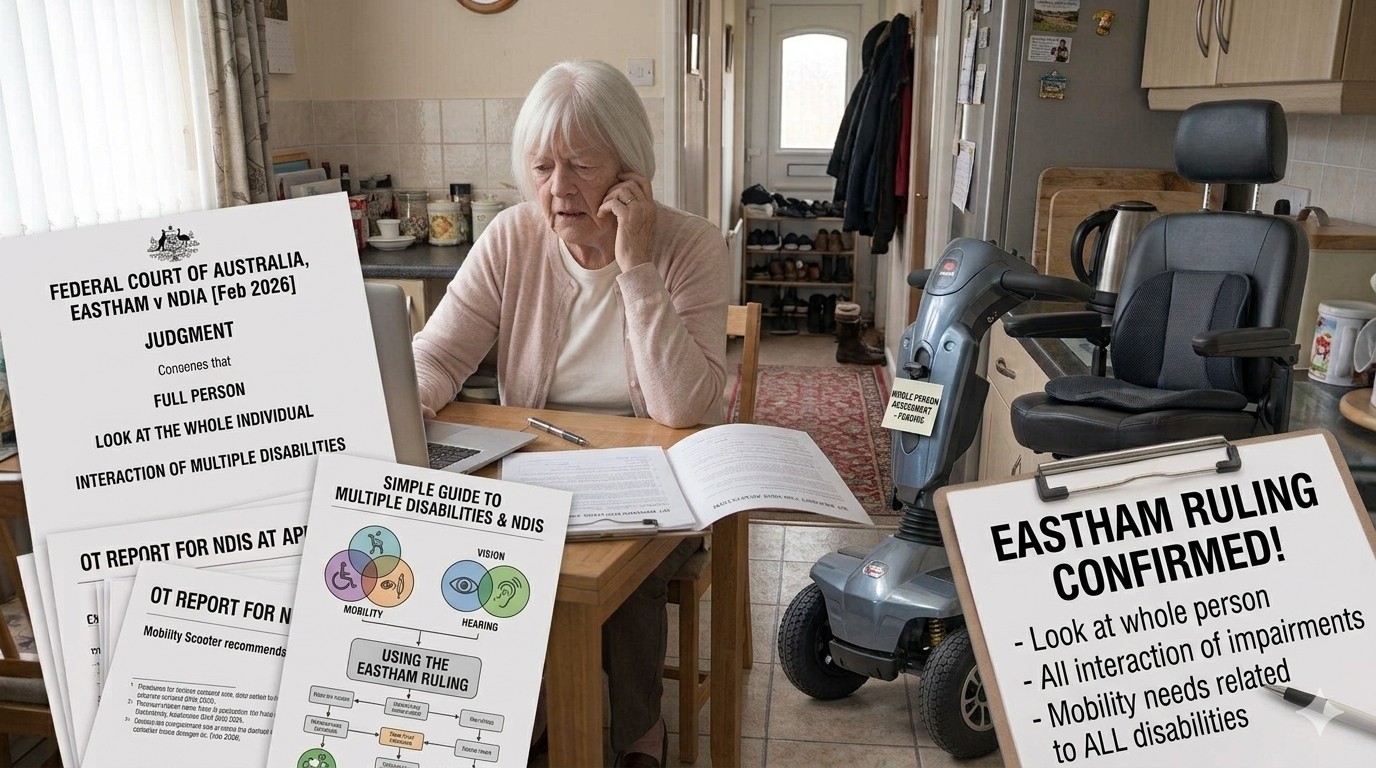
If that sounds familiar, you're not alone.
In February 2026, the Federal Court handed down a decision that changed everything for people in your situation. It's called the Eastham ruling, and it confirmed something profoundly important: the NDIS must look at the whole person, not just the impairment that got you through the door.
This guide will explain what the Eastham ruling and multiple disabilities means for your scooter request — and how you can use it to strengthen your case. By the end, you'll know you have more power than the refusal letter.
What Was the Eastham Case? The Story Behind the Ruling
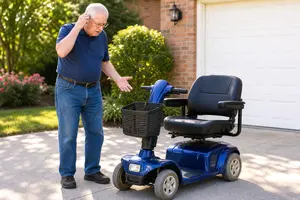
Lee Eastham is a 60-year-old man who lives in regional Victoria. He has hearing and vision impairments, which were the basis for his access to the NDIS. He also lives with several physical conditions that severely limit his mobility. Because of his vision impairment, he can't drive a car. Because of his mobility issues, he can't walk the three kilometres into town. And because he lives in a regional area, public transport is limited — especially on weekends and public holidays.
In 2022, Lee applied for NDIS funding for a mobility scooter so he could travel independently to do his shopping, attend medical appointments, and volunteer with the SES. The scooter cost around $7,300. The NDIA refused the request. Their argument? Lee needed the scooter because of his mobility issues — not because of the hearing and vision impairments that qualified him for the NDIS.
Lee fought back. He took the case to the Administrative Review Tribunal (ART), which ruled in his favour. The NDIA appealed to the Federal Court. And in February 2026, the Federal Court dismissed the NDIA's appeal. Lee won. The court ordered the NDIA to fund the scooter — and to pay Lee's legal costs.
But the story doesn't end there. What the court actually said is what matters for you.
What the Court Actually Said: The "Contributory Cause" Principle
The Eastham ruling turned on the meaning of a few key words in the NDIS Act. Section 34(1)(aa) says a support must be "necessary to address needs of the participant arising from an impairment" — meaning the impairment that qualified them for the NDIS. The NDIA argued that the word "arising from" meant the qualifying impairment had to be the sole or dominant cause of the need for the support.
The Federal Court disagreed. The court found that the qualifying impairment only needs to be a contributory cause of the need for the support — not the only cause, and not even the main one. In plain language: if your mobility issue is caused by a combination of factors — including your qualifying impairment and other conditions — that's enough. The NDIA cannot reject your request simply because your mobility issue isn't your "primary" disability.
The court also made another important point. The NDIS Rules describe what a support is — its attributes and effects — not what caused the need for it. So when the NDIA argued that the scooter was a "mobility" support and Lee's mobility issue wasn't his qualifying impairment, the court said that was the wrong way to look at it. The rules describe what the equipment does, not why you need it.
This is a big deal. It means the NDIA has to take a practical, holistic approach — looking at your whole life, not just the boxes you ticked on your access form. As senior solicitor Mitchell Skipsey put it: "The NDIS Act requires funding decisions to take a 'whole of person' approach".
So how does this apply to your scooter request? Let's walk through it.
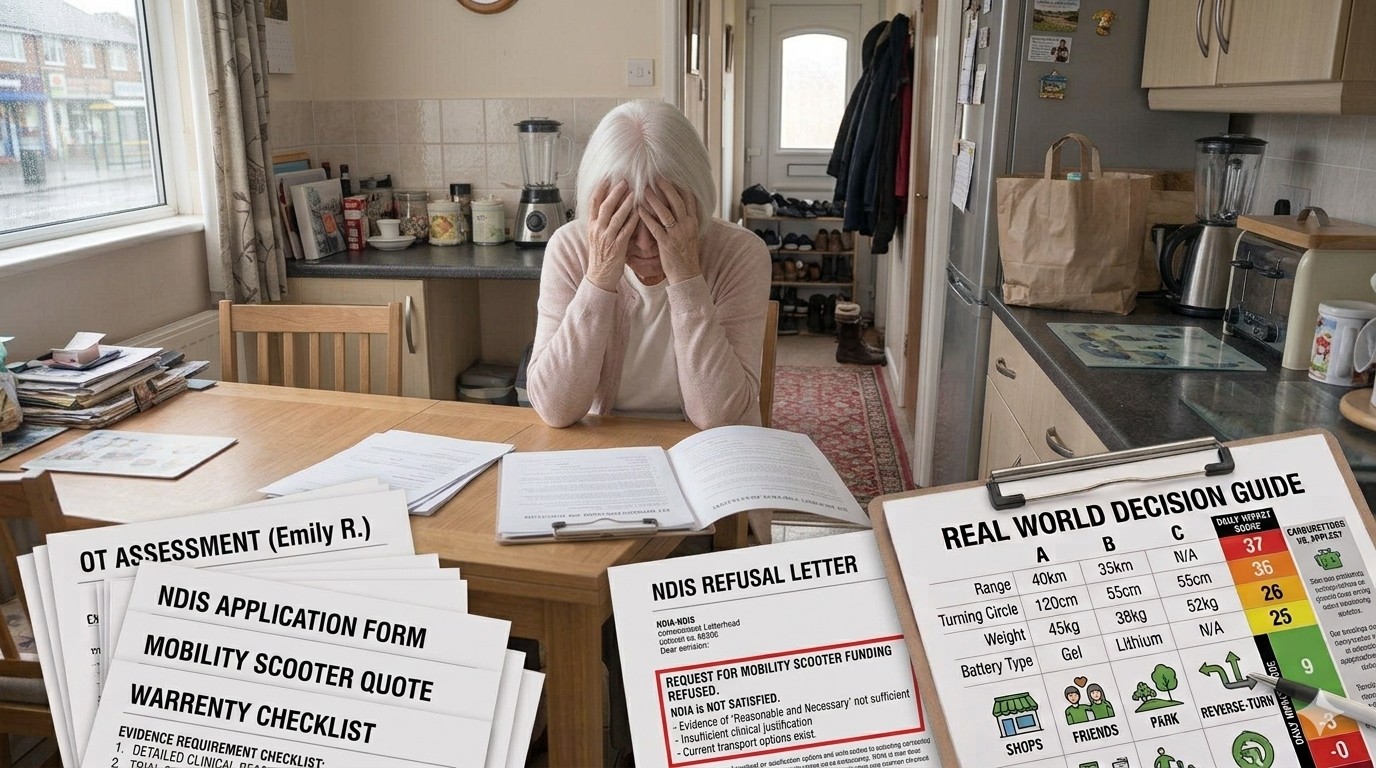
What This Means for Your Scooter Request
If you have multiple disabilities and your scooter request was refused — or if you're worried it might be — the Eastham ruling gives you a powerful argument. The NDIA can no longer say: "Your mobility issue isn't your qualifying impairment, so we don't have to fund this scooter." That argument has been rejected by the Federal Court.
Here's what the ruling means in practice:
If your refusal letter said your mobility issue isn't your "qualifying" impairment, that refusal may now be invalid. The Eastham ruling directly addresses this reasoning. You can request an internal review and cite the ruling.
If you're preparing a new application, you no longer need to prove that your mobility issue is the only reason you need the scooter — or even the main reason. You just need to show that your qualifying impairment contributes to your need.
If you have multiple conditions that interact, the NDIA must consider how they combine. The court said decision-making must consider "the interplay of their multiple conditions — not just those that gave them entry into the scheme".
This is genuinely transformative for participants who've been told they don't fit the system. But here's the question you're probably asking: How do I actually use this?
The good news is you don't need a lawyer or a court date. Let's look at how to apply the ruling at the internal review stage.
How to Use the Eastham Ruling in Your Internal Review
If your scooter request was refused on "wrong impairment" grounds, you can request an internal review within three months of receiving the decision. When you submit your request, you need to tell the NDIA four things: what decision you were expecting, why you think the decision should be different, any information you'd like reconsidered, and what new evidence you're providing.
Here's a template you can adapt:
"I am requesting an internal review of the decision to refuse funding for a mobility scooter. The refusal was based on the argument that my mobility issue is not my qualifying impairment. I am providing new information for reconsideration: the Federal Court decision in CEO of the NDIA v Eastham [2026] FCA 147. In that decision, the Court confirmed that a qualifying impairment only needs to be a 'contributory cause' of the need for a support — not the sole or dominant cause. My qualifying impairment contributes to my need for a mobility scooter. I request that the NDIA reconsider this decision in light of the Eastham ruling."
That paragraph is the heart of your review request. You can add more detail about how your impairments interact, and any new evidence from your OT or GP. But the key is citing the ruling clearly and directly.
And if you're wondering whether you need to go to court to use this — you don't. The internal review is your first opportunity.
What If the NDIA Tries to Change the Law?
Here's the part nobody wants to think about: the Eastham ruling is a court decision, and court decisions can be overridden by legislation. There are proposed amendments to the NDIS Act that could narrow the "reasonable and necessary" criteria and potentially weaken the Eastham principle. Some parliamentary submissions have warned that these changes "may lead to further disputes about causation".
This is a real concern. But here's what you need to know right now: as of today, the Eastham ruling is the law. It applies to your request. And if the law changes in the future, that's a fight for another day — one that advocates and legal centres are already preparing for.
Your job right now is to use the protection you have. And that protection is real, it's current, and it's yours.
If Your Internal Review Fails: What Comes Next
If the internal review upholds the refusal, you can apply to the Administrative Review Tribunal (ART) for an external review. You have 28 days from the internal review decision to lodge your application. The ART is independent, and it can overturn NDIA decisions. The Eastham case itself went through the ART before it reached the Federal Court — and Lee won at both stages.
The ART process is more formal than internal review, but it's still free for NDIS matters, and you don't need a lawyer — though legal advice can help for complex cases. Legal centres like the Justice and Equity Centre represent participants in cases like these, and they've made it clear they're watching for other refusals based on the same flawed reasoning.
You're not alone in this. There are people who've walked this path and won.
FAQs: The Eastham Ruling and Your Scooter Request
Does the Eastham ruling apply if I only have one disability?
The ruling is specifically about multiple disabilities, but it also clarifies that the NDIA must take a "whole of person" approach. If your refusal was based on a narrow reading of "arising from," the principle may still be relevant.
Do I need a lawyer to use the Eastham ruling?
No. You can cite the ruling in your internal review request yourself. If your case goes to the ART, legal representation can help, but it's not required.
What if my refusal letter didn't mention the "wrong impairment" reason?
The ruling may still be relevant. If the NDIA argued that your scooter request didn't meet the "arising from" requirement, the Eastham principle could apply. Seek advice from a support coordinator or legal centre.
Can the NDIA appeal the Eastham ruling again?
The NDIA appealed to the Federal Court and lost. There is no further appeal beyond the Federal Court in this case. The ruling stands.
What if the law changes?
As of now, the Eastham ruling is the law. If proposed amendments are passed, the legal landscape may change, but advocates are actively opposing those changes.
How long does an internal review take?
The NDIA aims to complete internal reviews within 60 days, though timelines can vary.
Your Next Step: You Have a Seat at the Table
You've just learned something the refusal letter didn't tell you: the NDIS must look at your whole life, not just the impairment that got you through the door. The Eastham ruling confirmed that your qualifying impairment only needs to be a contributory cause of your need for a scooter. It doesn't have to be the only cause, and it doesn't have to be the main one.
Your next step is simple. Find your refusal letter and check the date. Write the three-month internal review deadline somewhere you'll see it every day. Then start drafting your review request. Cite the Eastham ruling. Explain how your impairments interact. Include any new evidence from your OT or GP. If you have a support coordinator, ask them to help you submit the request. If you don't, call 1800 800 110 and ask for guidance.
Lee Eastham fought for three years to get a $7,300 scooter. He said it was "devastating" when he was refused — but he didn't give up, and he won. His case has now helped countless others.
You don't have to fight for three years. You have the ruling on your side. And you're more prepared to use it than you were ten minutes ago.
Stay mobile, stay confident!
Sign up for our monthly Mobility Scooter Newsletter to receive practical guides, expert advice, and inspiring stories that help you make the most of your scooter and download our free "Mobility Scooter Guide for Beginners."
Don't worry — your e-mail address is totally secure.
I promise to use it only to send you our newsletter, "Mobility Matters."
Recent Articles


-
NDIS Mobility Scooter Funding Checklist: Evidence That Gets Approved
Oct 01, 26 07:51 AM
 NDIS mobility scooter funding checklist — from OT assessment to approval. Here's exactly what to include so your request isn't delayed.
 -
NDIS Funding for Mobility Scooter Repairs & Servicing: Plan Ahead
Oct 01, 26 07:47 AM
 NDIS funding for mobility scooter repairs and servicing: what's covered, who to call, and how to avoid being stranded.
 -
NDIS Mobility Scooter vs Powered Wheelchair: Which One Is Right?
Oct 01, 26 07:43 AM
Mobility scooter vs powered wheelchair for NDIS doesn't have to be confusing. Here's how to decide and how to frame your evidence.

Ready to Feel More Confident on Your Mobility Scooter?

My Ebook, The Ultimate Guide to Mobility Scooters, walks you through choosing the right scooter, using it safely, and keeping it in top condition — all explained in clear, friendly language.
Give yourself (or someone you love) the gift of independence.

