- Home
- Buying Guides
- Avoiding Mobility Scooter Sales Pressure
- Mobility Scooter Buying Checklist
Mobility Scooter Buying Checklist That Prevents Pressure Selling (Australia-Focused)
Picture this. You have spent weeks researching. You know the range you need, the width of your hallway, and the budget you can afford. You walk into a showroom feeling prepared. Within twenty minutes, you are being guided toward a model that costs $2,000 more than you planned, told that a "manager's special" expires at 5pm, and asked for a deposit to "secure" the price.
The confidence you walked in with has evaporated, replaced by a knot of anxiety and a nagging question: Is this a good deal, or am I being taken for a ride?
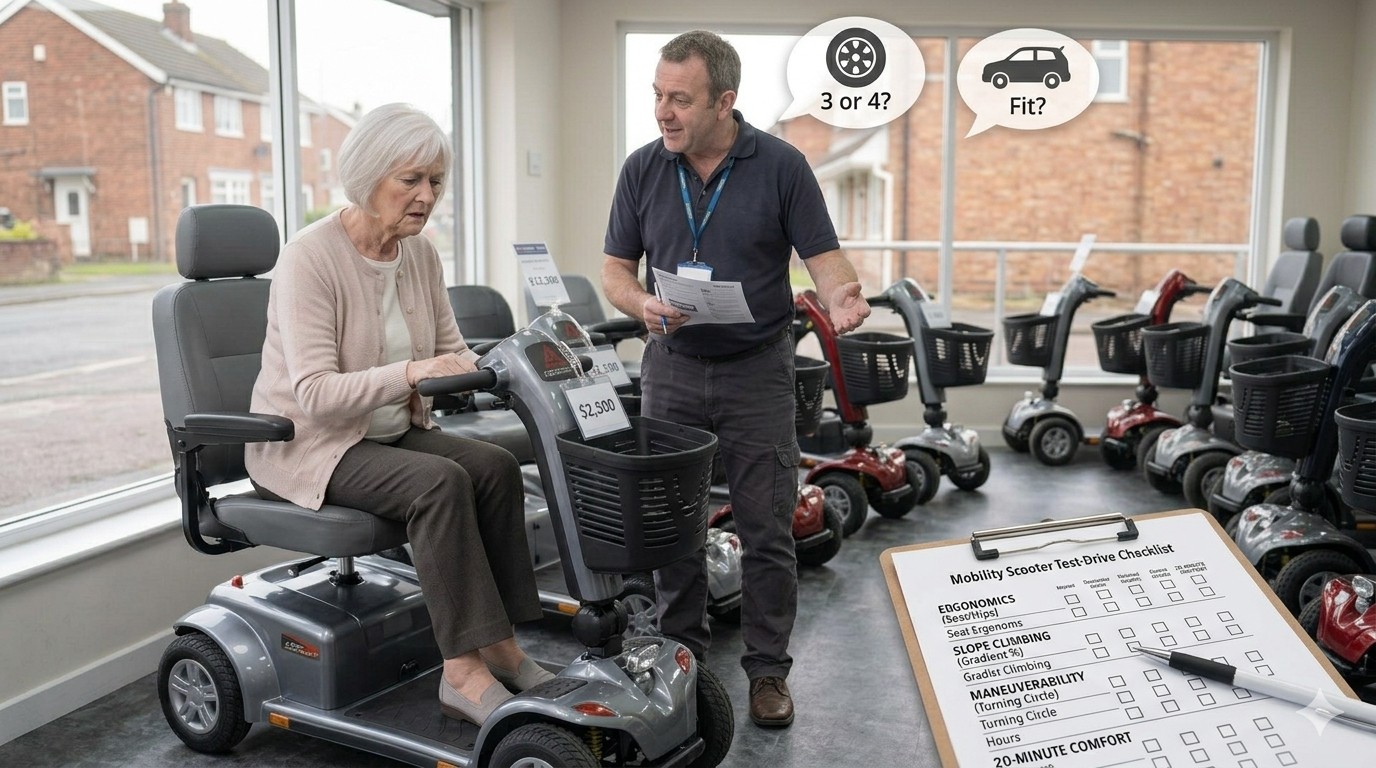
The mobility scooter buying checklist that prevents pressure selling is the tool that turns that knot of anxiety into a calm, methodical process. It is not about being cynical; it is about being prepared. This Australia-focused guide gives you the exact checklist, the red flags, and the consumer protections you need to stay in control from the first phone call to the final signature.
This is the deep-dive guide for anyone who wants to buy with their eyes wide open. You do not need to become a consumer law expert. You need a structured plan, a set of non-negotiable questions, and the quiet confidence that comes from knowing exactly what to expect—and exactly what to walk away from.
Why a Checklist Is Your Best Defence Against Pressure Selling
Pressure selling works by disrupting your decision-making process. It introduces urgency, confusion, and a sense of obligation—all tactics designed to make you act before you think. A checklist is the antidote. It externalises the process, turning a high-pressure emotional encounter into a series of tick-box tasks. It gives you a reason to pause, a script to follow, and a clear exit route if the answers do not meet your standards.
The Australian Consumer Law (ACL) is on your side, but it works best when you have documented evidence. The ACCC explicitly states that pressuring and harassing consumers is against the law, and this includes "undue harassment"—unnecessary or excessive contact designed to make a person feel "intimidated, tired or demoralised". A checklist helps you recognise when a line has been crossed and gives you the confidence to act on it. It also creates a paper trail, which is invaluable if you need to escalate a complaint later.
Deeper dive: For the complete planning-stage framework that this checklist sits within, start with the hub: Avoiding Mobility Scooter Sales Pressure .

The Pre-Purchase Phase: Before You Talk to a Single Salesperson
The most effective way to resist pressure is to do your homework before you are in the room. This phase is about gathering independent information so you can evaluate any sales pitch against your own research.
☐ 1. Get an independent assessment. Before you look at a single model, speak to an occupational therapist (OT). An OT assessment is not a box-ticking exercise; it is the clinical process of matching the person, the activity, the technology, and the environment. Getting the fit wrong on a mobility scooter can lead to wasted money, unmet needs, or even injury, such as pressure injuries or falls. This assessment is also crucial for accessing NDIS, My Aged Care, or DVA funding, as these schemes require evidence of "reasonable and necessary" equipment.
☐ 2. Set your budget and your non-negotiables. Know the realistic price range before you shop. In Australia, entry-level travel scooters start from around $1,000, mid-size models typically sit between $2,000 and $4,000, and heavy-duty or enclosed cabin models can exceed $7,000. Decide on your maximum budget, your must-have features (e.g., range, weight, turning circle), and your deal-breakers. Write these down. A salesperson cannot move a goalpost that is firmly fixed in writing.
☐ 3. Research prices and models independently. Use price comparison tools and visit multiple retailers online. Understand the recommended retail price (RRP) and the typical street price. This knowledge is your shield against the "today-only" discount tactic. If a "deal" is within a few percentage points of the everyday market price, the urgency is manufactured.
☐ 4. Know your GST rights. Many mobility scooters are GST-free if they are specifically designed for people with an illness or disability and are not widely used by people without a disability. Ask the dealer to confirm in writing whether the scooter qualifies for GST exemption, and ensure the quote reflects this. You should not be paying a 10% premium on a product that is legally tax-free for eligible buyers.
Deeper dive: For a line-by-line breakdown of the documents you must demand before paying, see: What to ask for in writing before buying a mobility scooter (quote, warranty, returns, servicing) .
The Dealer Interaction Phase: Your In-Room Checklist
This is where the checklist earns its keep. You are now in the environment where pressure is applied, and your job is to stick to your process, not the salesperson's.
☐ 5. Bring a support person. A reputable dealer will encourage you to bring a family member, friend, or carer. Having a second person present provides another set of ears for the sales pitch, another pair of eyes for the paperwork, and a witness to any promises made. The British Healthcare Trades Association identifies objecting to a relative or carer being present as a major red flag. If a salesperson tries to dissuade you, that is your signal to leave.
☐ 6. Ask for the full written quote—and check it against your list. Do not accept a verbal price or a monthly figure. The quote must itemise the scooter model, the total price, delivery and assembly costs, aftercare or servicing packages, and any add-ons as separate line items. Verify the GST exemption is applied. If the quote does not show the total cost including delivery and aftercare, it is not a complete quote.
☐ 7. Demand the written warranty and return policy. Do not rely on a verbal description. Ask for the warranty document and the return policy in writing. Check the warranty period for different components (e.g., frame, motor, battery), what is excluded, and who performs repairs. For returns, check the return window, the condition requirements, and any restocking fees, which can range from 10% to 25% of the purchase price.
☐ 8. Ask the "Servicing and Aftercare" question. A scooter is not a one-off purchase; it needs regular maintenance. Ask for a written servicing schedule that states how often servicing is recommended, what each service includes, what it costs (a basic annual service can cost around $160, with collection and return adding $120), and what happens if a repair is needed outside warranty.
☐ 9. Apply the "24-Hour Rule." State this as your policy: "I do not make same-day decisions on purchases of this size. I will review the written quote and terms and contact you tomorrow." If the deal disappears because you waited, you have lost nothing—you have avoided a purchase made under pressure. A genuine discount will still be there tomorrow. This is your most powerful tool against the "today-only" tactic.
☐ 10. Recognise the red flags and be ready to walk. If you hear any of the following, treat it as a signal to end the conversation: "That's just standard—everyone pays a deposit," "We can't put that in writing until you pay," or "If you don't pay today, the price goes up tomorrow." These are deflections and pressure tactics, not answers. The ACCC identifies artificial urgency, such as misleading "limited time" representations, as a key area of enforcement concern.
Deeper dive: For word-for-word scripts to handle every one of these situations, see: Mobility scooter salesperson scripts: what to say to slow things down and keep control. (Coming Soon!)

The Red Flag Playbook: Tactics to Recognise and Refuse
Pressure selling in the mobility sector follows recognisable patterns. Knowing them in advance is half the battle.
- The Commission-First Steer: You ask for an affordable model and are guided toward a premium one. This often reflects a commission-driven incentive structure, not your needs.
- The "Today-Only" Deadline: A discount that expires at midnight. A genuine sale does not require you to decide before you have had time to think. The ACCC has specifically targeted misleading "limited time" claims that create a false sense of urgency.
- The Doorstep Wear-Down: A home demonstration that stretches for hours, relying on your exhaustion rather than your informed consent. Industry codes of practice explicitly prohibit high-pressure selling, such as "offering inducements to force a quick decision, or knowingly taking advantage of vulnerable customers".
- The Vague Quote: A monthly figure or a "package" price with delivery, aftercare, or warranty exclusions left unclear. Upfront pricing must be the full cost, made clear from the start.
- The "Perfect for Your Condition" Claim: A salesperson's assurance that a model is right for your medical situation. Suitability is a clinical question, not a sales question. An OT assessment is the appropriate way to answer it.
Deeper dive: If the pressure is being applied during a home visit: Home-visit mobility scooter sales: red flags and how to end the appointment gives you a room-by-room plan for keeping control. (C0ming Soon!)
The Bottom Line: Plan, Document, Decide
A mobility scooter is a significant purchase, both financially and emotionally. The pressure tactics that exist in the market are not a figment of your imagination—they are a recognised consumer protection issue, and the law is on your side. But the law works best when you have a process.
This checklist is that process. It moves the power back to where it belongs: with you. By getting an independent assessment, setting your budget in advance, demanding everything in writing, and applying the 24-hour rule, you turn a high-pressure sales encounter into a calm, methodical evaluation. The right dealer will welcome this rigour; the wrong one will resist it. Either way, the checklist will tell you exactly what you need to know.
You are not being difficult by asking for written terms or taking a day to think. You are being a careful, informed buyer—and that is the most empowered position you can occupy. Take this checklist with you. Use it. And remember: a genuine deal can survive a pause, but a pressured purchase can haunt you for years.

Frequently Asked Questions
What is the most important thing on the checklist?
The most important item is getting an independent occupational therapist (OT) assessment before you shop. It is the foundation for matching the device to your needs, your home, and your safety, and it is essential for most funding pathways.
Can a dealer refuse to give me a written quote?
They can refuse, but that refusal is a major red flag. Industry codes and consumer guidance expect clear, upfront pricing and written information about linked services. A dealer who will not document the price is asking you to buy without the information you need.
What should I do if a salesperson offers a "today-only" discount?
State your policy: "I do not make same-day decisions on purchases of this size. Please put the full offer in writing, and I will review it tomorrow." If the deal disappears, it was not a genuine offer. The ACCC considers misleading "limited time" claims that create false urgency to be an unfair practice.
How much deposit is normal, and is it refundable?
There is no single "normal" amount. Some dealers ask for 10%, others a fixed holding amount. The critical question is whether the deposit is refundable and under what conditions. Australian guidance says non-refundability must be disclosed upfront, and deposits should normally be refunded in full within 30 days of a proper cancellation. Get the terms in writing before you pay.
What is a "restocking fee" on a mobility scooter return?
A restocking fee is a charge deducted from your refund if you return a scooter for change of mind. It can range from 10% to 25% of the purchase price. On a $3,500 scooter, a 15% fee is $525. Ask for this fee to be stated in writing before you buy.
Are mobility scooters GST-free in Australia?
Many are, if they meet the criteria of being specifically designed for people with an illness or disability and not widely used by people without a disability. The supply, installation, and training of eligible assistive technology is GST-free. Ask the dealer to confirm the GST status in writing on your quote.
Stay mobile, stay confident!
Sign up for our monthly Mobility Scooter Newsletter to receive practical guides, expert advice, and inspiring stories that help you make the most of your scooter and download our free "Mobility Scooter Guide for Beginners."
Don't worry — your e-mail address is totally secure.
I promise to use it only to send you our newsletter, "Mobility Matters."
Recent Articles


-
Mobility Scooter Weighted Decision Matrix: A Step-by-Step Guide
Nov 22, 26 10:42 AM
 Weighted decision matrix for mobility scooter quotes: a calm, step-by-step framework to score two offers fairly and see which one truly fits your life.
-
Avoiding Mobility Scooter Sales Pressure Before You Buy
Nov 22, 26 08:08 AM
Avoiding mobility scooter sales pressure begins with knowledge. This friendly hub walks you through every step—calmly and clearly. -
How to Compare Mobility Scooter Quotes Apples-to-Apples
Nov 22, 26 08:07 AM
 Mobility scooter comparison sheet: how to compare two quotes apples-to-apples, including price, warranty, servicing, and the red flags that matter.


Ready to Feel More Confident on Your Mobility Scooter?

My Ebook, The Ultimate Guide to Mobility Scooters, walks you through choosing the right scooter, using it safely, and keeping it in top condition — all explained in clear, friendly language.
Give yourself (or someone you love) the gift of independence.



