- Home
- Funding and Coverage
- NDIS Funding for Mobility Scooters
- Low-Cost vs Mid-Cost vs High-Cost NDIS AT
Low-Cost vs Mid-Cost vs High-Cost NDIS AT: Where Mobility Scooters Fit (and What Changes)
Picture this. You've finally found the mobility scooter that feels right. It's stable, it handles the footpath outside your place, and the seat doesn't leave your back aching after ten minutes. You're ready.
Then you open the NDIS portal, and the funding categories hit you like a wall: low-cost, mid-cost, high-cost. Capital Supports. Core. Evidence requirements. Your confidence dips. You close the laptop and think, "I'll come back to this later."
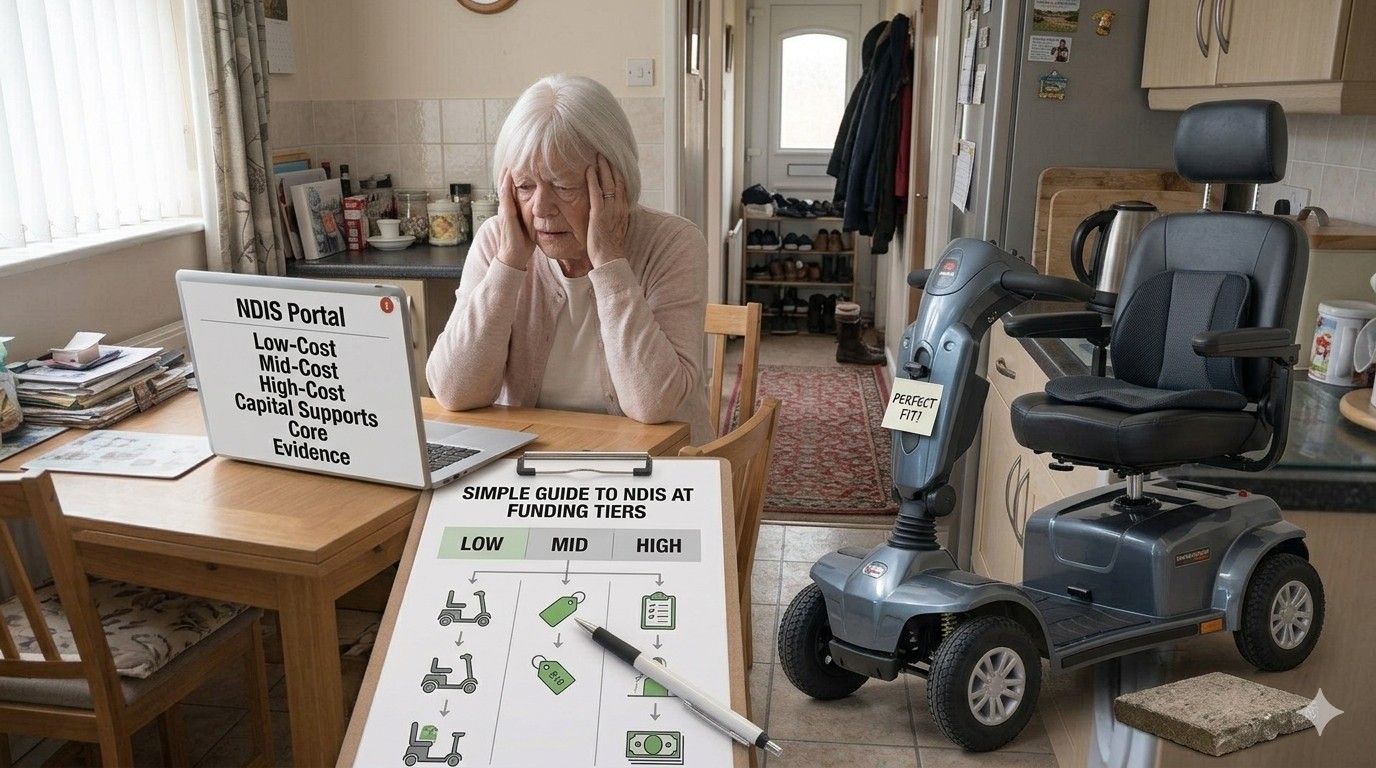
Here's the thing: you're not alone in that feeling. And the truth is, understanding low-cost vs mid-cost vs high-cost NDIS AT isn't as complicated as it looks once someone explains it in plain language. That's what we're going to do together.
By the end of this guide, you'll know exactly which tier your mobility scooter falls into, what changes at each level, and what you actually need to do next. No overwhelm. No jargon.
What Are the NDIS Assistive Technology Funding Tiers?
The NDIS groups assistive technology into three cost-based categories. The thresholds are set per item, not per plan, and they haven't changed in the current guidelines: low-cost AT is under $1,500 per item, mid-cost AT sits between $1,500 and $15,000 per item, and high-cost AT is anything over $15,000. That's the skeleton.
But the tiers aren't just about money — they're about complexity. The more an item costs, the more the NDIS wants to understand why it's the right choice for you. A walking stick doesn't need an OT report. A $6,000 scooter does.
So where does your scooter land? We're getting there — and the answer might surprise you. But first, let's look at what low-cost actually means, because it's the tier most people misunderstand.
Low-Cost AT: Under $1,500 Per Item
Low-cost assistive technology is the simplest tier. These are items under $1,500 per item, and you can generally buy them directly using your Core – Consumables budget without needing a quote or NDIA approval.
Think walking sticks, basic shower chairs, non-slip mats, large print labels, and simple grab rails. These are everyday aids that are easy to set up and use, and they're available from local suppliers or general retailers. You don't need an OT assessment. You don't need to submit evidence. You just buy what you need.
Here's the catch: mobility scooters are not low-cost AT. Almost no scooter on the market falls under $1,500. Even the most basic models start around $2,000–$2,400. So if you're hoping your scooter might squeeze into the low-cost category and skip the paperwork — it won't.
But that's not bad news. It just means your pathway is different, and once you understand it, it's actually more predictable.
Next, we'll look at where most scooters actually land.

Mid-Cost AT: Between $1,500 and $15,000 Per Item
This is where most mobility scooters live. The mid-cost tier covers items between $1,500 and $15,000 per item, funded from your Capital Supports budget.
Mobility scooters are typically classified as mid-cost AT, though larger or highly specialised scooters can sometimes creep into the high-cost bracket. Quality mid-range scooters generally range from $2,500 to $8,000, depending on weight capacity, range, and terrain capability. That's solidly mid-cost.
What changes at this tier? First, you need written advice from an AT assessor — typically an Occupational Therapist or Physiotherapist. This isn't a formal quote round; it's a letter or report explaining why the scooter is reasonable and necessary for your disability. You do not need three quotes. You do not need NDIA pre-approval before purchasing if the funding is already in your plan. You just need that written advice, and you can go ahead.
That's a relief for a lot of people, because the old "three quotes" rule used to stop scooter purchases in their tracks. But the quality of your OT report matters enormously. If it doesn't clearly link your impairment to your functional limitations and then to the scooter, the NDIS can push back.
We'll cover exactly what makes a strong report shortly — but first, let's look at what happens when a scooter crosses into high-cost territory.
High-Cost AT: Over $15,000 Per Item
High-cost AT is anything over $15,000 per item. This tier is for complex, specialised equipment — custom power wheelchairs, specialised seating systems, and home modifications. Larger or highly specialised mobility scooters can fall here, particularly if they require custom seating, advanced terrain capability, or significant postural support.
If your scooter is high-cost, the process changes noticeably. You'll need a comprehensive OT assessment, evidence of trials and comparisons of different models, multiple quotes, and sometimes an assessment of your home and community environment. NDIA approval is required before purchase.
This sounds like a lot — and it is. But it's also designed to protect you. High-cost equipment is a significant investment, and the NDIS wants to make sure you're getting the right item the first time.
If you're wondering whether your scooter might tip into this tier, the best thing you can do is get a quote before you get too far into the process. A scooter that costs $14,500 is mid-cost. A scooter that costs $16,200 is high-cost. That $1,700 difference changes your entire pathway.
Now that you know the three tiers, let's talk about where the real bottleneck usually sits: the evidence.

What Changes at Each Tier (and What Stays the Same)
Here's a simple way to think about it. Low-cost AT = buy and go. Mid-cost AT = written advice and buy. High-cost AT = assessment, quotes, approval, then buy. The paperwork increases with the price.
But the core question the NDIS asks at every tier is the same: is this item reasonable and necessary? The difference is how much evidence you need to answer that question convincingly.
For mid-cost AT — where most scooters sit — your OT report is your strongest tool. It needs to explain your disability, your functional limitations, how those limitations affect your daily life, and why this specific scooter is the right solution.
If you're wondering what to include in that report to give yourself the best chance of approval, we've created a full NDIS mobility scooter funding checklist that walks you through it step by step.
But for now, the key takeaway is this: mid-cost is the friendliest tier for scooter funding. It gives you autonomy without burying you in bureaucracy. And there's one more thing that's changed recently that makes this tier even more workable.
The Eastham Ruling and What It Means for Your Tier
In February 2026, the Federal Court handed down a decision that changed how the NDIA must assess funding requests for people with multiple impairments. Lee Eastham, a 60-year-old man with hearing and vision impairments as well as mobility limitations, was refused funding for a mobility scooter in 2022. The NDIA argued that his mobility issue wasn't his "qualifying" impairment, so the scooter wasn't reasonable and necessary.
The Federal Court disagreed. The court found that a qualifying impairment needs only to be a contributory cause of the need for the support — not the sole or dominant cause.
This matters for your tier because it removes a common obstacle. If you have multiple disabilities and you've been told your scooter request falls outside your qualifying impairment, that argument no longer holds the weight it once did. The tier your scooter falls into doesn't change, but your ability to challenge a refusal does.
We've broken down the full implications in our guide to the Eastham ruling and what it means for your NDIS scooter request.
For now, the takeaway is simple: the system is more open to your request than it was a year ago.
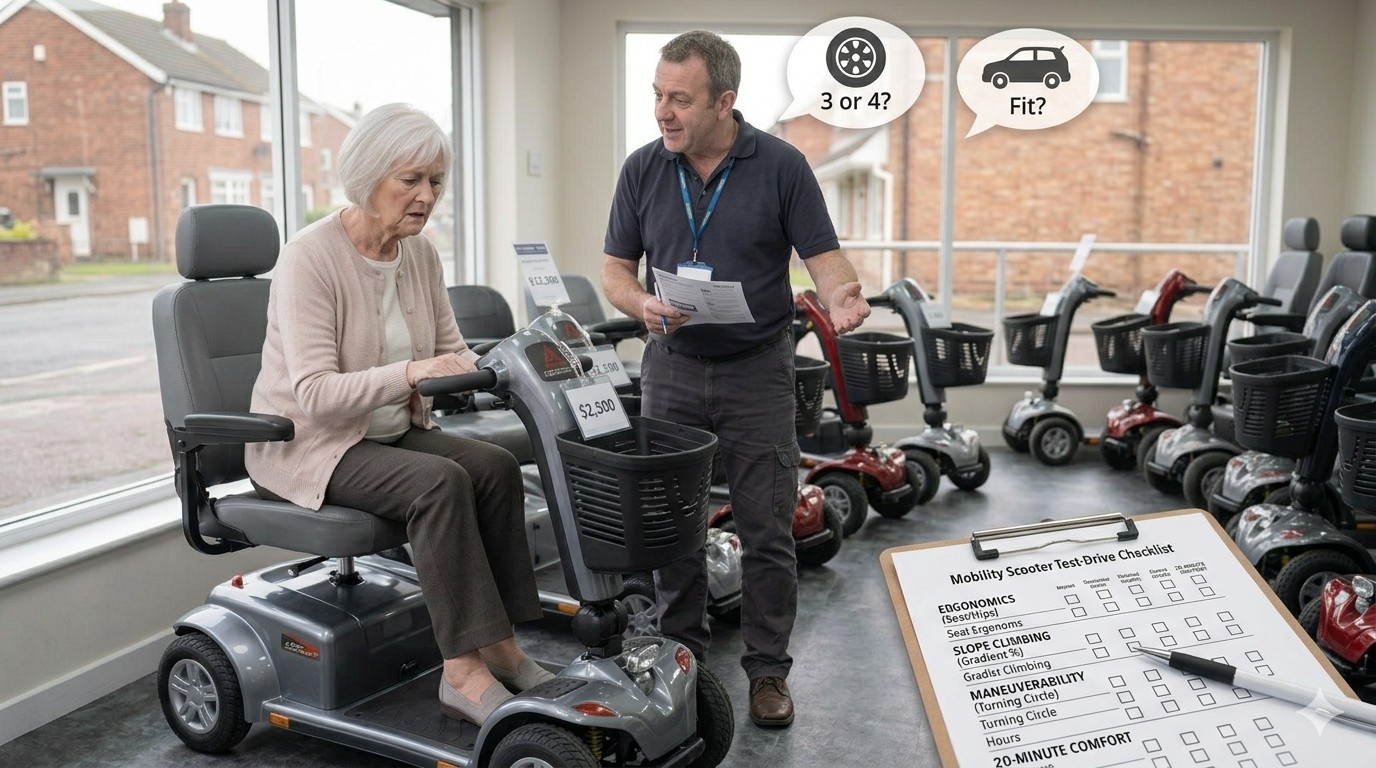
What Happens After Approval (and Why It Matters Before You Choose a Tier)
Once your scooter is approved — whether it's mid-cost or high-cost — the next steps are ordering, invoicing, delivery, set-up, and training. These steps look different depending on how your plan is managed.
Self-managed participants can pay upfront and claim reimbursement. Plan-managed participants work through their plan manager. Agency-managed participants must use NDIS-registered providers. Knowing which pathway you're on before you choose a scooter can save you weeks of frustration.
We've covered the full process in our guide to what happens after NDIS approves your mobility scooter.
But here's the important bit: your tier affects how much flexibility you have in choosing a supplier. Mid-cost AT gives you more freedom. High-cost AT often means working with registered providers. That's worth factoring into your decision.
Keeping Your Scooter Running (Regardless of Tier)
Your scooter's tier doesn't change the fact that it will need servicing, repairs, and eventually a replacement battery. The good news is that the NDIS funds repairs and maintenance for AT items you're currently using, regardless of which tier they originally fell into.
That includes routine servicing, tyres, chargers, and labour costs. These sit in your Capital Supports budget under "assistive technology repairs and maintenance."
We've put together a full guide to NDIS funding for scooter repairs, servicing, and replacement batteries if you want the detailed breakdown.
The short version: you're covered for keeping your equipment safe, not just for buying it.

FAQs About NDIS AT Funding Tiers and Mobility Scooters
What tier are mobility scooters usually in?
Most mobility scooters fall into mid-cost AT ($1,500–$15,000 per item). Basic models may sit at the lower end, while larger or specialised scooters can reach high-cost territory.
Do I need three quotes for a mid-cost mobility scooter?
No. For AT under $15,000, you need written advice from an AT assessor, but you do not need to submit formal quotes for approval.
Can I buy a scooter before NDIS approval?
Generally, no. The NDIS does not fund retrospectively. If you purchase before approval, reimbursement is unlikely unless there are exceptional circumstances. Always seek approval first.
What if my scooter costs just over $15,000?
It falls into high-cost AT, which requires a comprehensive assessment, multiple quotes, and NDIA approval before purchase. A small price difference can change your entire pathway.
How do I know which tier my scooter falls into?
Check the quote from your supplier. If it's under $1,500, it's low-cost. If it's between $1,500 and $15,000, it's mid-cost. If it's over $15,000, it's high-cost.
Does the Eastham ruling change the tier my scooter falls into?
No. The tier is based on cost. But the ruling changes how the NDIA must assess requests from people with multiple impairments, which can strengthen your case at any tier.
Your Next Step
You've done the hard part. You've taken a confusing system and turned it into something you can actually work with. The NDIS AT funding tiers aren't designed to trip you up — they're designed to match the level of evidence to the level of investment. And for most mobility scooter buyers, that means mid-cost AT: written advice, no quotes, and a pathway that respects your autonomy.
Your next step is simple. Talk to an OT or physiotherapist who understands NDIS scooter funding. Get your written advice. Get your quote. And if your scooter happens to cross into high-cost territory, you now know exactly what that means — and you're not walking into it blind.
A scooter isn't just equipment. It's the coffee you'll have with a friend without worrying about the walk. The appointment you'll attend without asking for a lift. The independence you've been waiting for.
You've got the map now. Go get it.
Stay mobile, stay confident!
Sign up for our monthly Mobility Scooter Newsletter to receive practical guides, expert advice, and inspiring stories that help you make the most of your scooter and download our free "Mobility Scooter Guide for Beginners."
Don't worry — your e-mail address is totally secure.
I promise to use it only to send you our newsletter, "Mobility Matters."
Recent Articles


-
The NDIS Mobility Scooter Funding Guide I Wish Someone Had Given Me
Sep 26, 26 08:38 AM
 NDIS funding for mobility scooters doesn't have to be confusing. Here's your friendly guide to eligibility, assessment, costs, and approval.
 -
NDIS Mobility Scooter Funding Checklist: Evidence That Gets Approved
Sep 26, 26 08:34 AM
NDIS mobility scooter funding checklist — from OT assessment to approval. Here's exactly what to include so your request isn't delayed. -
Mobility Scooters Covered by Medicare: Simple steps to Get Support
Sep 25, 26 09:09 AM
 Mobility scooters covered by Medicare — A friendly, clear guide to coverage, costs, and steps to regain independence with the right mobility support.



Ready to Feel More Confident on Your Mobility Scooter?

My Ebook, The Ultimate Guide to Mobility Scooters, walks you through choosing the right scooter, using it safely, and keeping it in top condition — all explained in clear, friendly language.
Give yourself (or someone you love) the gift of independence.




